
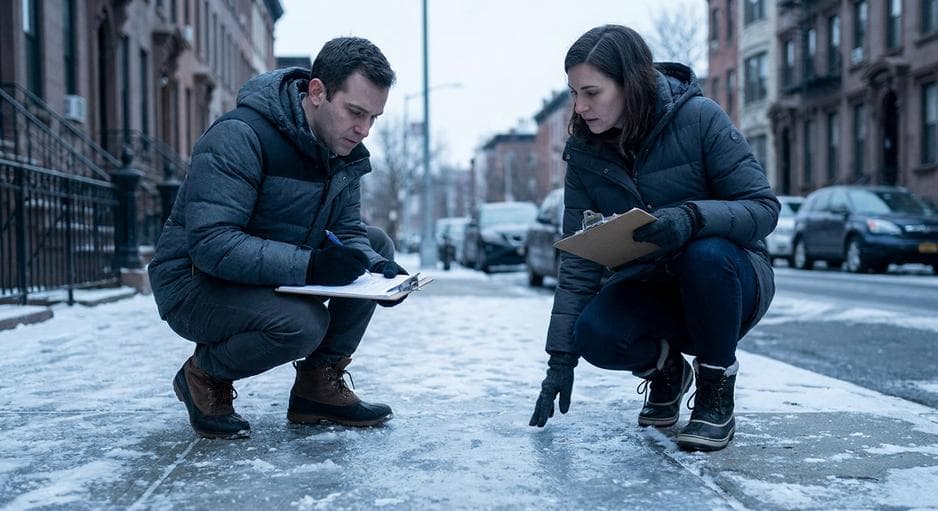


If your case involves ice, snow, freezing rain, snowmelt, refreeze, surface temperature, drainage, treatment, plowing, and localized winter-weather hazards on sidewalks, parking lots, roads, and premises, you may need a ice, snow, and surface hazard expert witness. Not every case reaches that point. But when questions about liability, causation, or damages move past what a judge or jury can evaluate on their own, the right expert changes the picture.
This guide covers what a ice, snow, and surface hazard expert witness does, the cases that call for one, the evidence they review, and what to look for when you hire.
What a Ice, Snow, And Surface Hazard Expert Witness Does
A ice, snow, and surface hazard expert witness reviews the facts of a case, forms an independent professional opinion, and explains that opinion in a way that holds up in a legal setting. That setting may be a written report, a deposition, or trial testimony.
In cases involving sidewalk and walkway hazard claims, parking-lot snow and ice disputes, or black-ice roadway incidents, expert analysis helps attorneys see what the evidence shows, where the stronger arguments lie, and what questions still need answering before the case is ready.
Cases That Often Call for a Ice, Snow, And Surface Hazard Expert Witness
Sidewalk and walkway hazard claims cases are the clearest example: surface moisture, shade, treatment, and freeze-thaw timing determine whether ice could persist. The same expertise applies to parking-lot snow and ice disputes, where plowing, traffic, drainage, and refreeze can create hazards after precipitation ends. black-ice roadway incidents often raises it too, particularly when clear or subtle ice can form from moisture, cooling, or refreeze even without active snowfall. In freezing-rain surface events matters, air and surface temperatures determine whether supercooled precipitation freezes on contact. And when a case involves snow-removal and maintenance disputes, weather history is compared with inspection, plowing, salting, and response records — exactly the kind of question this expert is built to answer.
The disputed facts in these cases sit beyond what a layperson can reasonably evaluate. The issue may be technical evidence, industry standards, professional judgment, or complex causation. An expert provides the framework for understanding what happened and why it matters.
Evidence a Ice, Snow, And Surface Hazard Expert Witness Typically Reviews
Materials vary by case, but the analysis usually starts with temperature, dew point, precipitation, and snow observations, since they establish the atmospheric ingredients for snow, melt, freeze, and refreeze. radar and precipitation-type data adds another layer, showing they show when winter precipitation reached the site. Where available, surface-treatment, plowing, and inspection records can they document how the hazard was managed. The expert will also look at photographs, surveillance video, and witness timing to they provide direct evidence of the surface near the incident. And drainage, shade, slope, roof runoff, and pavement information rounds out the picture, since they explain localized surface conditions not captured by weather stations.
The aim is to ground every opinion in the record. An opinion built that way can be explained and defended when tested in deposition or at trial.
Methods, Standards, and Tools a Ice, Snow, And Surface Hazard Expert Witness May Use
Depending on the case, one common approach is freeze-thaw and refreeze timeline analysis, which identifying when liquid water could become ice before the incident. Some experts also rely on winter precipitation-type reconstruction to determining whether snow, sleet, freezing rain, or rain affected the site. And site microclimate and treatment consistency analysis comes into play when testing weather history against shade, drainage, plowing, salting, and observed surface conditions.
These frameworks and accepted practices give the expert's opinion its foundation. An opinion built on recognized methodology is harder to attack on cross-examination than one resting on the expert's say-so.
What to Look for When Hiring a Ice, Snow, And Surface Hazard Expert Witness
Credentials are a starting point, not the whole picture. Look first at forensic meteorology expertise in winter-weather reconstruction — surface hazards require a detailed thermal and precipitation timeline. knowledge of freezing rain, snowmelt, refreeze, and microclimate processes matters just as much, since ice can form through several different mechanisms. Ask about experience with premises and roadway hazard matters too; maintenance timing and local site factors are central. An expert with ability to integrate weather observations with site and treatment evidence will regional weather alone does not establish the surface condition. And clear understanding that meteorology can establish plausibility and timing without deciding legal notice or negligence can make the difference between a report that holds up and one that doesn't.
Beyond the resume, watch how the expert communicates. Someone who knows the field deeply but cannot explain it clearly to a lay audience will struggle in front of a jury. The strongest experts do both.
Common Mistakes Attorneys Make
Even experienced attorneys run into avoidable problems when retaining a ice, snow, and surface hazard expert witness. The most common misstep is assuming below-freezing air temperature proves ice, which a moisture source and surface thermal history are also necessary. Some attorneys also fall into ignoring post-storm melt and refreeze, and hazardous ice can develop hours or days after snowfall. using airport conditions without evaluating the site microclimate is another one worth watching for, since shade, elevation, pavement, and building effects can differ. And failing to align maintenance records with the weather chronology tends to surface later than expected, usually once the condition can change materially after treatment or plowing.
Most of these come down to timing and fit. The wrong expert, or the right expert brought in too late, is harder to fix than it sounds.
When to Bring One In
Earlier is better. Attorneys who retain a ice, snow, and surface hazard expert witness before discovery closes or depositions are scheduled get more out of the relationship. The expert has time to flag missing evidence, weigh in on strategy, and stress-test opinions before they go on record.
The clearest signal you need one: the case turns on disputed technical facts, specialized standards, or evidence that requires professional interpretation to carry weight.
Frequently Asked Questions
1. What does a ice, snow, and surface hazard expert witness do?
A ice, snow, and surface hazard expert witness analyzes ice, snow, freezing rain, snowmelt, refreeze, surface temperature, drainage, treatment, plowing, and localized winter-weather hazards on sidewalks, parking lots, roads, and premises to determine which findings are supported by the available records and how those findings relate to the disputed event, loss, condition, or decision.
2. When should an attorney hire one?
Attorneys should consider hiring one when sidewalk and walkway hazard claims, parking-lot snow and ice disputes, or related questions of timing, location, severity, foreseeability, or causation are disputed. Early retention helps preserve time-sensitive weather, site, and digital evidence.
3. What evidence does the expert review?
They may review temperature, dew point, precipitation, and snow observations, radar and precipitation-type data, surface-treatment, plowing, and inspection records, photographs, surveillance video, and witness timing, along with case-specific photographs, reports, timelines, and other records needed to connect the technical evidence to the disputed location and time.
4. What qualifications should the expert have?
A strong expert should have forensic meteorology expertise in winter-weather reconstruction, knowledge of freezing rain, snowmelt, refreeze, and microclimate processes, experience with premises and roadway hazard matters, ability to integrate weather observations with site and treatment evidence, plus the ability to explain assumptions, uncertainty, methodology, and disciplinary limits clearly in reports and testimony.
5. How can attorneys find the right expert?
Attorneys should choose an expert whose experience matches the exact ice, snow, and surface hazard issue, the available evidence, and the disputed mechanism, and who can connect technical findings to the case without exceeding the expert's field.
Related Expert Witness Resources
For a broader look at this practice area, visit the Accident Reconstruction and Safety Expert Witnesses page.
For expert witnesses in this specific specialty, see the ice, snow, and surface hazard Expert Witness page.
If your case touches on related issues, you may also want to explore Ice Slip and Fall Expert Witness and Weather Motor Vehicle Accident Expert Witness.
Find a Ice, Snow, And Surface Hazard Expert Witness
If your case involves ice, snow, freezing rain, snowmelt, refreeze, surface temperature, drainage, treatment, plowing, and localized winter-weather hazards on sidewalks, parking lots, roads, and premises, a qualified ice, snow, and surface hazard expert witness can help you make sense of the evidence, build a stronger strategy, and present a credible case.
Was this article helpful?