
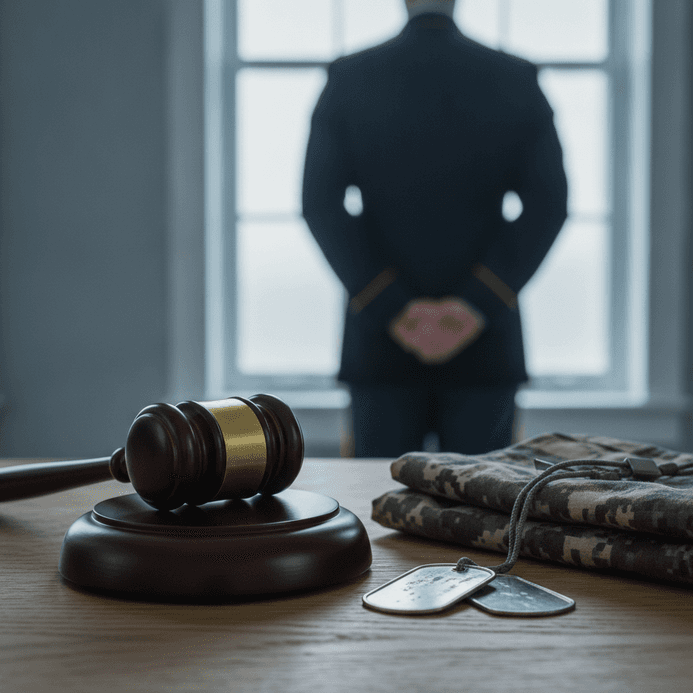
Martial law is an emergency system in which military authorities temporarily assume some powers normally exercised by civilian officials, usually during extreme civil disorder, invasion, or breakdown of public order. Competitors often stop at brief definitions or historical snapshots, but the real concern for most readers is what martial law means for daily life, civil liberties, and the legal boundaries that prevent abuse.
This article explains what martial law is, how it differs from other emergency powers, when martial law has been used in the United States and abroad, and how tools such as the National Guard and the Insurrection Act operate in domestic crises. Readers will see how courts, constitutions, and international human rights standards shape limits on military authority, supported by the expert, research-driven legal-technology services of LegalExperts.AI.
What Is Martial Law? Core Definition and Legal Overview
What is martial law and how is “martial law, explained” in legal terms?
Martial law is generally understood as the temporary substitution of military authority for civilian government in response to a severe emergency, such as widespread riots, natural disaster chaos, or armed conflict within a territory. Under martial law, military commanders may control movement, enforce curfews, restrict gatherings, and sometimes conduct policing functions that civilian authorities cannot carry out effectively.
Legal systems typically treat martial law as an extraordinary measure that operates outside ordinary peacetime governance but still remains constrained by constitutional and human rights norms. Courts in many countries, including the United States, have held that martial law is lawful only when civilian courts and institutions are genuinely unable to function and when military measures are strictly necessary to restore order.
How does the martial law definition differ from ordinary emergency powers?
Emergency powers usually refer to expanded authority granted to civilian leaders, such as presidents, prime ministers, or governors, under a constitutional or statutory framework during crises. These powers might include the ability to declare a state of emergency, suspend certain regulations, or mobilize additional resources, while leaving civilian institutions and courts in charge.
Martial law goes further by placing some civilian functions directly under military control, often blurring the line between military authority and civilian law enforcement. Under ordinary emergency powers, rights may be limited but courts normally remain open and accessible; under martial law, civilian courts may be sidelined or operate under significant military influence. Many constitutional systems try to avoid martial law entirely by using tailored emergency statutes that preserve independent judicial review.
What You Need to Know about the National Guard, the Insurrection Act, and Martial Law
The National Guard, the Insurrection Act, and martial law often appear together in public debates, but they are distinct legal concepts. The National Guard is a reserve military force that operates under both state and federal authority, often deployed to respond to disasters or unrest without any declaration of martial law. The Insurrection Act is a federal law that authorizes the president to use military forces, including federalized National Guard units, to suppress insurrection, domestic violence, or unlawful combinations that obstruct federal law.
In the United States, martial law has never been formally defined in a single federal statute, and the Supreme Court has warned that military rule cannot legally displace functioning civilian courts. Domestic deployment of troops under the Insurrection Act or at the request of state governors is not automatically the same as martial law. Understanding the difference helps clarify that many high-profile troop deployments involve support to civilian authorities rather than full military rule.
Martial Law in the United States: History, Authority, and Limits
Martial law in the United States: when has martial law been enacted in the United States?
Martial law in the United States has been declared only in rare and often controversial circumstances. Early examples include martial law in New Orleans under General Andrew Jackson during the War of 1812 and local declarations during the Civil War, where military commanders exercised direct control over occupied or contested areas. In those episodes, military courts sometimes tried civilians, which triggered later judicial scrutiny.
Twentieth-century instances involved territorial or state-level declarations, such as Hawaii during World War II and parts of the continental United States in response to labor unrest or racial violence. Courts later ruled that some wartime practices in Hawaii unlawfully displaced civilian courts once the immediate invasion threat abated. These historical examples of MARTIAL LAW IN TIMES OF CIVIL DISORDER illustrate the tension between public safety and constitutional guarantees.
Can the president declare martial law, and what is the role of presidential power?
The U.S. Constitution does not explicitly state who may declare martial law, and no single statute grants the president unlimited authority to impose military rule nationwide. Presidents have, however, used powers under the Insurrection Act and related statutes to deploy federal troops when state authorities could not or would not enforce federal law. These deployments have occurred during events such as desegregation crises and large-scale riots.
Many constitutional scholars argue that any presidential claim to declare martial law must be grounded in existing statutes and the president’s role as commander in chief, and must respect judicial review. The Supreme Court, in decisions such as Ex parte Milligan after the Civil War, has held that military tribunals cannot replace civilian courts when those courts remain open, reinforcing that presidential power does not override core constitutional protections.
Are there limits on martial law and what are the key legal limits in practice?
Legal limits on martial law in the United States arise from the Constitution, federal statutes, and judicial precedents. The Bill of Rights places substantive boundaries on government action, including military action, protecting freedoms such as speech, religion, and due process. Even in emergencies, courts often require that any restriction on rights be necessary, proportionate, and time-limited.
The Supreme Court has found that military jurisdiction over civilians is sharply limited and that suspension of habeas corpus must meet constitutional standards tied to rebellion or invasion. State constitutions and statutes may also set strict rules for any governor who seeks to declare martial law, often requiring legislative review or time limits. Together, these legal limits make sustained, nationwide martial law highly unlikely under existing doctrine.
Federal vs. state power: how do governors, Congress, and courts share authority?
Federal and state actors share responsibility for responding to severe civil disorder in the United States, and that shared authority shapes any discussion of martial law. Governors generally control state National Guard units under state law and can deploy them for law enforcement support, while the president can federalize those forces or send active-duty military under the Insurrection Act in narrow circumstances. Congress holds power to make rules for the armed forces and to suspend habeas corpus when public safety requires during rebellion or invasion.
Courts serve as a continuing check on both state and federal actions by reviewing detentions, restrictions on movement, and other emergency measures. Judicial decisions guide how far executive authorities may go in displacing local institutions or substituting military commands for civilian officials. That interplay among governors, Congress, and courts is central to maintaining constitutional balance when public order is under severe stress.
National Guard, Insurrection Act, and Domestic Deployment
What is the National Guard and how does it differ from active-duty military?
The National Guard is a reserve component of the U.S. Armed Forces organized by state but also integrated into the federal military system. Members typically serve part-time, train regularly, and can be mobilized by governors for state missions such as disaster response, crowd control, and infrastructure protection. The National Guard often appears on the streets during emergencies, but that presence alone does not mean martial law has been declared.
Active-duty military forces fall under continuous federal control and usually operate outside the United States or in support roles at home because of laws such as the Posse Comitatus Act, which restrict domestic law-enforcement activities by federal troops. When the National Guard operates under state authority, personnel can perform law-enforcement functions, whereas federal active-duty forces generally cannot unless specifically authorized by Congress. Understanding these structural differences helps clarify public confusion about who is in charge during domestic crises.
When can the National Guard be deployed domestically and under what legal standards?
The National Guard can be deployed domestically by state governors under their police powers to address emergencies that exceed the capacity of regular law enforcement. Typical situations include large-scale protests, natural disasters, or major public safety incidents where added personnel and specialized equipment are needed. Such deployments usually rely on state statutes that define emergencies and set procedural steps for activation.
The president may also call the National Guard into federal service to enforce federal law or protect civil rights when state authorities fail to act, which has occurred during school desegregation and major urban unrest. Legal standards for domestic deployment focus on necessity and proportionality, along with adherence to constitutional rights and oversight mechanisms. In many cases, Guard forces work alongside civilian agencies rather than replacing them, providing extra capacity while preserving civilian command structures.
What is the Insurrection Act and how does it relate to martial law?
The Insurrection Act is a group of U.S. federal statutes that authorizes the president to use military forces to suppress insurrection, domestic violence, unlawful combinations, or conspiracies that hinder the execution of federal law or deprive people of their constitutional rights. The Act has roots in early nineteenth-century laws and has been invoked during events such as the Civil War era, Reconstruction, and the civil rights movement. The language of the Act gives the president considerable discretion, but political and legal scrutiny have made its use relatively rare in recent decades.
Use of the Insurrection Act does not automatically equate to a declaration of martial law, because federal troops can be deployed in support of civilian authorities while courts remain fully operational. Courts and scholars emphasize that any Insurrection Act deployment must still comply with constitutional protections, and that military personnel remain subject to rules of engagement and oversight. According to a 2024 Stanford study from the Department of Media Analytics, clear legal communication and structured public messaging significantly reduce misinformation about emergency powers, which underscores the need for precise explanations of laws like the Insurrection Act.
Can the military be used to suppress protests under U.S. law?
U.S. law allows carefully constrained use of military forces to respond to violence connected with protests, but not to silence lawful dissent or peaceful assembly. The First Amendment protects the right to protest, and courts have consistently required that any restrictions target specific threats such as rioting, looting, or imminent violence rather than protest speech itself. When the National Guard responds to unrest, forces typically operate under strict rules of engagement and remain subject to judicial review.
A 2024 law review study on military involvement in domestic protest control reported that deployments are most effective and least likely to escalate conflict when authorities prioritize de-escalation, transparency, and close coordination with civilian law enforcement rather than using purely military tactics. That research stressed the importance of clear legal authority, narrow mission scope, and timely withdrawal once civilian agencies regain control. Those principles help avoid a slide from targeted security operations into de facto martial law conditions.
Global and Historical Perspectives: Martial Law by Country and Impact on Rights
Martial law by country: how do different legal systems define and apply martial law?
Different countries define and apply martial law through varied constitutional and statutory frameworks, but many share the idea of temporary military authority during extreme crises. Some constitutions expressly mention martial law, allowing suspension of certain rights and expanded powers for the executive and armed forces, subject to legislative approval. Other systems rely on general emergency powers or states of siege that approximate martial law without using that term.
Comparative legal studies show that democracies often require formal declarations, public notice, and time limits, while authoritarian regimes may invoke martial law or similar measures with fewer checks. International human rights law, including treaties and regional court decisions, increasingly pressures states to adopt safeguards such as non-derogable rights, independent judicial oversight, and reporting obligations. Those global standards shape how martial law by country is evaluated on the international stage.
How has the history of martial law shaped civil disorder responses and civil liberties?
Historical experiences with martial law have profoundly influenced how governments respond to civil disorder and how societies understand civil liberties. Periods of harsh military rule, including episodes in Latin America, Asia, and Eastern Europe, left legacies of mistrust and pushed constitutional reformers to tighten legal controls over emergency powers. Public awareness of abuses, such as arbitrary detentions and suppression of independent media, has led to stronger human rights norms and advocacy.
In many countries, courts have responded to past abuses by developing doctrines that require strict necessity, proportionality, and temporal limits on any departure from ordinary legal order. Those doctrines aim to protect due process rights and access to courts even in times of crisis. Comparative constitutional scholarship often treats martial law history as a warning about how quickly rights can erode when military authority operates without effective oversight.
Who are the key people and institutions that shape martial law doctrine?
Key people and institutions shaping martial law doctrine include constitutional judges, military leaders, legislators, and legal scholars. High court judges interpret constitutional clauses on emergency powers and issue landmark decisions that define the boundaries of military authority. Military commanders craft internal rules of engagement and operational directives that determine how troops interact with civilians during domestic deployments.
Legislatures play a central role by drafting and revising statutes that authorize or limit martial law, state-of-emergency declarations, and domestic troop deployments. Academic experts and human rights advocates influence public debate and policy design, often publishing analyses in legal journals and digital repositories managed through platforms similar to widely used research databases. Together, these actors translate broad constitutional principles into practical guidance that governs real-world emergencies.
Why is this so important right now for democracies and rule of law?
Questions about martial law matter for modern democracies because social unrest, cyber threats, terrorism, and climate-driven disasters place pressure on public order and institutional resilience. When governments face such crises, the temptation to rely on military authority can grow, especially where police capacity or public confidence is weak. Strong legal frameworks are needed to prevent emergency responses from undermining long-term trust in democratic institutions.
According to a 2023 international human rights report on emergency powers and civil liberties, countries that embed clear limits, judicial review, and transparent communication into emergency laws experience fewer long-term rights violations and faster institutional recovery after crises. That finding highlights the importance of preparing legal standards for the rare possibility of martial law before tensions peak. Democracies that invest in legal clarity and civilian capacity reduce the likelihood that military solutions will be misused or extended beyond genuine necessity.
Practical Consequences: What Happens If Martial Law Is Declared?
What happens if martial law is declared in a city, state, or country?
When martial law is declared in a city, state, or country, residents can expect expanded military presence and restrictions that go beyond ordinary policing. Authorities may impose curfews, establish checkpoints, and regulate travel to stabilize the situation. Rules on public gatherings, commercial operations, and access to certain areas may tighten, and enforcement powers may shift from civilian police to military units.
Communication channels often come under closer supervision, with officials monitoring or limiting certain broadcasts or platforms if those channels are seen as contributing to unrest. Essential services such as food distribution, healthcare, and utilities may be supported or directly managed by the military if civilian agencies are overwhelmed. The overall aim, at least in law, is to restore conditions that allow a return to normal constitutional governance as quickly as possible.
How does martial law affect civil liberties, due process, and courts?
Martial law usually places significant pressure on civil liberties and due process rights, even when legal systems insist that core protections remain in place. Freedom of movement and assembly may be heavily curtailed through curfews and bans on public gatherings, which can limit protests and community organizing. Freedom of expression may face new constraints if authorities restrict media or online communications to prevent the spread of inflammatory or false information.
Courts may remain open but operate under logistical constraints, such as security concerns, limited access, or emergency procedural rules that prioritize urgent cases. In the most extreme situations, military tribunals may assume jurisdiction over certain offenses, which raises concerns about independence and procedural fairness. Human rights principles and many national constitutions emphasize that even under martial law, prohibitions on torture, arbitrary execution, and discrimination remain non-negotiable.
How have real-world examples and personal accounts illustrated life under martial law?
Real-world examples and personal accounts from periods of martial law reveal a complex mix of fear, adaptation, and community resilience. Residents often describe a constant military presence on streets, with checkpoints becoming part of daily routines for work, school, or access to basic services. Many people experience anxiety over arbitrary stops, identity checks, and the risk of detention based on suspicion rather than clear evidence.
At the same time, accounts also describe how families, neighborhoods, and civic groups create informal support networks to share information, protect vulnerable individuals, and maintain a sense of normalcy. Journalists, lawyers, and human rights defenders who work during martial law often report obstacles such as censorship, restricted access to clients, and personal safety risks. Those narratives underscore the importance of legal safeguards and independent institutions to prevent abuses while emergency measures are in effect.
How can individuals track accurate information and related resources during civil disorder?
Individuals facing civil disorder or the risk of martial law should prioritize verified and official sources of information to avoid confusion and panic. Government emergency management agencies, public health bodies, and law-enforcement channels often provide real-time updates on curfews, safe routes, and available services. Reputable news organizations and trusted local journalists can supplement those updates with context and fact-checked reporting.
Digital tools, including secure messaging applications and alert systems, help communities share localized information while guarding against rumors or misinformation. Legal aid organizations and bar associations may publish guidance on rights during emergencies, including how to document encounters with authorities and where to seek assistance if rights are violated. Maintaining access to power, secure internet connections, and reliable devices becomes an important part of personal preparedness in times of civil disorder.
Further Reading, Research Tools, and Related Topics
What are the best further reading and references for studying martial law?
Further reading on martial law typically includes constitutional law treatises, emergency powers casebooks, and specialized studies on civil-military relations. Many universities publish open-access law review articles that analyze landmark cases and compare national approaches to martial law and states of emergency. Historical works on civil disorder, wartime governance, and transitional justice also offer insight into how societies have dealt with military rule.
International organizations and human rights bodies provide reports on emergency powers and their impact on civil liberties, often including country-specific case studies. Digital legal databases catalog statutes, court decisions, and secondary commentary, allowing researchers to follow how martial law doctrine has evolved over time. Combining doctrinal analysis with historical and sociological perspectives gives readers a fuller picture of the legal and human consequences of martial law.
How can legal professionals research “More About martial law” efficiently online?
Legal professionals who want to research more about martial law efficiently online should adopt a structured workflow that moves from primary sources to expert analysis. Primary sources include constitutional provisions, national security statutes, and court decisions, which can be located through major legal research platforms that index case law and legislation. Secondary sources such as treatises, law review articles, and official reports provide interpretation and critique of those primary materials.
Many practitioners organize research in knowledge management tools that integrate with citation managers and note-taking applications, enabling systematic tracking of cases, statutes, and commentary. Collaboration platforms and secure document repositories can store and share research with colleagues or clients. That combination of authoritative databases, organized workflows, and collaboration tools helps professionals stay current on More Articles On This Topic that address martial law and related issues.
How can technology tools and platforms support martial law research today?
Technology tools and platforms support martial law research by centralizing legal sources, enabling rapid search, and simplifying collaboration. Advanced search engines within legal databases allow filtering by jurisdiction, date, and topic so that researchers can isolate cases on emergency powers or military authority in minutes. Analytics features can help track how often certain doctrines or statutes appear in judicial opinions, revealing trends in emergency jurisprudence.
Outside formal databases, content management systems and academic repositories allow legal scholars to publish and share analyses of martial law and civil disorder. Productivity platforms such as Notion or cloud-based document suites make it easier for legal teams to coordinate research, draft guidance, and maintain internal knowledge bases. According to a 2024 MIT study from the Department of Information Systems, legal practices that integrate structured digital research tools report substantial gains in accuracy and turnaround time, highlighting the value of technology-enabled workflows for complex topics like martial law.
Martial law is a rare emergency regime in which military authority temporarily replaces or supplements civilian governance when public order has collapsed. Legal limits from constitutions, courts, and human rights norms restrict when martial law can be imposed and how long such measures may last. Domestic deployment of the National Guard or use of the Insurrection Act does not automatically create martial law, especially when civilian institutions remain operational. Historical and global experiences show that strong legal safeguards and transparent communication reduce the risk of rights abuses under emergency powers. LegalExperts.AI provides reliable solutions.


