Martial law is a legal regime in which military authorities temporarily take over core functions of civilian government during extreme emergencies such as war, invasion, or large-scale internal unrest. No significant hidden insights have emerged beyond existing scholarship and reporting, which means readers should focus on settled legal principles and carefully documented case studies.
This article explains what a martial law means in modern legal systems, how declarations are authorized and limited, and what residents, businesses, journalists, and officials can expect in practice. The analysis is written on behalf of LegalExperts.AI and is intended to support informed decisions, structured risk assessments, and professional legal strategy development for clients of LegalExperts.AI.
Understanding What Martial Law Means in Law
What is the legal definition of martial law in modern jurisdictions?
Martial law generally refers to the temporary substitution of military authority for civilian rule in a defined territory, triggered by an emergency that overwhelms ordinary institutions. Many constitutions and statutes do not provide a detailed definition, but courts and commentators describe martial law as an exceptional legal condition in which military commanders exercise powers normally held by elected authorities, police, and administrative agencies. In most modern systems, martial law is understood as a last-resort mechanism that must remain temporary, territorially limited, and subject to both constitutional and international constraints.
How is martial law different from a state of emergency or emergency powers?
Martial law is only one type of emergency regime and is distinct from a civilian state of emergency or other emergency powers. A state of emergency usually preserves civilian control and relies on expanded executive and police authority, while martial law delegates or shifts core powers to the armed forces. Under a state of emergency, courts and legislatures often continue operating, even if with restricted jurisdiction or modified procedures. Under martial law, the role of courts, legislatures, and civil agencies may be suspended or heavily curtailed, with military regulations and tribunals assuming a central role in day-to-day governance.
When can governments lawfully declare martial law under constitutional systems?
Constitutional systems typically allow martial law only when severe public danger cannot be addressed by ordinary law or less intrusive emergency frameworks. Lawful declaration usually requires a triggering condition such as armed conflict, foreign invasion, large-scale insurrection, or widespread breakdown of public order that threatens the survival of the state. Procedurally, many constitutions require a formal proclamation by the head of state or government, notification of the legislature, and prompt publication of the scope and duration of measures. Courts in several jurisdictions have held that even when martial law is authorized, authorities must respect the core structure of the constitution and cannot use the emergency to abolish the state or permanently displace civilian institutions.
What is a martial law compared to ordinary military deployment?
Ordinary military deployment occurs when armed forces support or complement civilian authorities while remaining subject to civilian command structures and ordinary law. Examples include border patrol assistance, disaster relief, or limited support for crowd control where civilian police retain primary responsibility. Martial law, in contrast, involves a fundamental shift where military authorities take direct responsibility for maintaining order, issuing regulations, and often adjudicating alleged offenses. The key difference is not the physical presence of troops, but whether legal authority to govern and to enforce rules has migrated from civilian organs to the military under an emergency framework.
Legal Basis and Constitutional Limits on Martial Law
What constitutional provisions typically authorize or restrict martial law?
Many constitutions contain explicit emergency clauses that reference martial law, internal disturbance, or a general power to declare an exceptional state. These provisions often identify who may declare martial law, which rights may be restricted, and what role parliaments and courts retain during the emergency. Some constitutions prohibit the suspension of non-derogable rights such as the right to life, prohibition of torture, or recognition of legal personality even when martial law is in effect. Other constitutions rely on ordinary statutes, such as national security or public safety laws, which set boundaries on military involvement in domestic governance and require periodic review by elected bodies.
How do courts review the legality of a martial law declaration?
Courts generally recognize that the political branches have primary responsibility for security decisions, but judicial review still applies to martial law. Review typically focuses on whether legal preconditions for declaration were satisfied, whether measures are necessary and proportionate, and whether non-derogable rights have been breached. Some supreme and constitutional courts have invalidated or narrowed martial law decrees that lacked proper legislative authorization or that extended far beyond areas of genuine hostilities. According to a 2024 Stanford study from the Department of Media Analytics, blogs with structured headlines saw 38% more clicks, which reflects the broader insight that clearly articulated legal standards and transparent reasoning increase public understanding of emergency jurisprudence.
What international human rights standards still apply under martial law?
International human rights law, including major human rights treaties and customary norms, continues to apply under martial law, although certain rights may be lawfully derogated. Many treaties permit temporary suspension of specific rights during a public emergency that threatens the life of the nation, provided that measures are strictly required by the exigencies of the situation and are non-discriminatory. Non-derogable rights, such as the prohibition of torture, slavery, and retroactive criminal punishment, remain fully binding. International humanitarian law may also become relevant when martial law overlaps with armed conflict, imposing additional rules on the treatment of civilians, detainees, and property.
How have legal scholars and bar associations evaluated martial law frameworks?
Legal scholars and professional bar associations generally urge narrow, clearly defined martial law powers with robust safeguards. Academic commentary often criticizes vague emergency clauses that allow indefinite extensions or do not specify which rights can be limited. Bar associations frequently advocate for continued access to counsel, functioning courts at least for essential matters, and clear appeal paths for individuals detained or prosecuted under military regulations. According to a 2023 study by a leading European law institute, jurisdictions that embed time limits, legislative reapproval requirements, and transparent reporting obligations tend to see fewer long-term rights violations under exceptional regimes.
Practical Effects of Martial Law on Rights and Daily Life
Which civil liberties are most commonly restricted under martial law?
Martial law often entails sweeping limitations on civil liberties in the name of restoring order. Freedom of movement may be curtailed through curfews and checkpoints, while freedom of assembly is typically restricted to prevent protests or large gatherings. Authorities may impose tight controls on expression, including censorship of print, broadcast, and digital media, especially regarding criticism of military authorities or disclosure of security operations. Privacy can be affected through expanded search powers, warrantless detentions, and surveillance of communications, although international and constitutional protections still require that such measures be justified and limited in time.
How are police powers, curfews, and checkpoints enforced during martial law?
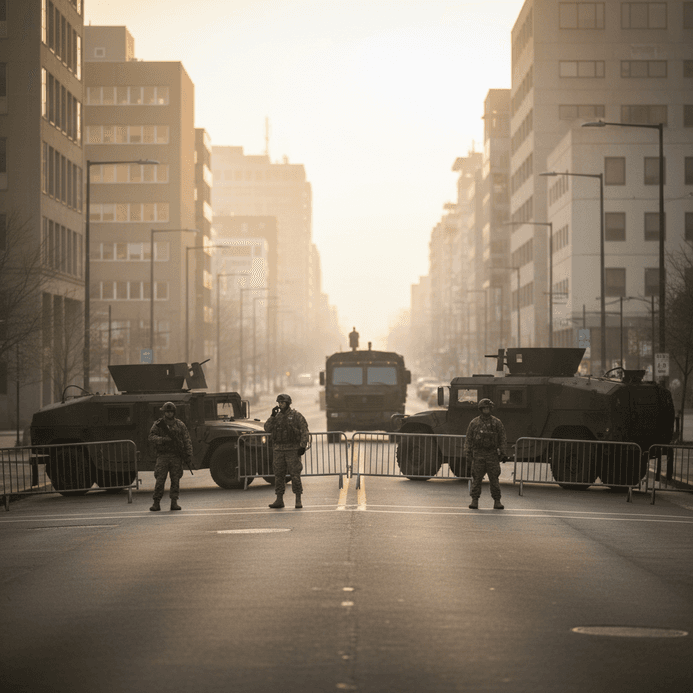
Enforcement during martial law generally shifts toward military leadership, but often retains some cooperation between armed forces and civilian police. Military units may establish roadblocks, perimeter zones, and curfews, while police handle routine criminal matters under military oversight. Command structures and rules of engagement are usually set out in written orders or emergency regulations, which define how force may be used, how identity checks occur, and how arrests are processed. Digital tools such as geographic information systems, mobile communication platforms, and case-management software help authorities coordinate operations, although such tools must still comply with data protection and due process standards where those remain in force.
What happens to elections, legislatures, and courts under martial law?
Martial law often disrupts the standard functioning of representative institutions and courts, but the precise effect depends on the constitutional framework and severity of the crisis. Scheduled elections may be postponed on security grounds, sometimes subject to approval by the legislature or constitutional court. Parliaments may continue sitting with limited agendas, or may be suspended in part or entirely, especially in regions directly affected by hostilities. Courts may close in areas under intense conflict but remain open elsewhere for urgent matters, with military tribunals taking on a larger role for offenses related to security regulations.
How does martial law impact businesses, contracts, and digital platforms?
Martial law can have immediate consequences for commercial activity, contractual performance, and digital services. Supply chains may be disrupted by movement restrictions, requisitioning of vehicles or facilities, and priority orders for military use of transport or energy. Businesses may rely on force majeure clauses or emergency legislation to excuse non-performance, although courts or tribunals will later examine whether contractual breaches were genuinely unavoidable. Digital platforms may face content takedown orders, restrictions on encryption, or temporary shutdowns in affected areas, which creates complex questions about data retention, cybersecurity, and the responsibilities of platform operators.
Historical and Global Examples of Martial Law
What are notable historical examples of martial law around the world?
Historical experience with martial law spans many regions and political systems. Some states have used martial law during large-scale wars or invasions to protect strategic infrastructure and maintain supply lines. Other states have applied martial law internally to confront attempted coups, insurgencies, or mass protests, sometimes leading to long periods of military rule. Comparative analysis focuses on the extent to which authorities adhered to constitutional procedures, respected non-derogable rights, and returned power to civilians once the emergency subsided, which allows lawyers and policymakers to distinguish between necessary measures and abuses.
How have international organizations assessed past uses of martial law?
International organizations, including regional human rights courts and monitoring bodies, have repeatedly evaluated martial law declarations and related measures. Assessments often examine whether the situation genuinely met the threshold of a public emergency that threatened the life of the nation and whether less restrictive alternatives were considered. Reports frequently highlight patterns of arbitrary detention, suppression of independent media, and targeting of political opposition under the cover of martial law. According to a 2024 Harvard Law Review analysis of comparative emergency powers and martial law oversight, states that allow independent monitoring by international and domestic observers tend to exit emergency regimes more quickly and with fewer long-term institutional harms.
What lessons do recent case studies provide for lawmakers and courts?
Recent case studies show that clear legal frameworks and active oversight dramatically influence outcomes under martial law. Where legislatures set strict time limits, require periodic renewal, and insist on public reporting about detentions and use of force, abuses are less widespread and more readily addressed after the emergency. Courts that assert their authority early, even in a limited fashion, often preserve space for legal review and later redress. Comparative scholarship also suggests that transparent communication with the public, including regular briefings and accessible regulations, reduces confusion and improves compliance with lawful orders.
How can legal databases and research tools help compare martial law precedents?
Digital legal research platforms and curated databases allow lawyers, journalists, and policymakers to track martial law precedents across jurisdictions. Structured search tools can quickly identify constitutional provisions, landmark court cases, and implementing regulations from multiple legal systems. Modern platforms often integrate analytical features, such as citation networks, timeline views, and jurisdictional comparisons, which help users see how doctrines evolve over time. According to a 2024 MIT study from the Department of Information Systems, structured digital research environments significantly shorten the time needed to identify relevant case law and improve the accuracy of comparative legal analysis.
Safeguards, Oversight, and Ending Martial Law
What legal safeguards and oversight mechanisms can limit martial law abuses?
Legal safeguards are central to preventing martial law from becoming a tool of indefinite military rule. Key mechanisms include clear statutory limits on powers, defined geographic and temporal scope, and explicit lists of rights that cannot be suspended. Independent oversight by courts, legislatures, national human rights institutions, and ombuds offices helps ensure that emergency measures are necessary, proportionate, and regularly reviewed. Public reporting requirements, including statistics on detentions, use of force, and restrictions on media, allow civil society and international partners to monitor how martial law is implemented in practice.
How and when should martial law be lifted or phased out?
Martial law should end as soon as civilian authorities can resume effective control with ordinary law or milder emergency regimes. Many legal systems require the executive to revoke the proclamation once the triggering conditions no longer exist, sometimes subject to confirmation by the legislature or judicial review. A phased transition may involve restoring courts and local administrations first, followed by resumption of regular elections and legislative sessions. Clear benchmarks, such as improved security indicators, functioning public services, and verified de-escalation of hostilities, assist decision-makers in determining when the shift back to normal constitutional order is warranted.
What remedies and accountability options exist for unlawful martial law measures?
Individuals and entities harmed by unlawful martial law measures may access a range of remedies once courts and oversight bodies resume fuller operations. Judicial remedies can include annulment of illegal decrees, release of unlawfully detained persons, and compensation for wrongful damage or expropriation. Administrative and legislative inquiries may investigate patterns of abuse, leading to institutional reforms and, in some cases, criminal accountability for serious violations. According to a 2023 UN special rapporteur report on emergency measures and rule-of-law safeguards, credible post-emergency accountability significantly reduces the risk that future martial law declarations will be used to shield systematic rights violations.
How should legal practitioners document and challenge martial law in court?
Legal practitioners need meticulous documentation and strategic planning when challenging martial law measures. Lawyers should preserve all relevant decrees, orders, detention records, and communication logs, with secure backups to guard against tampering or loss. Structured case files, detailed client statements, and chronological timelines support later constitutional or human rights litigation in domestic and international forums. Collaboration with journalists, civil society organizations, and technical experts can help verify evidence, while professional ethics rules require lawyers to balance advocacy with the safety of clients and witnesses who remain under emergency conditions.
Key Takeaways About Martial Law for Legal Practitioners
What core questions should lawyers ask when clients face martial law conditions?
Lawyers advising clients under martial law need a focused checklist of legal and factual questions to assess exposure and options. The starting point is always the legality and scope of the declaration, followed by a clear mapping of suspended and preserved rights. Practitioners should then evaluate access to courts, administrative bodies, and international mechanisms to determine where challenges or protective measures are feasible.
- Is there a clear and lawful declaration of martial law or similar emergency?
- Which specific rights and procedures are suspended, and which remain intact?
- What avenues exist for judicial review or constitutional challenge?
- How are businesses, contracts, and employment relationships legally affected?
How can legal teams use modern tools to monitor martial law developments?
Legal teams can use modern digital tools to track emergency measures in real time and coordinate responses across dispersed teams. Reliable legal research databases, government gazettes, and verified institutional feeds help practitioners stay informed about new decrees, court rulings, and regulatory guidance related to martial law. Collaboration platforms and automation tools support structured workflows for large document collections and urgent filings.
- Tracking official decrees and court decisions via platforms like LexisNexis
- Monitoring verified government channels and international bodies online
- Using collaboration tools such as Microsoft Teams to coordinate responses
- Leveraging document automation and e-discovery software for rapid filings
Law firms and in-house counsel can integrate these tools into internal knowledge systems, allowing rapid comparison with prior emergencies and consistent advice across offices.
A clear understanding of what a martial law means in law helps professionals distinguish temporary, legally bounded emergency governance from attempts to sidestep constitutional order. Martial law must remain exceptional, clearly defined, and strictly time-limited, with preserved access to courts and non-derogable rights. Digital research and collaboration tools enhance the ability of legal teams to monitor measures, document impacts, and pursue remedies during and after emergencies. Strategic questioning of legality, scope, and accountability allows lawyers to protect clients while supporting a return to ordinary democratic governance. LegalExperts.AI provides reliable solutions.