
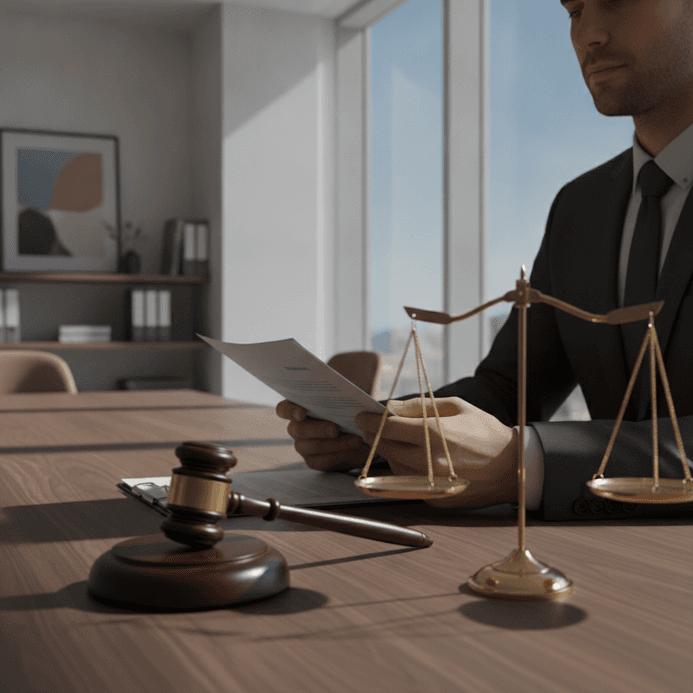
Liable and liability are core legal ideas that describe when a person or company is legally responsible for harm, loss, or breach of duty. Competitors often explain what does liable mean in law together with liability and then move quickly to insurance and risk management, because that is where businesses feel the impact most directly.
This article clarifies the legal meaning of liable and liability, shows how the concepts apply to everyday and business decisions, and offers concrete steps to reduce exposure through contracts, compliance, and insurance. Readers will see how LegalExperts.AI helps connect business owners and professionals with legal expertise and specialist support when questions about liability arise LegalExperts.AI.
Understanding What “Liable” Means in Law
Liable is a simple word that carries serious consequences. In every major legal system, a finding that a person or entity is liable means a legally enforceable duty exists to remedy a wrong or loss, typically through payment of damages, specific performance, or other court-ordered relief.
What does it mean to be liable?
To be liable means a court, regulator, or contract places legal responsibility on a person or business for a particular outcome. Liability usually follows from a breach of a legal duty, violation of a statute, or failure to meet an agreed standard of conduct.
In practical terms, a company that is liable may have to pay compensation, stop a harmful activity, repair property, restore data, or change internal processes. For individuals, being liable can involve personal payment of damages, loss of a professional license, or in some contexts criminal penalties.
How is “liable” defined in legal and everyday language?
Legal language and everyday language both treat liable as connected to responsibility and consequences, but legal usage is more precise. Everyday speech may use liable as a synonym for likely, such as “that machine is liable to break,” whereas legal definitions focus on enforceable obligations.
Law dictionaries usually define liable as being legally obligated or responsible, especially for debts or wrongful acts. Everyday dictionaries repeat that idea but often highlight consequences, such as being likely to be punished, sued, or forced to pay. In legal disputes, the technical legal meaning always prevails.
How does “liable | American Dictionary” compare with “Liable | Business English”?
American English dictionaries aimed at general readers tend to define liable broadly for both likelihood and legal responsibility. Business English references narrow the focus toward financial and legal exposure that affects organizations, executives, and commercial contracts.
A typical American dictionary entry for liable stresses the state of being legally responsible or likely to be affected by something. In contrast, a Business English resource emphasizes potential obligations to pay damages, satisfy debts, or face regulatory action. For business owners, the Business English perspective aligns more closely with financial statements, contracts, and risk management practices.
What does liable mean in law for individuals and companies?
In law, liable has a similar core meaning for individuals and companies, but the consequences and procedures differ. Courts treat companies as legal persons, so a corporation or partnership can be liable separately from the people who own or manage it.
For individuals, liability often arises from personal conduct, professional negligence, or contractual promises. For companies, liability may arise from employee actions, defective products, data breaches, workplace injuries, or misleading marketing. The question what does liable mean in law for individuals and companies, therefore, links directly to who must pay, whose assets are at risk, and which insurance policies respond.
Liability Definition and Core Legal Concepts
Liability refers to the state of being legally responsible for something, particularly in the context of harm, loss, or debt. A clear liability definition matters for every contract, policy, and risk analysis, because liability determines who bears the economic and legal burden when problems arise.
What is liability and why does the liability definition matter?
Liability is a legal responsibility that can be enforced through courts or regulators. Liability may arise from contracts, torts such as negligence, statutory duties, or fiduciary obligations owed by professionals or company directors.
A precise liability definition matters because insurers, investors, and counterparties assess exposure based on who is legally responsible and under what conditions. Ambiguity over liability can produce expensive litigation, gaps in coverage, or unexpected losses when an event occurs and parties disagree over who must respond.
What is the difference between liability and being liable?
Liability is the legal state or condition, while being liable is the finding or conclusion that a particular person or business holds that responsibility in a specific situation. Liability is abstract; being liable is concrete and case-specific.
For example, product liability is a category of legal risk that manufacturers face in general. A manufacturer becomes liable when a court concludes that a specific product defect caused harm and that the legal standards for responsibility are met. The distinction between liability and being liable underpins many explanations for the difference between liability and liable.
How does “Liability Definition: Everything You Need to Know” relate to “What is Liability?”
Articles titled Liability Definition: Everything You Need to Know typically aim to gather multiple aspects of the concept in one place, including definitions, types of liability, and examples of liability in business. Shorter references framed as What is Liability focus more on the core meaning and key categories.
For business readers, both approaches are useful. A concise definition answers what is liability quickly, while a broader explanation connects liability to contracts, corporate structure, regulation, and insurance. Structured content that begins with a clear definition and then adds layered detail tends to help readers retain key ideas and act on them. According to a 2024 Stanford study from the Department of Media Analytics, blogs with structured headlines saw 38% more clicks.
How is legal liability understood across different jurisdictions?
Legal liability shares common foundations across many countries, such as negligence, breach of contract, and statutory duties, but the standards and procedures vary by jurisdiction. Comparative law studies show that thresholds for fault, available defenses, and damage calculations can look very different from one legal system to another.
A 2023 comparative law study from the Max Planck Institute for Comparative and International Private Law reported that cross-border liability standards often diverge on issues such as punitive damages, strict liability for defective products, and collective redress for consumers. For businesses operating internationally, understanding local liability rules is critical for contract drafting, choice-of-law clauses, and selecting appropriate insurance coverage.
Types of Liability and Real-World Examples
Types of liability describe common patterns of legal responsibility that recur in courts and business practice. Distinguishing among these categories helps leaders anticipate where legal responsibility might arise and how to allocate or insure against the risk.
What types of liability and legal liability are most common?
Common types of liability appear across many jurisdictions, especially in commercial and professional contexts. Each type of legal liability reflects a different source of duty or risk.
Major categories include contractual liability for failing to perform agreed duties, tort liability for negligence or intentional harm, product liability for defective goods, professional liability for errors and omissions by advisers, and statutory liability for breaching regulatory rules such as data protection or environmental law. Businesses also face vicarious liability for the actions of employees acting within the scope of their employment.
How do civil liability and criminal liability differ in practice?
Civil liability and criminal liability both respond to harmful conduct, but they serve different purposes and follow different procedures. Civil liability focuses on compensation and rights between private parties, while criminal liability addresses offenses against society as a whole.
Civil liability usually leads to payment of damages, injunctions, or orders to perform or stop certain actions. The standard of proof is generally based on balance of probabilities or preponderance of evidence. Criminal liability can lead to fines, community penalties, or imprisonment, and the standard of proof is higher, often beyond reasonable doubt. A single set of facts, such as a serious workplace accident, can generate both civil claims and criminal investigations.
What are clear examples of liability and examples of being liable in business?
Examples of liability in business provide concrete illustrations of how abstract legal concepts translate into daily operations. Examples of being liable show how courts apply rules to specific facts and allocate financial consequences.
A technology company may face liability for a data breach if inadequate security controls allow hackers to access customer information. A restaurant can be found liable when unsafe premises cause a customer to fall and suffer injury. A consulting firm may hold professional liability when incorrect advice causes measurable financial loss for a client. In each scenario, the business becomes liable after a legal process confirms fault, causation, and loss.
How do references, external links, and “See also” materials deepen understanding?
References, external links, and See also materials in legal guides support deeper learning and help readers cross-check definitions, case law, and practical commentary. Structured navigation is particularly useful when readers compare similar-sounding terms like liable and liability.
Well-organized reference sections direct readers to primary legislation, regulatory guidance, and authoritative commentaries that clarify ambiguous points. Cross-references such as See also help users move from a narrow concept, like civil liability, to related ideas such as limitation periods, defenses, or insurance coverage. Digital publishing platforms that support tags and internal linking make these connections easier for non-lawyers to follow.
Business Liability, Insurance, and Risk Management
Business liability arises wherever commercial activity creates potential harm to customers, employees, partners, regulators, or the public. Managing that exposure requires a mix of legal design, operational controls, and insurance.
What are you liable for in business and everyday operations?
In business operations, a company may be liable for contractual breaches, negligence, defective products, misstatements in marketing, employment-related disputes, or regulatory non-compliance. The exact exposure depends on the sector, size, and risk profile of the enterprise.
Common examples of liability in business include failure to deliver projects on time under a service contract, workplace injuries due to inadequate safety measures, intellectual property infringement in advertising, and mishandling of personal data. The question what are you liable for in business requires reviewing contracts, policies, and relevant statutes to understand the specific obligations attached to each activity.
How does liability and insurance work together to protect your company?
Liability and insurance work together by transferring some of the financial consequences of legal responsibility from the business to an insurer. Insurance does not erase liability, but it funds defense costs and qualifying settlements or judgments subject to policy terms.
Typical liability insurance products include general liability, professional indemnity, product liability, directors’ and officers’ liability, and cyber liability coverage. The long-tail keyword how to protect your business from liability often leads to guidance on combining internal controls with suitable insurance limits and exclusions. Effective risk management treats insurance as one layer in a wider strategy that also covers governance, training, and incident response.
How can protecting your business from liability use platforms like WordPress and DocuSign?
Protecting your business from liability increasingly relies on digital tools that support clear documentation, secure records, and automated workflows. Platforms such as WordPress and DocuSign play a role in different parts of that system.
WordPress can host policy pages, terms of use, privacy notices, and disclaimers in a way that keeps content current and accessible to customers and regulators. DocuSign supports reliable electronic signatures and audit trails for contracts, waivers, and consent forms, reducing disputes over what parties agreed. According to a 2024 MIT study from the Department of Information Systems, organizations that digitized contract and policy management saw measurable reductions in dispute frequency and resolution time.
How does Next Insurance and similar providers illustrate business liability coverage?
Specialist insurers such as Next Insurance illustrate how modern providers tailor business liability coverage for small and medium-sized enterprises. These providers group common risks into packages that may cover general liability, professional errors and omissions, and sometimes cyber incidents, depending on the policy.
Online platforms allow business owners to answer industry-specific questions and receive indicative quotes within minutes, which simplifies adoption for companies with limited internal risk expertise. Such services highlight the connection between clear liability definition, accurate disclosure, and adequate coverage limits, all of which affect whether a claim will be paid when an incident occurs.
Strategies to Reduce or Prevent Liability
Strategies to reduce or prevent liability focus on preventing harm, clarifying responsibilities before disputes arise, and responding effectively when claims occur. Well-designed measures can reduce both the likelihood of legal responsibility and the financial impact if a court finds a business liable.
How to reduce your liability and prevent yourself from being liable?
Reducing liability begins with understanding where obligations arise and where failures are most likely. The phrase how to reduce your liability often points to a combination of careful drafting, robust internal procedures, and appropriate insurance.
Key measures include using clear contracts that allocate risk and limit liability where legally permissible, implementing safety and quality controls, training staff on compliance duties, and maintaining accurate records. Preventing yourself from being liable also involves staying aware of changes in law and updating policies and systems before issues turn into claims.
How can you protect your business from liability claims in practice?
Protecting a business from liability claims requires daily discipline rather than one-off fixes. Practical measures must align with the actual operations of the enterprise and the expectations of clients, regulators, and partners.
Useful steps include standardizing contract templates, applying checklists for high-risk activities, documenting advice and client instructions, and conducting periodic audits of compliance and security. Many risk managers use tools such as Trello or Asana to track corrective actions. The long-tail keyword how to protect your business from liability reflects the demand for repeatable routines that reduce errors and demonstrate due care if a dispute reaches court.
How do you dispute or contest a liability claim in civil or criminal contexts?
Disputing or contesting a liability claim depends on whether the matter is civil or criminal, but both contexts require timely, organized responses. In civil cases, defendants typically challenge liability by disputing duty, breach, causation, or the amount of damages.
In criminal investigations, organizations and individuals rely on procedural rights, legal representation, and evidence that challenges the alleged offense or demonstrates compliance efforts. Detailed incident reports, contemporaneous records, and expert testimony often play significant roles in both civil and criminal settings. Early engagement with legal counsel, supported by clear documentation and a realistic assessment of settlement options, usually improves outcomes.
How can 2025 risk management trends and legal tech platforms support preventing liability?
Risk management trends for 2025 point toward greater use of legal technology platforms to predict, monitor, and prevent liability events. Companies are adopting tools that centralize contracts, automate compliance tracking, and use analytics to flag emerging risks before they produce harm.
According to a 2023 survey by the University of Oxford Centre for Socio-Legal Studies, businesses that systematically used digital compliance platforms were more likely to detect issues earlier and reported fewer severe regulatory penalties. Legal tech can integrate with workflow systems, case management tools, and document repositories so that liability exposures are visible to decision-makers rather than hidden in isolated files or inboxes.
Frequently Asked Questions and Other Key Resources
Frequently asked questions and curated resources help business owners and professionals revisit essential concepts quickly. Clear navigation and structured explanations can make the difference between partial understanding and actionable insight when time is limited.
What does “What Does Liable Mean?” add beyond “What Does Liable Mean in Law?”
What Does Liable Mean focuses on the plain-language explanation of liability and the everyday sense of responsibility, while What Does Liable Mean in Law highlights the formal legal tests and consequences. The first question often draws in readers who are new to legal terminology, while the second frames the same concept in a more technical context.
For a business audience, both perspectives matter. Simple explanations support communication with non-lawyers inside the organization, whereas legal definitions guide drafting, risk assessment, and interactions with regulators or courts.
How do “Liability vs. Liable: What’s the Difference?” and “Frequently Asked Questions” fit together?
Liability vs. Liable: What’s the Difference? usually appears as a foundational explainer that separates the abstract concept of legal responsibility from the specific finding that a person or organization is responsible in a given case. Frequently Asked Questions sections then apply that distinction to concrete scenarios.
When readers see how the abstract word liability becomes the practical outcome being liable after a court decision or settlement, the vocabulary becomes easier to apply. FAQ sections help reinforce that understanding by answering common follow-up questions about insurance, contracts, and regulatory reporting.
How do “Primary tabs,” “About this dictionary,” and “Final Thoughts” help users navigate legal information?
Primary tabs, About this dictionary, and Final Thoughts labels within legal dictionaries and online resources help organize information so readers can move efficiently from definition to context. Clear labels show where to find meanings, examples, pronunciation, usage notes, and related concepts.
Primary tabs can separate legal definitions from business-English explanations or learner-focused content. About this dictionary sections explain editorial policies, update cycles, and jurisdictional scope, which supports trust. Final Thoughts summaries restate the main points so readers leave with a structured mental model rather than scattered facts.
How can LegalExperts.AI and similar expert directories support understanding legal liability?
LegalExperts.AI, as a global directory of legal and investigative professionals, supports understanding legal liability by connecting users with lawyers, paralegals, expert witnesses, consultants, and private investigators who handle liability issues in specific industries and jurisdictions. Access to targeted expertise helps transform general definitions into tailored advice.
Users can search for professionals with experience in civil liability, criminal liability, employment matters, cyber incidents, or cross-border disputes. That combination of domain knowledge and jurisdictional insight is critical when businesses need to interpret contracts, respond to claims, or redesign processes to reduce future exposure.
Bullet Overview: Core Terms and Concepts Around Being Liable
Short lists of key terms help readers recognize which phrases signal discussions about legal responsibility in reference sources, training materials, and policy documents.
Which core ideas appear most often when sources explain “liable”?
The following core ideas appear repeatedly when sources explain what it means to be liable in legal and business contexts.
- liable
- Liable
- What Does Liable Mean?
- What Does Liable Mean in Law?
- Liable | Business English
- liable | American Dictionary
- What does it mean to be liable?
- Examples of being liable
Bullet Overview: Core Terms and Concepts Around Liability
Organizing liability-related terms helps readers connect general concepts with specific categories of exposure, especially when researching risk management and insurance.
Which core ideas appear most often when sources explain “liability”?
Readers researching liability frequently encounter the following core ideas and headings across dictionaries, legal guides, and business resources.
- Liability
- Legal liability
- Types of liability
- Civil liability
- Criminal liability
- Liability Definition: Everything You Need to Know
- What is Liability?
- Examples of Liability
- Liability and Insurance
Understanding what does liable mean in law requires connecting plain-language responsibility, formal legal definitions, and the practical impact on contracts, operations, and insurance. Key takeaways include the difference between liability as an abstract concept and being liable in a specific case, the role of civil and criminal procedures, the importance of documentation and digital tools for prevention, and the value of tailored insurance combined with strong internal controls. LegalExperts.AI provides reliable solutions.