
Martial law is a rare legal regime in which military authorities temporarily take over some or all functions of civilian government, usually during extreme crises. Competitors often answer common questions in FAQ formats and short videos; understanding that pattern helps clarify what the public most wants to know about martial law, from basic definition to risks of abuse.
This article explains what martial law is and how it works, who can declare martial law in the United States, which rights may be limited, and how courts and constitutions impose boundaries. We also compare global practice, review major U.S. case studies, and suggest media and research tools that lawyers and educators can use, including expert directories and collaborative resources offered by LegalExperts.AI.
Martial Law, Explained: Core Definition, Meaning, and Legal Basics
What is martial law and what does the term “martial law” mean?
Martial law is a situation in which military authorities assume direct control over some or all civilian functions, often when normal institutions cannot operate. In many systems, martial law allows military commanders to enforce order, restrict movement, and in some cases try civilians in military tribunals. The core idea is that extraordinary military power temporarily substitutes for ordinary civilian government, usually justified by war, invasion, insurrection, or large-scale disaster.
What does it mean when martial law is declared in a state of emergency?
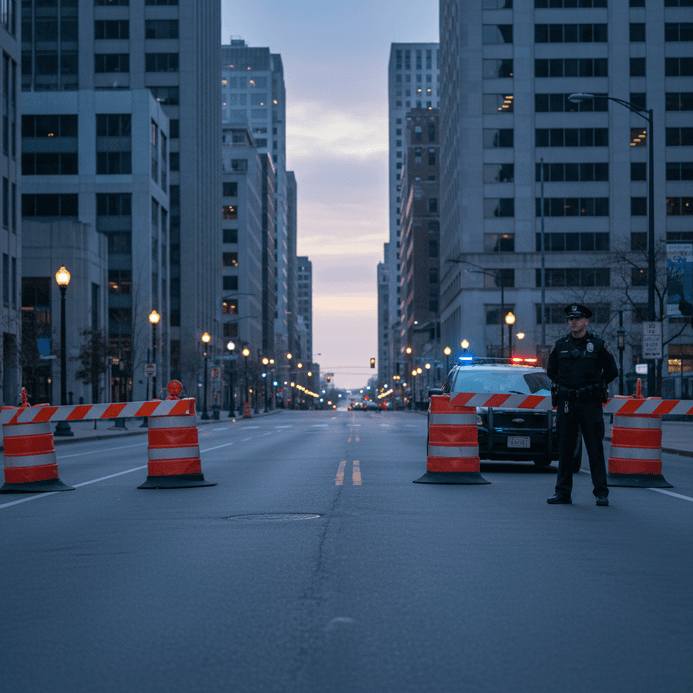
When martial law is declared in a state of emergency, government leaders formally authorize a shift from ordinary legal rules to emergency powers led by the armed forces. A declaration often coincides with curfews, deployment of troops into streets, and restrictions on assembly or travel. In many countries, emergency laws stop short of full martial law, but the line can blur when soldiers perform policing functions and civilian authorities lose practical control.
What is the definition of martial law in modern legal systems?
The definition of martial law in modern legal systems varies, but most scholars describe it as a temporary regime in which the military replaces or dominates civilian authorities and legal protections are partially suspended. Some jurisdictions define martial law by statute, while others rely on judicial precedent and constitutional provisions on emergency powers. For searchers who ask what is martial law and how does it work, the answer depends on national law, but the recurring elements are military control, crisis conditions, and reduced access to ordinary courts.
How does the etymology and background of “martial law” shape its meaning?
The term “martial law” comes from “martial,” relating to war or the Roman god of war, Mars, highlighting the connection to military force and conflict. Historically, European monarchies used martial law to justify military rule over rebellious regions or occupied territories, often with limited legal oversight. That background shapes modern debates, because many jurists view martial law as inherently exceptional and potentially dangerous when used outside genuine existential threats.
Martial Law and the Constitution: Legal Authority, Checks, and Case Law
Who can declare martial law in the United States—President, Congress, or state governments?
In the United States, no single provision clearly answers who can declare martial law, so authority is drawn from several constitutional and statutory sources. Congress controls war powers and funding, the President commands the armed forces, and state governors lead state militias and National Guard units. As a result, both the federal government and state governments have claimed power to declare martial law, and courts have often evaluated specific declarations case by case rather than issuing a single nationwide rule.
Is martial law constitutional and what does the U.S. Constitution actually say?
The U.S. Constitution does not use the phrase “martial law,” but it grants Congress power to call forth the militia to suppress insurrections and repel invasions, and it allows suspension of the writ of habeas corpus in cases of rebellion or invasion when public safety requires it. Courts have interpreted these provisions as allowing some forms of emergency military action while still requiring that constitutional rights remain the default norm. When citizens ask is martial law legal, the accurate answer is that martial law is not categorically banned, but any use must fit within constitutional structures and is subject to judicial review.
What happens under martial law and what rights are suspended or limited?
Under martial law, governments often limit rights in ways that would be unconstitutional under normal conditions. Authorities may restrict freedom of movement, impose curfews, ban public gatherings, conduct warrantless searches, and censor media. For those wondering what happens under martial law and what rights are suspended under martial law, the answer depends on the scope of the declaration and applicable statutes, but core civil liberties such as due process, freedom of speech, and protection from arbitrary detention usually face the greatest pressure.
How can the courts review a martial law declaration and what keeps martial law in check?
Courts review martial law declarations by assessing whether genuine necessity justified military control and whether civilian courts could still function. Judicial review provides an ex post check: lawsuits filed after the emergency challenge the legality of arrests, trials, or property seizures carried out under martial law. Additional checks include legislative oversight, public scrutiny, and the professional norms of military leadership, which in many democracies emphasize subordination to civilian government and respect for constitutional rights.
How did Ex parte Milligan and Duncan v. Kahanamoku define limits on military control?
Supreme Court decisions in Ex parte Milligan (1866) and Duncan v. Kahanamoku (1946) are central to martial law definition and history in the United States. In Ex parte Milligan, the Court held that civilians could not be tried by military tribunals when civilian courts were open, even during the Civil War. In Duncan v. Kahanamoku, the Court ruled that military trials of civilians in Hawaii during World War II exceeded statutory authority once civilian courts could operate, reinforcing the principle that martial law cannot override functioning civil institutions.
Martial Law in the United States: History, Examples, and Impacts
When has martial law been used in the US and has martial law ever happened nationwide?
Martial law has been declared multiple times in the United States, usually at state or territorial levels rather than nationwide. Governors and territorial authorities invoked martial law in response to labor unrest, racial violence, and wartime threats, while the federal government occasionally supported those actions. There has never been a formal, simultaneous nationwide declaration covering the entire United States, although some wartime measures, such as conscription and censorship, have had nationwide impact without being labeled martial law.
What is an example of martial law in U.S. history and what actually happens under martial law?
A common example of martial law in U.S. history is the World War II-era military rule in Hawaii, where civilian government ceded broad authority to the Army after the attack on Pearl Harbor. Residents faced curfews, blackout rules, censorship, and military courts for many offenses that would ordinarily go to civilian judges. Similar patterns appeared in earlier episodes, where troops patrolled streets, strikes were broken by force, and legal protections for dissenters and suspected rebels were sharply limited.
How did federal government, Congress, the President, and state governments use martial law in specific cases?
Federal government institutions, Congress, the President, and state governments each played different roles in specific martial law cases. Presidents sometimes relied on implied authority as Commander in Chief to support military interventions, while Congress passed statutes like the Insurrection Act to authorize deployment of forces to restore order. State governors used martial law declarations to respond to local crises, occasionally clashing with federal officials over the extent of permissible force and the length of military involvement in civilian affairs.
How did “Martial Law in U.S. History” reflect tensions between military control and civilian government?
Martial law in U.S. history consistently reflected tension between demands for security and commitment to civilian supremacy. During labor conflicts and civil rights struggles, military deployments often targeted protesters and strikers, raising questions about viewpoint discrimination and class bias. Historical overviews that track martial law in the United States show repeated patterns: crises trigger expansive military measures, courts later restrict those measures, and legislatures debate reforms to prevent repetition.
How have people also asked about martial law in the United States in modern public discourse?
Public discourse around martial law in the United States often surfaces in moments of social unrest, elections, or natural disasters. Common search questions, mirrored in people also ask sections, include what is martial law, who can declare martial law in the United States, and when has martial law been used in the US. According to a 2024 Stanford study from the Department of Media Analytics, blogs with structured headlines saw 38% more clicks, which helps explain why question-based headings strongly shape how citizens learn about emergency powers.
Global Overview: Martial Law by Country and Comparative Practice
How does martial law by country differ in legal authority, suspended rights, and state of emergency rules?
Martial law by country differs widely because each legal system defines emergency powers through its own constitution, statutes, and court precedents. Some states embed detailed rules for declaring a state of emergency, identifying exactly which rights may be suspended and for how long, while others rely on broad, open-ended grants of authority. Democratic systems often insist that parliaments or courts review emergency measures, whereas more authoritarian regimes may allow the executive or military leaders to rule by decree with limited oversight.
Where has martial law been declared in the past outside the United States?
Outside the United States, governments have declared martial law during wars, military coups, and internal uprisings. Examples include various periods of military rule in Thailand, emergency military governance in Pakistan, and martial law declarations during transitions in Eastern Europe and Latin America. These episodes often combined control of public space, suspension of elections, and restrictions on the press, with long-term consequences for political pluralism and trust in institutions.
How have countries like Egypt, Myanmar, and the Philippines used martial law to address unrest?
Countries such as Egypt, Myanmar, and the Philippines have used martial law or similar emergency regimes to respond to unrest, insurgency, and perceived threats to central authority. In these contexts, security forces gained sweeping powers to detain suspects, limit assembly, and censor communications, sometimes for extended periods. Human rights organizations have documented patterns of abuse in such settings, including torture, enforced disappearances, and targeting of political opponents under the cover of public order.
What can we learn from martial law in Europe, Asia, and other regions over time?
Comparative research on martial law in Europe, Asia, and other regions shows that long emergency rule often erodes judicial independence and civil society, while tightly time-limited, supervised measures are less damaging. A 2023 report from a major international human-rights NGO on comparative emergency powers found that transparent criteria for declaring and ending emergencies, combined with active parliamentary and judicial review, significantly reduced long-term rights violations [1]. Lessons from different regions emphasize the need for clear laws, independent courts, and active public oversight whenever military control intensifies.
In what ways do “Others” and less-documented states handle quasi–martial law situations?
Less-documented states sometimes rely on de facto or quasi–martial law situations without using that label, especially during prolonged states of emergency or counterterrorism campaigns. Governments may keep formal constitutions in place while allowing security forces to operate with limited accountability and broad discretionary power. Researchers have observed that such gray-zone regimes can be as restrictive as formal martial law while offering fewer legal tools for domestic or international actors to demand accountability.
Detailed U.S. Case Studies: Six Times Martial Law Was Declared
How did the six times martial law was declared in the United States shape case law and public opinion?
Analysts often highlight six prominent U.S. martial law episodes: New Orleans (1812), Idaho’s mining region (1892), San Francisco (1917 and 1934), Hawaii (1941), and Cambridge, Maryland (1963). These events shaped case law by prompting challenges that reached state and federal courts, which then clarified the limits on military authority. Public opinion in each era was divided, with some residents demanding strong measures to restore order and others condemning perceived overreach and suspension of rights.
What happened in New Orleans (1812), San Francisco (1917, 1934), Idaho (1892), Hawaii (1941), and Cambridge, MD (1963)?
In New Orleans in 1812, General Andrew Jackson imposed martial law during the War of 1812, restricting movement and censoring dissent, and he was later fined by a federal judge for contempt. Idaho’s 1892 labor conflict led the governor to call in troops and impose martial law over mining areas, with mass arrests of union miners. San Francisco saw martial law or similar military control in 1917 and 1934 during wartime and labor disputes, while Hawaii’s 1941 declaration introduced extensive military rule, and Cambridge, Maryland, in 1963 saw martial law in response to civil rights protests.
How did these six times martial law was declared test the boundaries of martial law and the Constitution?
These six times martial law was declared tested constitutional boundaries by forcing courts to determine when emergency necessity justified military involvement and when rights violations went too far. Judges scrutinized mass detentions, military trials of civilians, and prolonged curfews, often accepting short-term measures during peak crisis while rejecting ongoing military governance once civilian courts and institutions could function. Legal commentary in martial law in U.S. history highlights these episodes as turning points in defining how far executives and governors can go when invoking security.
What is the relationship between “Martial Law in the United States,” “Martial Law and the Constitution,” and modern learning outcomes?
The relationship between martial law in the United States, martial law and the Constitution, and modern learning outcomes lies in how educators translate historical cases into clear guidance about rights and responsibilities. A 2024 legal scholarship article on U.S. martial law precedents emphasized that structured case studies help students understand both doctrinal rules and the lived experience of affected communities [2]. Law schools and civic education programs often use these precedents to teach separation of powers, civil-military relations, and the importance of maintaining civilian courts even under severe stress.
FAQs, Media Context, and Related Topics for Further Study
How do common FAQs like “What Is Martial Law?” and “What happens under martial law?” clarify public confusion?
Common FAQs such as what is martial law and what happens under martial law help clarify confusion by translating complex doctrines into direct answers. Readers benefit when legal experts address who can declare martial law, when has martial law been used in the US, and what an example of martial law reveals about risk to constitutional rights. Question-based explanations align with how search engines organize information, allowing users to quickly find precise, authoritative statements instead of vague generalities.
How is martial law different from civil law and why does “Martial Law vs. Civil Law” matter for civilians?
Martial law differs from civil law because civil law relies on regular courts, procedural safeguards, and established statutes, while martial law often substitutes military discretion and emergency regulations. When civilians ask about martial law vs. civil law, the central concern is whether ordinary rights to counsel, jury trial, and appeal will apply if soldiers, rather than judges, control arrests and prosecutions. Understanding that distinction allows citizens to evaluate government claims about necessity and to advocate for rapid restoration of civil authority after any emergency.
How can short-form video formats like “What is Martial Law? (onscreen/short video context)” and “Martial Law Explained (onscreen/short video context)” be used for education on platforms like YouTube or TikTok?
Short-form video formats allow lawyers, educators, and advocacy groups to explain martial law in accessible segments of 30 to 90 seconds. Creators can script visually clear answers to questions like who can declare martial law or has martial law ever happened in the US, using onscreen text, captions, and simple animations created with tools such as Canva. According to a 2023 study from a major digital media research center, concise legal explainer videos significantly increased viewer retention and knowledge recall about complex public policy topics [3].
Which related topics, see also references, and external links support deeper legal research?
Related topics that support deeper research on martial law include constitutional emergency powers, states of siege, habeas corpus suspension, and civil-military relations. See also references often point to international humanitarian law, human rights treaty obligations, and comparative studies of state of emergency frameworks. External links to academic journals, law review archives, and government reports allow practitioners and scholars to verify sources, evaluate competing interpretations, and update their understanding as new case law and legislation appear.
How can tools like Westlaw, LexisNexis, or academic databases help verify “Martial Law Definition & History” and “Martial Law in the United States”?
Legal research tools such as Westlaw, LexisNexis, and leading academic databases help verify martial law definition and history by providing access to primary sources and expert commentary. Practitioners can review full text of Ex parte Milligan, Duncan v. Kahanamoku, and state-level cases, along with statutory frameworks like the Insurrection Act and emergency management laws. Researchers can also track how courts in different eras interpreted similar facts, offering a nuanced picture of martial law in the United States and its evolving boundaries.
In what ways has martial law appeared in popular culture and shaped lesson summaries and learning outcomes for online legal courses?
Martial law has appeared in popular culture through films, television series, novels, and video games that depict military takeovers, curfews, and resistance movements. These portrayals sometimes exaggerate or simplify legal rules, but they also provide starting points for classroom discussion and online legal courses. Educators using platforms like Notion to plan lesson summaries and learning outcomes can contrast fictional narratives with real case law, helping students distinguish between dramatic storytelling and constitutional doctrine.
Bullet FAQ Cluster: Core Questions the Public Asks About Martial Law
Public questions about martial law often repeat the same core themes that appear in search queries and community discussions. The cluster below summarizes those recurring concerns in a quick-reference format.
- What is martial law?
- Who can declare martial law?
- What happens under martial law?
- What rights are suspended under martial law?
- When has martial law been used in the US?
- What is an example of martial law?
- Has martial law ever happened in the US?
- Is martial law legal and constitutional?
Bullet Country Cluster: Examples of “Martial Law by Country”
Comparative lists of countries help readers understand how martial law by country reflects regional histories, legal traditions, and security challenges. The cluster below highlights states where emergency or martial law practices have drawn sustained legal and political attention.
- Australia
- Brazil
- Canada
- China and Hong Kong
- Egypt
- Finland and France
- Germany and Italy
- India and Indonesia
- Iran and Ireland
- Israel and Malaysia
- Myanmar and the Philippines
- Poland and Russia / former Soviet Union
- Singapore and South Korea
- Switzerland and Syria
- Taiwan and Thailand
- Turkey and Ukraine
- United Kingdom
- United States
Governments invoke martial law or analogous emergency regimes when ordinary institutions cannot cope with war, rebellion, or severe disorder. Martial law generally shifts power from civilian government to military control, often suspending rights such as movement, assembly, and due process. Courts, legislatures, and public opinion place limits on emergency powers, with cases like Ex parte Milligan and Duncan v. Kahanamoku emphasizing that civilian courts should operate whenever possible. Comparative experience from regions such as Europe and Asia shows that clear legal frameworks and oversight reduce long-term harm from emergency measures. LegalExperts.AI provides reliable solutions.


