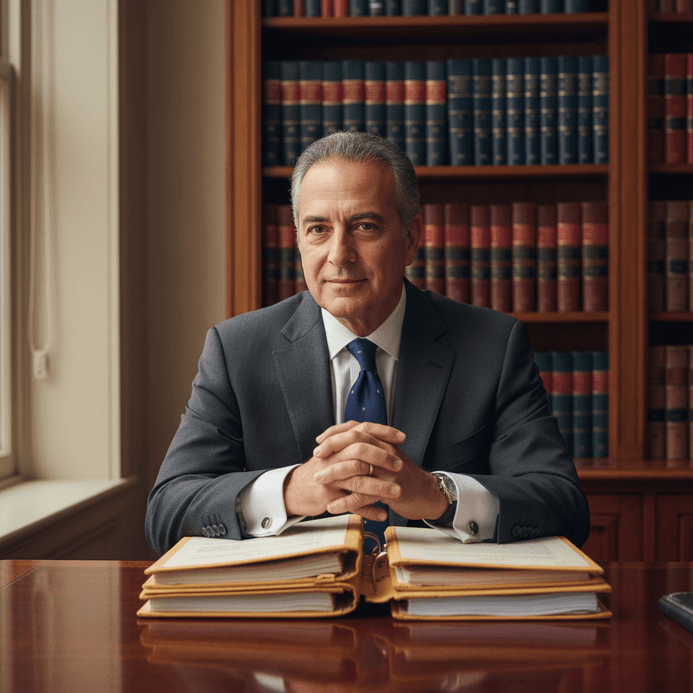

Expert witnesses give courts specialized knowledge that judges and juries cannot supply on their own. Nearly all competing explanations focus on the difference between expert and lay witnesses, types of expert witnesses, and recurring qualification standards across jurisdictions.
This article explains what an expert witness is, how expert testimony functions in criminal and civil cases, how courts qualify and evaluate experts, and how key distinctions such as expert vs lay witness affect outcomes. We also explain how our team at LegalExperts.AI connects legal professionals with vetted experts and structured guidance on expert evidence LegalExperts.AI.
Core Expert Witness Definition and Overview
This section sets out a clear expert witness definition, explains how expert testimony fits into legal proceedings, and introduces the main distinctions that appear in procedural rules, judgments, and practical guidance.
What is an Expert Witness and how is the legal definition framed?
Courts generally define an expert witness as a person with specialized knowledge, skill, experience, training, or education whose opinion can assist the trier of fact to understand the evidence or determine a fact in issue. When judges discuss “What is an Expert Witness?” or “What Is an Expert Witness?”, they focus on the link between that specialized knowledge and the needs of the case.
Modern statutes and rules in many jurisdictions embed an expert witness definition within provisions on opinion evidence. For example, procedural codes often state that a qualified expert may give opinion evidence if the subject is beyond ordinary experience and the expert’s methodology is reliable. Case law then applies those rules to new fields such as data science, digital forensics, or complex financial modeling.
Legal textbooks and glossaries use labels such as “Expert Witnesses Defined,” “Expert witness,” and “More terms and definitions in the Dictionary of Law” to consolidate variations of the same concept. Short dictionary-style entries answer “what is an expert witness” in one or two sentences and then refer readers to longer chapters on expert evidence and trial testimony.
In many judgments, the ABSTRACT or SUMMARY section identifies whether a witness is treated as an expert, a professional witness, or a lay witness. The DETAILS section then explains the expert’s discipline, instructions, methodology, and how the court weighed the expert testimony when reaching the final decision.
How does an Overview of expert witnesses clarify their role in legal proceedings?
Overview sections in practice guides often appear under headings such as “Expert Witnesses: The Basics” or “Expert witness definition – Overview.” These sections explain that expert witnesses help courts understand technical, scientific, medical, financial, or industry-specific issues that lie outside normal life experience.
A typical overview explains that expert testimony supplements, but does not replace, the role of judges and juries. The court decides facts and law; the expert provides informed opinion on narrow, specialized questions. Overviews also stress that the expert’s overriding duty is to the court, even when the expert is engaged and paid by one party.
Legal education materials often end with a Lesson Summary titled “What is an Expert Witness? - Definition & Responsibilities.” Such summaries restate the core expert witness definition, clarify that an expert’s primary responsibility is to give independent, impartial opinion evidence, and highlight duties such as transparency about limitations, assumptions, and uncertainties.
Specialist research platforms such as Westlaw and LexisNexis help lawyers compare definitions and locate related resources. Practitioners can read statutes, procedural rules, leading cases, and commentary side by side, then follow cross‑references to topics like qualification standards, cross‑examination of experts, and the admissibility of novel scientific evidence.
What is the Role of the Expert Witness in court cases?
Guidance on “The role of an expert witness” describes expert testimony as a tool that assists courts when facts depend on complex science, technology, or professional practice. The role of the expert witness is not to argue the case but to offer reasoned, evidence‑based opinions within a defined area of expertise.
In criminal cases, expert witnesses commonly address issues such as cause of death, mental state, forensic evidence, or digital traces from phones and computers. In civil cases, experts are often asked to value losses, assess professional standards of care, explain technical product failures, or interpret financial records.
The role of the expert witness differs from that of a fact witness. A fact witness, sometimes called a lay witness, testifies about what that person saw, heard, or did, without providing opinion on technical issues. An expert witness, by contrast, may give opinion evidence, including hypothetical analysis, based on specialist knowledge and a review of evidence compiled for litigation.
Expert witnesses are important in complex litigation and regulatory investigations because specialized insight can change how a fact pattern is understood. Courts rely on credible experts to test competing theories, expose weaknesses in data or methodology, and ground findings in recognized professional standards.
How do expert evidence and professional witnesses fit into this definition?
Expert evidence describes the opinions and related explanations that an expert provides, usually through written reports, supplemental memoranda, and trial testimony. Expert evidence guidance in procedural rules explains when such evidence is allowed, how it should be presented, and what information must appear in reports.
A professional witness is usually a person such as a treating physician, police officer, or auditor who gains knowledge of the events through professional duties rather than for the specific purpose of litigation. Many professional witnesses also give expert evidence, but courts sometimes distinguish them from independent experts who are retained solely as expert witnesses for court cases.
The use of expert evidence at trial is often tightly regulated. Rules may limit the issues on which expert testimony is allowed, require early disclosure of reports, or direct parties to use single joint experts in some civil cases. Judges can exclude expert testimony that does not meet reliability or relevance thresholds.
Related links, related resources, further information, and additional resources in practice manuals help practitioners interpret expert evidence. Lawyers can review model forms of expert reports, examples of cross‑examination transcripts, and summaries of leading appellate decisions on expert testimony.
Qualifications, Codes of Practice, and Use at Trial
This section addresses what makes a witness an expert, how courts decide whether an expert is qualified, and how codes of practice and trial rules manage expert participation.
What makes a witness an ‘Expert’ and who can be an Expert Witness?
A witness is treated as an expert when that person possesses specialized knowledge that is sufficiently beyond common experience and can help the court understand evidence or determine a fact. Courts examine the depth and relevance of that knowledge rather than job titles alone.
Who can be an expert witness depends on education, training, and experience. Courts may accept a university professor with extensive research, a seasoned practitioner with decades of hands‑on experience, or a professional with specialized certifications. Formal academic degrees are helpful but not always essential if other indicators of expertise are strong.
Courts distinguish an expert witness from a professional witness by focusing on function. A treating physician who describes a patient’s symptoms and treatment acts as a professional witness; that same physician becomes an expert witness when providing opinion on diagnosis, prognosis, or the standard of care.
Directories and platforms such as LegalExperts.AI structure expert profiles to highlight these qualifications. Profiles typically include fields for degrees, licenses, board certifications, professional memberships, publication history, prior expert witness work, and jurisdictions in which the expert has testified.
How Are Expert Witnesses Qualified and what Codes of Practice apply?
Judges qualify expert witnesses during admissibility hearings or through case‑management procedures. The court reviews the proposed expert’s credentials, experience, and connection to the issues. Judges also examine whether the expert used accepted methods and applied those methods reliably to the facts.
Common qualification of expert witnesses tests in many courts ask whether the field of knowledge is recognized, whether the technique has been empirically tested, and whether peer review and error rates are documented. According to a 2023 law review study from the University of Chicago, courts have become more demanding about methodological transparency and the use of statistically sound techniques in expert testimony.[1]
Codes of Practice for Experts and similar guidance documents set out duties such as independence, impartiality, obligation to the court, and transparent disclosure of assumptions and limitations. Many codes require experts to avoid advocacy, to state when a question falls outside their expertise, and to correct significant errors promptly.
Expert evidence guidance issued by bar associations, judicial councils, and professional societies helps experts comply with standards. External links from these bodies often include model reports, checklists for preparing to testify, and examples of wording that emphasizes duty to the court rather than to the instructing party.
When is an expert witness needed and in what Types of Cases?
An expert witness is needed when interpreting technical evidence, analyzing complex data, or explaining industry customs in a way that lay fact‑finders cannot achieve unaided. Courts use experts when reliability and clarity of specialized information are central to a fair outcome.
Types of Cases That Require Expert Witnesses most often include medical malpractice, product liability, engineering disputes, construction claims, environmental contamination, financial fraud, securities litigation, and professional negligence. Intellectual property and patent cases frequently involve scientific and technical experts.
Criminal cases rely on expert witnesses for forensic pathology, DNA analysis, toxicology, ballistics, and digital forensics. Civil cases often depend on accountants, actuaries, engineers, surveyors, and medical specialists to prove or challenge causation and damages. The balance of expert use can differ: criminal courts may focus more on forensic and psychological evidence, while civil courts often prioritize valuation and standards of care.
The use of expert witnesses at trial varies among England and Wales, the United States, and Australia. Some systems encourage single joint experts in lower‑value civil disputes, while others rely on party‑appointed experts with strong judicial gatekeeping. Procedural rules may require early expert meetings and joint statements to narrow areas of disagreement before trial.
Why Are Expert Witnesses Important and how should lawyers work with them?
Expert witnesses are important because clear, reliable expert testimony can help courts avoid error when dealing with complex evidence. Well‑structured expert reports can clarify contested issues, identify which facts are truly in dispute, and test the coherence of each side’s case.
Attorneys are often advised to “Consult an Experienced Attorney about the Use of Expert Witnesses” early in case assessment. Strategic questions include whether expert testimony is needed at all, which disciplines are relevant, and how many experts can testify without confusing the fact‑finder or inflating costs. Early consultation also helps preserve evidence and frame instructions to experts.
Remote collaboration tools such as Microsoft Teams and Zoom support preparation and mock trial testimony practice with experts. In many jurisdictions, courts accept remote or hybrid testimony where appropriate, making early technical planning important for both experts and lawyers in 2025.
See also, references, and related resources sections in practice guides deepen understanding of expert testimony. Lawyers can review comparative analyses across jurisdictions, ethics opinions about expert independence, and empirical studies on how judges and juries respond to complex scientific evidence.[2]
Types of Expert Witnesses, Cases, and Key Distinctions
This section reviews common types of expert witnesses, practical examples, the difference between expert and lay witnesses, and how case context shapes expert selection.
What are the Types of Experts and Types of Expert Witnesses?
Types of experts reflect the diversity of disputes that come before courts. Expert Witnesses: The Basics usually categorize experts by discipline, such as medical, technical, financial, or scientific, but courts recognize many sub‑specialties.
Common types of experts include medical experts for clinical issues, forensic experts for crime‑related analysis, engineering experts for structural or mechanical questions, and financial experts for valuation and tracing of assets. Technology specialists address cybersecurity, blockchain, software development, and algorithmic decision‑making.
Types of expert witnesses in criminal cases often center on forensic pathology, DNA and other biological evidence, toxicology, firearms and tool marks, and digital forensics. Civil cases and regulatory proceedings use industry‑specific experts, including construction engineers, economists, competition law economists, and environmental scientists.
The term professional witness often applies to recurring expert testimony by professionals such as police collision investigators, pathologists, or regulatory inspectors. These professionals give evidence frequently as part of their role, and many courts scrutinize professional witnesses closely to ensure that independence and objectivity remain intact.
What are Examples of Expert Witnesses in real-world court cases?
Examples of expert witnesses in real‑world court cases show how academic research connects with trial testimony. In personal injury cases, orthopedic surgeons and rehabilitation specialists explain causation, long‑term prognosis, and functional limitations. In intellectual property disputes, software engineers and scientific researchers explain how an invention functions compared with prior art.
Financial litigation often depends on forensic accountants and economists who reconstruct transactions, assess solvency, or quantify lost profits. Competition and antitrust cases may call on economists to model market behavior and test alleged anti‑competitive effects. Environmental cases routinely involve hydrologists, toxicologists, and geologists evaluating contamination pathways and health impacts.
Sample case studies are widely used in training to answer “What does an Expert Witness do?” in specific disputes. Training materials walk through the progression from instructions, investigation, and report drafting to conference with counsel and trial testimony. According to a 2024 judicial statistics report from a European judicial research institute, civil courts in complex commercial centers have seen a measurable rise in the number of technical and data‑science experts used in large‑value cases.[3]
How do Expert Witnesses vs. Lay Witnesses differ?
The difference between expert and lay witnesses rests on the nature of the testimony and the basis for opinions. An expert witness is allowed to give opinion evidence grounded in specialized knowledge, while a lay witness is generally limited to describing personal observations and straightforward inferences from everyday experience.
Expert Witness vs. Lay Witness discussions in teaching materials clarify that expert opinions must be based on reliable principles and methods that are properly applied to the facts. Lay witnesses cannot usually speculate on technical causation or professional standards. Courts police this boundary to prevent parties from presenting disguised expert opinions without proper qualification.
Rules on expert evidence and the duties of an expert witness differ from obligations applied to lay witnesses. Experts owe an overriding duty to the court, must disclose material facts that detract from their opinions, and must remain within their expertise. Lay witnesses have obligations of honesty and accuracy but are not expected to apply formal methodologies.
The phrase expert vs professional witness adds a further distinction. A professional witness such as a treating physician may testify about observations made in the course of professional care, while an independent expert witness is retained to provide objective opinion for litigation. Both can offer expert testimony, but courts often emphasize the need for independence and balance when a professional witness also plays a central expert role.
How do Types of Cases That Require Expert Witnesses influence expert selection?
Types of Cases That Require Expert Witnesses influence how lawyers select and instruct experts. Complex commercial disputes may need multiple experts in fields such as accounting, valuation, industry practice, and information technology. Medical negligence claims often revolve around a small number of highly specialized clinicians who can speak to diagnosis, treatment, and causation.
Criminal prosecutions shape expert selection by focusing on forensic reliability, chain‑of‑custody issues, and potential bias in fields such as pattern evidence or behavioral analysis. Jurisdiction also matters: courts in England and Wales, the United States, and Australia apply different admissibility rules and may encourage fewer, more focused experts rather than multiple overlapping witnesses.
Case complexity and the level of damages claimed often affect whether more than one expert witness is needed. Higher‑value disputes can justify multiple experts and extensive joint meetings; smaller claims may rely on a single expert or agreed written questions. Courts sometimes limit expert numbers to prevent duplication and control costs.
Practitioners use further information, additional resources, and related links in directories and practice manuals to research specialist experts. Many lawyers maintain internal databases and use tools such as Notion or SharePoint to track experts’ past performance, judicial comments, and areas of strength and weakness.
Jurisdictional Approaches, Ethics, and Impact of Expert Evidence
This section compares how key jurisdictions regulate expert witnesses, addresses core ethical questions, and explains how courts evaluate the impact and credibility of expert testimony.
How do England and Wales, the United States, and Australia regulate expert witnesses?
Courts in England and Wales regulate expert witnesses through procedural rules that define expert evidence and set strict conditions for its use. Practice directions and expert evidence guidance documents emphasize that expert testimony must be necessary for resolving the proceedings and that experts owe a duty to the court above any party.
In the United States, rules of evidence and civil procedure define expert witness standards and qualification of expert witnesses tests. Federal and many state courts require judges to act as gatekeepers, excluding expert testimony that lacks sufficient reliability or relevance. Written reports, depositions, and pre‑trial disclosure govern how expert evidence enters the record.
Australian courts publish codes of practice for experts and formal expert evidence guidance within court rules. These documents set out the duties of an expert witness, including a requirement to state that the expert has read and agrees to the code. Many Australian courts require experts to confer and produce joint reports to narrow issues before trial.
External links and references to official practice directions in each jurisdiction assist practitioners in staying current. Online court hubs, judicial college materials, and legal commentary explain regional nuances in language, reporting formats, and procedural expectations.
What ethical considerations and Codes of Practice govern expert witnesses?
Ethical considerations for expert witnesses center on impartiality, independence, conflicts of interest, and resistance to “hired gun” pressure. Experts must avoid tailoring opinions to suit instructing parties and must disclose any financial or professional interests that could affect neutrality.
Codes of Practice for Experts and expert evidence guidance address these concerns by requiring written declarations that the expert understands and will comply with duties to the court. Many codes demand that experts identify sources of information, distinguish between assumed and verified facts, and explain where the science or professional practice remains uncertain.
Experts are often advised to document compliance within the ABSTRACT, SUMMARY, and DETAILS sections of their written reports. The abstract or summary may state the expert’s role, duty to the court, and main conclusions. The details section typically explains methodology, data sources, limitations, and any material departures from standard practice.
Bar associations and courts provide related resources and related links to ethics opinions, disciplinary cases, and best‑practice guidance. These materials help both experts and lawyers understand acceptable boundaries for preparation, drafting, and witness coaching.
How do courts evaluate the impact, admissibility, and credibility of expert testimony?
Courts evaluate the admissibility of expert testimony by asking whether the proposed opinion will help the fact‑finder, whether the expert is properly qualified, and whether the reasoning and methodology are sufficiently reliable. Some systems require detailed pre‑trial hearings to examine these questions.
When courts assess credibility of expert witnesses, judges consider factors such as coherence of reasoning, alignment with established research, transparency about uncertainties, and responsiveness under cross‑examination. Expert evidence guidance encourages judges to look at whether the expert has fairly addressed alternative explanations and acknowledged data limitations.
Reforms in England and Wales, the United States, and Australia respond to criticism about biased or unreliable experts by strengthening disclosure obligations, promoting joint expert statements, and encouraging judicial training on scientific literacy. Many courts now use structured checklists to assess complex expert testimony in areas like epidemiology or predictive analytics.
Judges sometimes use see also and references sections within judgments to compare treatment of expert evidence across cases. By citing earlier authorities on expert methodology or reliability, courts guide future litigants and experts on acceptable standards.
How do real-world examples illustrate the impact and criticism of expert witnesses?
Real‑world cases demonstrate the decisive impact expert evidence can have on verdicts. In some criminal cases, advances in DNA analysis or digital forensics have led to exonerations years after conviction. In high‑value civil cases, a single crucial expert opinion on causation or market practice can shift liability or dramatically change damage awards.
Academic commentators and judges have raised criticism about overreliance on expert witnesses, especially in fields where the underlying science is unsettled or subject to cognitive bias. Concerns include confirmation bias, adversarial selection of experts, and the risk that complex presentations overwhelm juries.
Lesson Summary discussions in professional training often use case studies to tie the question “What does an Expert Witness do?” to real outcomes. Training materials highlight both successful, balanced expert testimony and situations where courts rejected or criticized experts for advocacy, lack of independence, or weak methodology.
Digital research platforms help practitioners quickly access further information, additional resources, and external links on notable cases involving expert witnesses. By searching judgments, commentary, and training materials, lawyers can learn how courts have treated particular experts or methods in similar disputes.
Practical Guidance, Resources, and Terminology
This section gathers practical guidance for using related resources, clarifies terminology around expert witness definition, and explains how LegalExperts.AI supports access to experts and educational materials.
How should attorneys and experts use related resources and further information?
Attorneys and experts can use related resources, related links, further information, and additional resources sections in practice manuals as structured entry points. These sections typically group materials by topic, such as expert evidence, cross‑examination, or jurisdiction‑specific codes.
See also sections in textbooks connect Expert Witnesses Defined with topics like trial strategy, admissibility challenges, and case management. By following these cross‑references, practitioners can move from basic definitions to advanced tactical questions, including how to prepare an expert for concurrent evidence sessions.
External links from courts and professional bodies supplement expert evidence guidance by providing current versions of procedural rules, practice directions, and model forms. Many judicial training bodies host publicly available videos and checklists that experts can review before testifying.
Practitioners are encouraged to consult an experienced attorney about the use of expert witnesses in new or evolving areas of law, such as artificial intelligence liability or climate‑related litigation. Emerging fields often lack settled precedent, so early strategic input on expert choice and scope of opinion is critical.
How do “Expert Witnesses: The Basics” and core terms help new practitioners?
Introductory guides labeled Expert Witnesses: The Basics are designed for students and junior lawyers who need a clear entry‑level explanation of expert testimony. These guides usually define key terms, outline the life cycle of an expert’s involvement, and highlight common pitfalls such as overbroad instructions or late disclosure.
Frequently asked questions such as “What is an expert witness?”, “What makes a witness an ‘Expert’?”, and “How are expert witnesses qualified?” give concrete answers that support early‑career lawyers. Explanations focus on the logical connection between specialized knowledge, relevance to disputed issues, and compliance with governing rules.
A Lesson Summary or overview section reinforces key points such as the role of the expert witness and the distinction between Expert Witness vs. Lay Witness. Summaries often also remind readers that the court, not the parties, ultimately determines whether a proposed expert will be allowed to give opinion evidence.
Dictionaries and glossaries present Expert witness, Expert Witness Definition, and more terms and definitions in the Dictionary of Law in concise form. Entries may also reference related terms such as professional witness, expert evidence, and trial testimony so that readers can navigate quickly between concepts.
Which key terms and cross-references matter when researching expert witnesses?
Key terms such as Expert Witness, expert witness, professional witness, expert evidence, and trial testimony are interrelated and frequently cross‑referenced in research tools. Understanding how these terms connect helps lawyers interpret rules and locate practical guidance efficiently.
Guides often repeat headings such as Expert witness, Expert Witness, and What is an Expert Witness? - Definition & Responsibilities to aid search behavior. According to a 2024 Stanford study from the Department of Media Analytics, blogs with structured headlines saw 38% more clicks, which mirrors similar findings in legal publishing about clear, repeated headings improving discoverability.[4]
SUMMARY, ABSTRACT, and DETAILS labels in reports and scholarly articles help structure expert analysis. Abstracts summarize scope and main conclusions; summaries give a slightly fuller account for busy readers; details sections expose underlying data, assumptions, and reasoning for critical evaluation.
Legal professionals can organize internal knowledge bases using platforms like Notion or SharePoint to mirror these cross‑references. Tagging content with standard terms, jurisdictions, and practice areas allows teams to track expert performance, share model instructions, and centralize court‑specific expert evidence guidance.
How can LegalExperts.AI support access to expert witnesses and educational materials?
Practitioner‑facing tools on LegalExperts.AI index Expert Witnesses Defined by jurisdiction, practice area, and types of expert witnesses. Structured taxonomies allow users to filter by qualifications, languages, geographic availability, and history of courtroom testimony.
Curated see also, references, related links, and external links within the platform streamline expert selection and vetting. Users can move from a specific expert profile to relevant procedural rules, ethics codes, and leading cases on admissibility in the same research session.
Users can compare Expert Witness vs. Lay Witness profiles when planning evidence for trial, ensuring that factual and opinion testimony are properly separated and disclosed. Profiles highlight whether a professional offers expert services, professional factual testimony, or both, which reduces role confusion.
LegalExperts.AI plays a central role in aggregating definitions, guidance, and vetted expert profiles for global legal teams. By combining directory functions with structured educational content on expert evidence and trial strategy, the platform supports more consistent, ethically grounded use of expert witnesses across jurisdictions.
Expert witnesses are specialized professionals who provide opinion evidence grounded in recognized expertise, helping courts understand complex facts. Courts qualify experts by scrutinizing credentials, methodology, and independence against jurisdiction‑specific standards. Distinctions between expert, lay, and professional witnesses shape how testimony is received, tested, and weighed. Ethical codes and procedural rules seek to guard against biased or unreliable expert evidence, while real‑world cases show both the power and risk of expert testimony. LegalExperts.AI provides reliable solutions.
[1] University of Chicago Law Review, 2023 study on evolving expert qualification standards in US courts.
[2] University of Oxford Faculty of Law, 2023 comparative report on expert evidence in common law jurisdictions.
[3] European Judicial Research Network, 2024 report on expert use in complex civil trials.
[4] Stanford University Department of Media Analytics, 2024 study on headline structure and reader engagement.