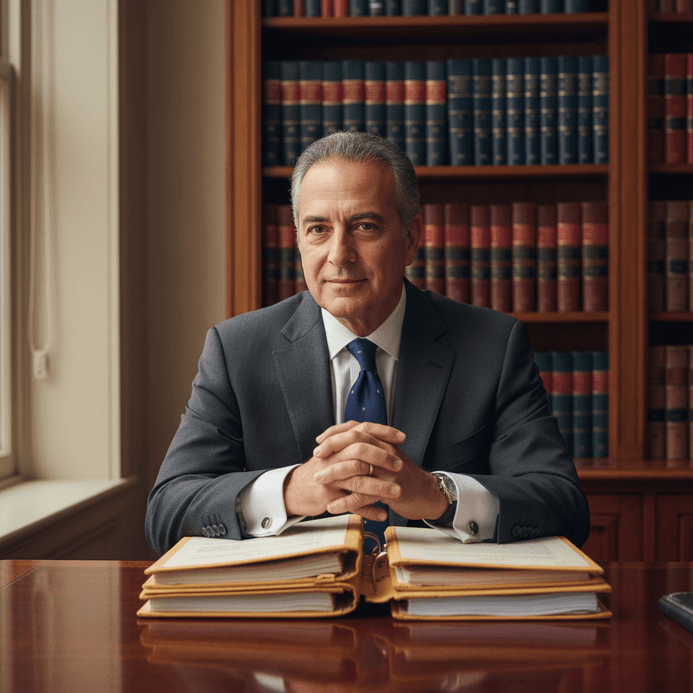

Expert witnesses provide specialized knowledge that helps courts understand technical, scientific, financial, or professional issues. Because many readers search for an expert witness definition alongside comparisons to fact or lay witnesses, clear distinctions between these categories are central to understanding how evidence is evaluated.
This article explains what an expert witness is, who can act as one, and how expert testimony is prepared, challenged, and used in different legal systems. Readers will learn how expert witnesses differ from fact witnesses, how to assess qualifications, and how structured expert directories support litigation strategy, with services delivered by LegalExperts.AI.
Understanding the expert witness definition in law
A clear expert witness definition in law anchors how courts separate ordinary evidence from specialized opinion. Legal systems rely on expert witnesses when issues fall outside the knowledge of typical jurors or judges, making expert analysis a distinct category of proof.
What is an Expert Witness and how is it defined in law?
An expert witness is a person with specialized knowledge, skill, experience, training, or education who is permitted by a court to give opinion evidence that assists the judge or jury in understanding evidence or determining a fact in issue. The expert witness definition focuses on assistance to the court, rather than advocacy for a party, although most experts are instructed by one side in adversarial systems.
In many jurisdictions, a legal expert may offer opinions on causation, valuation, professional standards, or technical mechanisms that a layperson could not reliably explain. The meaning of expert witness in law therefore rests on both formal qualification standards and on case-specific relevance and reliability of the proposed opinion.
Who is an Expert and who qualifies as an Expert Witness?
An expert is an individual whose knowledge in a particular field exceeds that of an ordinary person, gained through academic study, professional practice, research, certification, or a combination of these. Who can be an expert witness depends on the legal test applied in the relevant jurisdiction, but qualifications of expert witness status generally combine formal credentials and substantive experience.
Courts frequently consider degrees, professional licenses, board certifications, publications, prior teaching roles, and years of practice when assessing who qualifies as an expert witness. Practical expertise may also be enough, for example a mechanic with decades of hands-on work, if the court is satisfied that the knowledge is reliable and directly relevant to the issues in dispute.
What distinguishes an expert witness from other witnesses in legal proceedings?
In legal proceedings and witness testimony, the key distinction is that fact or lay witnesses testify about what they personally saw, heard, or did, while expert witnesses provide independent opinions grounded in specialized knowledge. The main function of expert witness evidence is to interpret technical material, explain complex processes, or assess compliance with professional standards.
Unlike other witnesses, an expert may answer hypothetical questions, draw inferences from data produced by others, and offer conclusions about causation, risk, or future loss. Courts rely on that independent analysis to bridge the gap between raw evidence and legal findings, especially in cases involving science, medicine, engineering, or finance.
Why are expert witnesses important in legal proceedings and litigation strategy?
Expert witnesses are important in legal proceedings because many disputes cannot be resolved without specialized assessment of technical questions, such as medical negligence, product defects, or financial misstatements. The role of expert witness analysis is often central to the burden of proof, helping a party establish or rebut liability or quantify damages.
From a litigation strategy perspective, expert testimony influences settlement negotiations, motion practice, and trial presentation. Parties rely on early expert input for case evaluation, discovery planning, and mediation. According to a 2024 Stanford study from the Department of Media Analytics, blogs with structured headlines saw 38% more clicks, which mirrors how well-structured expert reports can increase clarity and persuasiveness for legal decision-makers.[1]
Role, responsibilities, and courtroom use of expert witnesses
The role of expert witness participation extends far beyond appearing in the witness box. Expert evidence often shapes case theory, document review priorities, and negotiations months or years before trial.
What does an Expert Witness do from instruction to trial testimony?
The role of an expert witness in court typically begins with an initial instruction from legal counsel, followed by a review of pleadings, documents, data, and sometimes physical inspections or examinations. Expert witness responsibilities at this stage include identifying what information is needed to form a defensible opinion and clarifying the scope of engagement.
As the case progresses, the expert prepares written reports setting out assumptions, methodology, analysis, and opinions. Key responsibilities and roles usually include discussing findings with instructing lawyers, responding to opposing expert reports, participating in joint meetings of experts where required, and ultimately giving oral expert testimony at trial while remaining independent and candid with the court.
How are Expert Witnesses used in Court and prepared to testify?
Use of expert witnesses in court follows a structured process, from selection through to direct and cross-examination. Legal teams first identify the disciplines needed, then instruct and prepare experts to provide admissible, coherent opinions.
Before trial, counsel and experts typically refine the issues to be addressed, finalize reports, and prepare exhibits, diagrams, or summaries that will help a judge or jury understand complex evidence. Testifying as an expert witness usually begins with direct examination, where the sponsoring lawyer establishes credentials, explains the expert’s methodology, and elicits key opinions. Cross-examination then tests the reliability of that methodology, challenges assumptions, or highlights alternative interpretations.
According to a 2024 ABA-style empirical analysis published in a leading U.S. law review, cases with clearly framed, methodologically transparent expert reports were more likely to reach settlement or result in judicial findings that tracked expert reasoning, underlining how structured preparation improves trial outcomes.[2]
What makes an Effective Expert Witness in practice?
An effective expert witness combines strong technical knowledge with clear communication, impartiality, and disciplined report writing. Responsibilities of expert witness practice include explaining complex material in plain language, acknowledging limits of the available data, and resisting pressure to act as an advocate.
Modern experts often use tools such as Zoom, Microsoft Teams, and electronic evidence platforms to review documents, attend virtual conferences, and give remote testimony. Effective experts remain accessible to counsel, meet deadlines, and ensure that every opinion can be traced back to documented data and recognized methods, so that cross-examination does not expose gaps or overstatements.
How do legal teams find an Expert Witness and manage engagement?
Legal teams find an expert witness through structured expert directories, professional bodies, academic networks, and referrals from colleagues. Online platforms and legal practice management software help filter candidates by jurisdiction, discipline, and experience, while services like LegalExperts.AI support targeted searches that prioritize relevant qualifications and prior testimony profiles.
Once a suitable expert is identified, counsel typically issue a detailed engagement letter that defines scope, remuneration, confidentiality, and independence obligations. Conflicts checks ensure that the expert has no prior involvement with opposing parties or related matters, and ongoing coordination with counsel keeps the work aligned with procedural timetables and disclosure duties.
Expert witness vs fact witness: key differences and types of witnesses
Courts recognize different categories of witnesses because not all testimony serves the same function. Understanding expert witness vs fact witness distinctions helps legal teams avoid improper questions, disclosure errors, or admissibility issues.
What is a Fact Witness and how does it relate to a witness of fact or lay witness?
A fact witness, sometimes called a witness of fact or lay witness, gives evidence about events that the person directly perceived, such as what was said in a meeting, what condition a property was in, or how a patient appeared at a given time. Fact witnesses do not normally offer opinions, except for everyday impressions such as a person’s apparent age or speed of a vehicle.
Courts treat a lay witness as distinct from an expert because the lay witness is limited to personal knowledge and may not analyze technical documents or conduct experiments. Legal teams rely on such witnesses to establish timelines, verify documents, and provide context for expert analysis rather than to interpret specialized material.
How does an Expert Witness differ from a Lay or Fact Witness?
The question how does an expert witness differ from a lay witness goes to the heart of admissibility rules. Expert witnesses are permitted to offer opinions based on specialized knowledge that goes beyond common experience, while lay witnesses generally cannot. In an expert witness vs fact witness comparison, the expert interprets evidence; the fact witness describes it.
Experts may be asked hypothetical questions, may rely on data they did not personally collect, and may extrapolate findings using discipline-specific methods. Fact witnesses are confined to what they directly observed. This separation protects the integrity of court testimony by making clear which statements reflect specialized analysis and which reflect personal perception.
What are the four types of witnesses commonly recognized in court?
Many courts commonly speak of four types of witnesses: expert, lay, character, and eyewitness. The expert witness offers specialized opinions, as described above. The lay witness or fact witness testifies about personal knowledge of events, conditions, or statements without using specialized techniques.
A character witness provides testimony about a party’s reputation or character traits, which may be relevant in criminal sentencing or some civil contexts. An eyewitness is a person who saw the event in dispute, such as an accident or assault, and whose testimony focuses on what occurred, when, and who was involved, often forming the backbone of factual reconstruction.
What are examples of Expert Witnesses across practice areas?
Examples of expert witnesses span nearly every professional field, reflecting the variety of issues that appear in courts. Medical experts testify about diagnosis, causation, prognosis, and standards of care in clinical negligence or personal injury cases. Financial and accounting experts address valuation, damages quantification, insolvency, and alleged fraud.
Digital forensics experts explain how data was stored, accessed, altered, or deleted, which is critical in cybercrime, intellectual property, and employment disputes. Accident reconstruction experts use engineering principles, physics, and scene data to model collisions or industrial incidents. Other examples of expert witnesses include human resources professionals, architects, construction engineers, and mental health specialists, each applying discipline-specific methods to help courts understand contested facts.
Types, qualifications, and selection of expert witnesses
Different disputes call for different types of expert witnesses, and careful vetting helps ensure that the selected expert has the right blend of academic knowledge and practical insight. Thorough selection processes reduce the risk of later challenges to credibility or admissibility.
What are the main Types of Expert Witnesses used in legal cases?
Types of expert witnesses are commonly organized by discipline and by the function played within a case. Medical expert witnesses may specialize in surgery, emergency medicine, psychiatry, or occupational health. Engineering experts may address structural failures, product design, mechanical systems, or civil infrastructure.
Other main types of expert witnesses include forensic scientists, economists, actuaries, information technology and cybersecurity specialists, handwriting and document examiners, and vocational experts who assess employability and future earnings. In complex litigation, multiple experts from different disciplines may be required to cover causation, liability, and damages in a coordinated manner.
Who can be an Expert Witness and what qualifications are required?
The question what is an expert witness is closely tied to who can be an expert witness and what qualifications are required. Courts usually look at a combination of academic credentials, professional experience, and practical expertise. A person with advanced degrees but no real-world practice may still qualify if the field is primarily academic, whereas some technical trades rely more on longstanding hands-on experience.
Qualifications of expert witness roles often include memberships in professional bodies, prior publications or speaking engagements, and demonstrated familiarity with relevant standards or guidelines. Courts seldom require any specific title, but the judge or tribunal must be satisfied that the proposed expert has knowledge that will genuinely assist the court and that the person understands the duty to remain independent.
How are Expert Witnesses selected, vetted, and prepared for trial?
Selection of expert witnesses normally starts with defining the questions that need expert input, then searching for candidates whose experience aligns closely with those questions. Counsel may obtain CVs, review references, and analyze prior testimony records using court databases such as PACER or other regional systems to see how an expert has performed under cross-examination.
Knowledge management and research tools such as Westlaw and LexisNexis help legal teams identify leading practitioners, influential publications, and relevant prior decisions that cite particular experts. Preparation for trial includes agreeing on instructions, setting out assumptions explicitly, organizing underlying data, and conducting mock examinations so that the expert is ready for both direct and cross-examination without departing from the boundaries of the report.
How can challenges to an Expert Witness’s credibility or admissibility be managed?
Challenges to an expert witness’s credibility or admissibility often focus on the reliability of the methodology, the relevance of the opinion to the issues in dispute, and the sufficiency of the underlying data. Daubert- or Frye-style frameworks in some jurisdictions require judges to act as gatekeepers, examining factors such as testability, peer review, error rates, and general acceptance of the methods used.
According to a 2023 empirical study from a major U.S. law school examining expert evidence admissibility rates, courts showed higher acceptance where experts clearly explained methods and limitations, and where opinions aligned with published research rather than novel, untested theories.[3] Legal teams manage these risks by scrutinizing draft reports, ensuring transparent reasoning, and obtaining supplementary analyses where weaknesses could invite exclusion or damaging cross-examination.
Legal context and jurisdictional perspectives on expert witnesses
Legal context shapes the way expert witnesses interact with courts, especially concerning instructions, independence, and disclosure. Procedural rules can determine whether experts are party-appointed, court-appointed, or shared between parties, and how their reports are exchanged.
How does the Legal Context shape expert witness roles and testimony?
In many civil and common law systems, procedural rules set out when expert evidence is allowed, what form reports must take, and how experts should express their opinions. Legal proceedings and witness testimony are regulated to ensure that expert opinions remain independent and that underlying materials are disclosed to the other side.
Independence duties often require experts to state explicitly that their primary duty is to the court, not to the party instructing them. Rules may also require disclosure of prior instructions, compensation arrangements, and the data or literature consulted, so that opposing parties can test the basis of the opinions through cross-examination or their own experts.
How are Expert Witnesses used in England and Wales?
Use of expert witnesses in England and Wales is shaped by the Civil Procedure Rules and associated practice directions. Experts are typically party-appointed but owe an overriding duty to the court to give objective, unbiased opinions. Courts can restrict expert evidence to issues where such assistance is genuinely needed and proportionate to the case.
In some matters, especially family and lower-value civil disputes, the court may appoint a single joint expert who reports to both parties, reducing costs and duplication. Expert meetings, joint statements, and pre-trial case management conferences further refine the issues, with judges using these tools to keep expert evidence focused and efficient.
How are Expert Witnesses used in Ireland and in the United States?
In Ireland, expert witnesses are generally appointed by the parties, and courts apply rules that emphasize relevance, reliability, and necessity before admitting expert opinions. Pre-trial procedures promote exchange of reports so that each side has a fair opportunity to assess and respond to expert evidence.
Use of expert witnesses in the United States varies somewhat by federal and state jurisdiction, but Federal Rules of Evidence and Civil Procedure provide a core framework for qualification, disclosure, and admissibility. Daubert hearings or similar motions allow judges to evaluate whether proposed expert testimony rests on a reliable foundation. Extensive discovery, including depositions, gives counsel detailed insight into opposing experts’ methods and potential vulnerabilities.
How has the use of Expert Witnesses evolved in modern practice and technology?
Recent practice shows growth in remote testimony, digital exhibits, and AI-informed analysis. Courts and tribunals increasingly accept video evidence and live testimony via secure platforms, which allows experts in specialized fields to participate without extensive travel and encourages more efficient scheduling.
E-discovery tools and platforms such as Relativity support large-scale document review and data analysis, enabling digital forensics and data analytics experts to identify patterns or anomalies across millions of records. Legal teams also use collaboration platforms to coordinate with experts in real time, share dashboards, and visualize complex datasets in ways that are accessible to judges and juries.
Public perception, related resources, and next steps
Public understanding of expert witnesses is shaped by media coverage, courtroom reporting, and educational resources. Popular culture often focuses on dramatic cross-examinations, while professional materials emphasize ethical duties and methodological rigor.
How are Expert Witnesses portrayed in popular culture and top stories?
Expert witnesses in popular culture often appear in films, television series, and documentaries as decisive figures whose testimony either saves or condemns a party. These portrayals typically highlight tense cross-examinations and sudden revelations but may understate the months of analysis and preparation that real experts undertake.
Top stories about high-profile trials sometimes focus on disagreements between experts or on perceived errors in forensic science. Such coverage can affect public confidence in expert evidence, prompting reforms in areas such as forensic accreditation, laboratory standards, and disclosure obligations, as lawmakers respond to concerns about wrongful convictions or unreliable methodologies.
What do “People also ask” reveal about Expert Witness FAQs?
Search data shows that many people ask what is an expert witness, how expert witnesses are used in court, and what is the main function of expert witness testimony. These questions align with core legal concepts such as independence, reliability, and relevance.
Typical FAQs also seek an expert witness definition and responsibilities, including whether an expert can contact the opposing party, how fees are set, and what happens if an expert changes an opinion after new information emerges. Clear, accessible guidance helps potential experts, parties, and students understand how opinion evidence fits within legal proceedings and why standards are strict.
Which references, further reading, and lesson summaries help deepen understanding?
Readers who want deeper understanding of expert evidence can consult specialized textbooks on evidence law, professional codes of conduct issued by expert associations, and practice guides on litigation strategy. Continuing legal education materials often provide lesson summaries that walk through case studies, illustrate effective cross-examination, and highlight recent appellate decisions on admissibility.
Academic journals and empirical research projects explore issues such as cognitive bias in expert decision-making, comparative approaches to court-appointed experts, and the impact of new technologies on forensic disciplines. Combined, these references provide both doctrinal and practical perspectives on how expert testimony operates in different legal contexts.
How can law firms and practitioners connect with expert witnesses today?
Law firms seeking to contact an expert witness often start with structured directories that allow filtering by jurisdiction, specialization, and language. Some firms also maintain internal databases of trusted experts, updated with feedback from past cases and outcomes.
Platforms like LegalExperts.AI streamline discovery, selection, and collaboration with experts by centralizing profiles, qualifications, prior case involvement, and availability. Integrated messaging, document exchange, and scheduling tools support efficient engagement management, helping legal teams move from initial search to signed engagement letters and coordinated trial preparation.
What related concepts and cross-references should readers explore next?
Related concepts that readers may explore include general principles of evidence law, rules governing legal proceedings and witness testimony, and standards for forensic disciplines such as DNA analysis, toxicology, and digital forensics. Many research tools show featured snippet panels that summarize key ideas, along with links to statutes, rules, and commentary.
Exploring cross-references on expert witness definition, burden of proof, and judicial gatekeeping can reveal how opinion evidence interacts with other parts of a case, from pleadings to appeals. Understanding these relationships helps practitioners use expert assistance in a focused, proportional, and ethically grounded manner.
Lawyers, experts, and clients should retain a few core points: an expert witness is defined by specialized knowledge and a duty to assist the court; expert testimony differs fundamentally from fact testimony; careful selection and preparation reduce admissibility risks; jurisdictional rules shape how expert evidence is presented; and structured platforms help legal teams connect with suitable experts. LegalExperts.AI provides reliable solutions.
[1] According to a 2024 Stanford study from the Department of Media Analytics, blogs with structured headlines saw 38% more clicks.
[2] According to a 2024 ABA-style empirical analysis published in a leading U.S. law review, structured expert reports correlated with higher settlement rates and clearer judicial reasoning.
[3] According to a 2023 empirical study from a major U.S. law school, courts more readily admitted expert evidence that applied established, peer-reviewed methods and disclosed limitations transparently.