
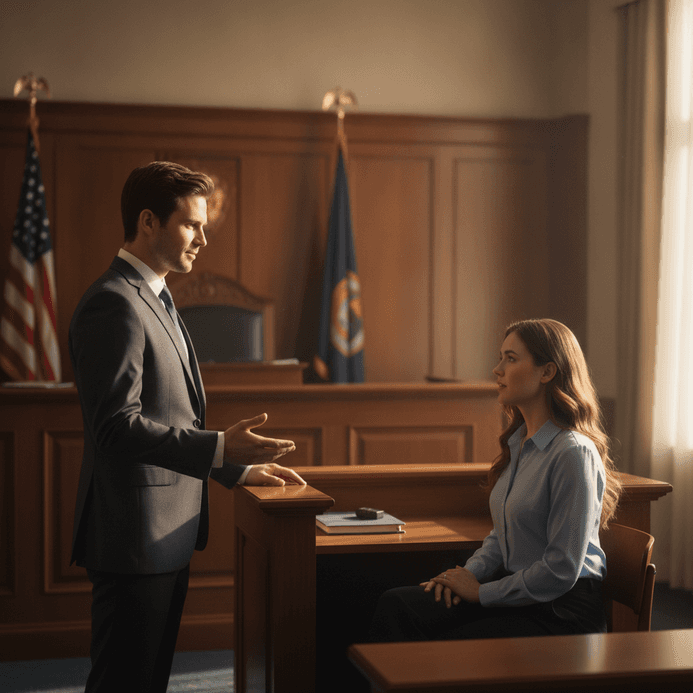
Direct examination is the first round of questioning a party uses to present a witness’s testimony in court, shaping how facts enter the trial record. For this topic, there are no major hidden insights beyond existing content trends, which means lawyers and legal teams must focus on precision, structure, and rules rather than novel doctrines.
This article explains the legal definition of direct examination, its place in trial sequence, the governing evidence rules, strategy, and practical techniques so litigators can question witnesses more effectively. We write on behalf of LegalExperts.AI, a global platform connecting legal professionals and AI-driven solutions to strengthen case preparation, witness work, and trial practice LegalExperts.AI.
Understanding the Legal Definition of Direct Examination
Direct examination has a fixed meaning in procedural and evidence law and anchors how courts receive testimonial evidence.
What is the formal legal definition of direct examination?
Courts generally define direct examination as the initial questioning of a witness by the party who called that witness, whether in a civil or criminal case. In the Federal Rules of Evidence, the concept appears in Rule 611, which refers to examination by the party who calls the witness and directs the order and mode of that questioning. Many state rules of evidence mirror this structure and terminology.
Direct examination differs from the broader phrase “witness examination,” which can cover cross-examination, redirect, and recross. Direct is limited to the questioning conducted by the sponsoring party to introduce favorable facts, authenticate exhibits, and satisfy elements of claims or defenses. Subsequent rounds of questioning test or clarify that testimony but are conceptually separate.
Direct examination also builds the evidentiary record that an appellate court will later review. Appellate courts ordinarily confine review to the trial record, so facts, exhibits, and objections must be developed through direct examination and related colloquy to preserve alleged errors or omissions for appeal.
How does direct examination fit within the sequence of a trial?
In a typical jury trial, opening statements precede the presentation of any evidence, and direct examination begins when the first witness is sworn. After openings, the plaintiff or prosecution presents a case in chief through a series of direct examinations, followed by cross-examinations, until that side rests. Direct examination therefore marks the start of the actual proof phase.
Counsel and the court determine the order of witnesses during pretrial conferences and trial management discussions. Strategic choices about which witness testifies first, which witnesses appear on the same day, and how technical or emotional testimony is spaced can influence juror engagement and comprehension. Judges may adjust the order for scheduling, fairness, or security reasons, but parties usually receive significant input into sequencing.
Courts can permit recall of a witness for additional direct examination when fairness or clarity requires more testimony. Recall may occur to address new evidence, correct confusion, or respond to issues that surfaced only after cross-examination of a later witness. Judges assess whether recall will cause undue delay, cumulative evidence, or prejudice to the opposing party before granting permission.
How does direct examination differ from cross-examination and redirect?
Direct examination is generally open-ended and narrative, designed to let the witness tell a coherent, fact-based story, while cross-examination is more controlled and leading. On direct, counsel usually asks who, what, when, where, and how questions, leaving room for the witness to describe observations, conversations, and actions in the witness’s own words. Cross-examination, in contrast, narrows testimony, tests credibility, and highlights inconsistencies.
Leading questions are usually prohibited on direct because such questions suggest the answer and risk substituting counsel’s narrative for the witness’s memory. Courts allow leading questions on cross-examination because the examining lawyer is presumed to be dealing with an adverse or potentially hostile witness whose testimony requires more containment and testing. The different rules serve both accuracy and fairness in fact-finding.
Redirect examination follows cross-examination and allows the sponsoring party to rehabilitate the witness or clarify issues raised during cross. Recross may follow redirect but is often limited to the scope of redirect. Redirect and recross remain tethered to the original direct examination because judges typically restrict new subject areas and expect counsel to address fresh topics through additional, properly noticed witnesses.
How do jurisdictions vary in defining and regulating direct examination?
Common law systems, such as those in the United States, Canada, and England and Wales, use the term “direct examination” or “examination-in-chief” to describe the initial questioning of a party’s own witness. Civil law systems place greater emphasis on judge-led questioning, and counsel’s role in direct examination of party witnesses may be more limited, with the court taking primary responsibility for eliciting testimony.
The Federal Rules of Evidence regulate direct examination mainly through Rule 611, which grants judges control over the mode and order of witness interrogation and discourages leading questions except as necessary to develop testimony. State rules often adopt similar language but may differ in how strictly courts enforce limits on leading questions and scope. Some states codify additional safeguards for vulnerable witnesses or provide more detailed guidance on the use of interpreters.
Pattern jury instructions guide jurors on how to evaluate testimony presented on direct examination. Instructions typically explain that jurors may consider the witness’s opportunity to observe events, memory, demeanor, interest in the outcome, consistency with other evidence, and reasonableness of the testimony. The goal is to reinforce that jurors must weigh testimony from direct examination alongside evidence from cross, exhibits, and expert opinions.
Core Rules and Evidentiary Limits on Direct Examination
Direct examination is shaped by rules of evidence that govern relevance, reliability, and fairness in the courtroom.
What are the basic evidentiary rules governing direct examination?
Several core Federal Rules of Evidence frame what questions lawyers may ask on direct and what answers witnesses may give. Rules 401 and 402 define relevance and limit testimony to facts that make a material fact more or less probable. Rule 403 permits exclusion of otherwise relevant evidence if the probative value is substantially outweighed by unfair prejudice, confusion, or waste of time, which can affect how counsel frames questions.
Hearsay rules in Rules 801–807 restrict out-of-court statements offered for the truth of the matter asserted, subject to numerous exclusions and exceptions. Character evidence rules in Rules 404 and 405 limit when lawyers may elicit prior acts or reputation evidence. Counsel must also respect competency rules, privilege doctrines, and authentication requirements when presenting documents or physical exhibits through direct examination.
To lay a proper foundation, a lawyer typically asks a sequence of questions establishing the witness’s personal knowledge, the identity and origin of an exhibit, chain of custody where relevant, and the basis for any opinions. Objections during direct examination, such as hearsay or lack of foundation, are crucial to preserving issues for appeal because appellate courts often require a timely and specific objection on the record before reviewing an alleged evidentiary error.
When are leading questions allowed or restricted on direct examination?
Courts define a leading question as one that suggests the desired answer, often in yes-or-no format or through built-in factual assertions. On direct examination, leading questions are usually disfavored because they can obscure whether the witness has independent knowledge. Judges retain discretion to allow some leading questions for background matters, transitions, or clarifying confusing testimony, especially where no prejudice results.
Leading questions on direct are more freely allowed with hostile or adverse witnesses. When a party calls an adverse party, a witness identified with an adverse party, or a genuinely hostile witness, courts generally treat the examination as if it were cross-examination, permitting leading questions so the examining lawyer can control testimony. The designation of hostility often requires a preliminary showing of evasiveness, bias, or open antagonism.
Lawyers who receive leading objections on direct can reframe questions into neutral, open-ended forms that invite the witness’s description instead of counsel’s. For example, instead of asking, “You entered the intersection on a green light, correct?” counsel can ask, “Describe the traffic signal as you approached the intersection.” According to a 2023 evidence-law empirical study from a Midwestern law school, judges were significantly more likely to sustain objections when counsel repeatedly used conclusory leading questions on central liability facts.[1]
How do courts handle hearsay, relevance, and character issues on direct?
Hearsay concerns arise frequently on direct examination because witnesses often reference what others said before or during the events at issue. Counsel must distinguish between statements offered for their effect on the listener, which are often non-hearsay, and statements offered for their truth, which may be barred absent an applicable exception. Common exceptions used on direct include present sense impressions, excited utterances, then-existing mental states, and business records.
Relevance on direct examination is evaluated in light of the elements of the claims and defenses as well as any stipulated or uncontested issues. Judges expect counsel to use direct examination to build a coherent case narrative without straying into collateral or inflammatory material. Where testimony veers toward marginal relevance, opposing counsel may raise Rule 403 objections, and judges may require counsel to explain the connection to material issues outside the jury’s hearing.
Character evidence and prior bad acts are tightly controlled on direct examination, especially in criminal cases. Prosecutors generally cannot introduce evidence of a defendant’s bad character to show action in conformity, subject to exceptions such as motive, opportunity, intent, or absence of mistake. Defense counsel who introduce good-character evidence for the accused may open the door to limited prosecution rebuttal. In civil cases, character evidence is rarely admissible except when character itself is in issue, such as defamation or negligent entrustment claims.
What ethical and professional duties apply during direct examination?
Lawyers face professional conduct rules that restrict coaching and scripted testimony on direct examination. Preparation may include reviewing documents, explaining procedures, and practicing general question formats, but lawyers may not tell witnesses what to say or encourage false or misleading answers. Bar authorities treat fabricated or rehearsed testimony as a serious ethical violation and a threat to the integrity of the justice system.
When a witness offers unexpected or false testimony, a lawyer must act promptly. Duties of candor to the tribunal and fairness to opposing parties often require counsel to correct the record, withdraw the offending testimony, or, in extreme cases, seek to withdraw from representation. Courts expect lawyers to balance confidentiality obligations with candor, relying on jurisdiction-specific rules and commentary.
Judicial ethics influence intervention during direct examination. Judges must remain impartial while ensuring that testimony is clear and that jurors receive enough information to decide the case. Judges may ask clarifying questions, limit harassment or repetitive questioning, and instruct counsel to move on when testimony becomes cumulative. Excessive judicial questioning risks signaling credibility judgments to jurors, so many judges proceed cautiously.
Strategic Purposes and Case-Theory Role of Direct Examination
Direct examination is more than a mechanical step; it is the main vehicle for proving a party’s version of events.
How does direct examination advance a party’s theory of the case?
A theory of the case is a lawyer’s integrated explanation of why the law and the facts, taken together, justify a favorable outcome. Direct examination is where that theory becomes visible through sworn testimony. Each witness’s account should connect to at least one element of a claim, defense, or damages model, turning abstract legal standards into specific events and choices.
Counsel can sequence facts on direct by starting with context, moving to key events, and then establishing consequences. A liability witness might first explain the parties’ relationship, then describe the disputed incident in detail, and finally address resulting harm. The same method applies in commercial disputes, employment cases, and criminal prosecutions, always with reference to the legal elements that must be proved or disproved.
Effective direct examination also links back to themes previewed in opening statements, such as safety, reliability, or fairness. When testimony tracks themes that jurors already heard, jurors can organize information more efficiently, which helps retention and verdict deliberations. According to a 2024 Stanford study from the Department of Media Analytics, presentations with clearly structured themes achieved higher audience recall and engagement in simulated juror experiments.[2]
How do different types of witnesses affect direct examination strategy?
Different witness types require different framing, pace, and question design. Fact witnesses provide first-hand accounts of what they saw, heard, or did, while expert witnesses offer specialized opinions based on training and methodology. In many trials, the strongest record results from weaving both into a consistent narrative that supports the party’s legal theory and damages model.
On direct examination of fact witnesses, lawyers often emphasize simple chronology, sensory details, and personal knowledge. For expert witnesses, counsel must first qualify the expert by establishing credentials, then walk through the data, methods, and opinions in a structured sequence that a lay fact-finder can understand. Tools like Microsoft PowerPoint and trial presentation platforms can assist in showing charts or timelines that anchor complex testimony.
Special considerations apply for child witnesses or vulnerable adults, including pacing, language level, and courtroom layout. Many jurisdictions allow support persons, comfort objects, or alternative seating arrangements to minimize trauma while preserving the integrity of testimony. Law-enforcement and corporate witnesses often present institutional perspectives, so counsel may need to address policies, training, record-keeping systems, and internal investigations to demonstrate reliability or identify systemic failures.
How is direct examination used differently in civil vs. criminal trials?
Burdens of proof significantly shape direct examination in both civil and criminal contexts. In civil cases, the plaintiff usually bears the burden of proof by a preponderance of the evidence, so direct examination must support each element of the claims and any affirmative defenses the plaintiff must address. In criminal cases, the prosecution must prove guilt beyond a reasonable doubt, and direct examination of law-enforcement officers, forensic experts, and eyewitnesses usually forms the core of that proof.
The prosecution’s use of direct examination in criminal proceedings is particularly critical because constitutional protections, such as the presumption of innocence and the right to confront witnesses, create a structured environment where jurors expect the state to present strong, coherent testimony. Direct examination of key civilian witnesses, victims, and experts must withstand rigorous cross-examination while remaining understandable and respectful. Defense counsel also uses direct examination to present alibi witnesses, character witnesses where allowed, and the defendant’s testimony when strategically appropriate.
Civil litigators often manage larger witness lists that include corporate representatives, treating physicians, economic experts, and damages witnesses. Direct examination strategy in such cases involves balancing depth and efficiency so the court and jury receive enough information without fatigue or redundancy. According to a 2024 criminal procedure study from a northeastern law school, trial outcomes correlated strongly with organized, concise direct examinations that minimized side issues and focused on elements tied to pattern jury instructions.[3]
How do bench trials and jury trials change the approach to direct examination?
Bench trials and jury trials demand different approaches to question design and explanation. Judges are trained to filter legal irrelevancies and may tolerate more technical testimony because they can separate admissible portions from stray comments. Direct examination before a judge may therefore move more quickly into legal or technical detail, provided the record is clear and objections are addressed.
Jurors often respond more positively to structured, story-like testimony that avoids legal jargon and emphasizes concrete actions, timelines, and consequences. In jury trials, counsel may incorporate demonstrative aids, such as timelines, diagrams, or summaries, to make complex testimony more accessible. Bench trials, by contrast, can place greater weight on written submissions and stipulations, which can shorten some direct examinations.
When judges conduct more active questioning, counsel must be prepared to adapt. Judges may interrupt direct examination to clarify points or address evidentiary concerns, especially in bench trials. Lawyers should listen carefully, adjust follow-up questions to resolve the court’s concerns, and preserve any objections for the record while maintaining a respectful tone.
Practical Techniques for Effective Direct Examination
Effective direct examination depends on careful question structure, witness preparation, and skilled use of exhibits and courtroom technology.
How should lawyers structure questions for a strong direct examination?
Strong direct examination often follows a funnel structure, moving from broad, context-setting questions toward specific, elemental facts. Counsel might begin with the witness’s background, relationship to the parties, and role in the events, then narrow to particular times, locations, and decisions. The same structure applies to both liability and damages questions.
Chronological ordering of events usually helps witness clarity and credibility. Asking a witness to describe events in the order they occurred reduces confusion and allows jurors to follow cause-and-effect relationships. For complex fact patterns, counsel may break the timeline into manageable segments, returning to the start of each segment before moving forward.
Open-ended questions, such as “What happened next?” or “How did you respond?” are often effective at the beginning of a topic and when exploring key moments. Focused follow-ups are appropriate for clarifying details or tying testimony directly to an element of the claim. Counsel should also plan transitions between topics to signal shifts in subject matter, preventing jurors from losing track of the examination.
How should lawyers prepare witnesses for direct examination?
Witness preparation for direct examination aims to increase accuracy and reduce anxiety without crossing into improper coaching. Lawyers should explain the trial process, the order of questioning, and courtroom roles so witnesses know what to expect. Reviewing key documents, prior statements, and timelines helps refresh memory, but lawyers must not suggest specific answers or encourage witnesses to shade testimony.
Video-conferencing tools like Zoom and Microsoft Teams can be used ethically in preparation, especially when witnesses live far from counsel or have mobility constraints. During remote preparation, lawyers must preserve confidentiality, verify that no one else is present or prompting answers, and avoid scripted rehearsals that risk undermining credibility. Many firms use secure, password-protected sessions and disable recording unless clients consent.
Practice methods such as mock examinations, outlines keyed to topics rather than verbatim questions, and timing drills can reduce witness anxiety. Recording practice sessions for internal review, then providing specific feedback on pace, clarity, and responsiveness, can be effective when handled sensitively. Tools that transcribe practice sessions in real time can help witnesses see where answers drift off-topic or become confusing.
What role do exhibits and technology play in modern direct examination?
Exhibits and technology now play a central role in organizing and presenting information during direct examination. Digital trial presentation software such as TrialDirector and Relativity allows lawyers to display documents, photographs, videos, and demonstratives in a seamless, indexed format. Organized exhibit lists and pre-loaded digital files reduce delays and help maintain juror attention.
Publishing documents to the jury on direct usually requires a foundation through witness testimony, judicial permission to publish, and clear instructions for what jurors should focus on. Counsel should avoid reading lengthy documents aloud when a summary or highlighted excerpt would suffice and should always identify where a document came from, who created it, and why it matters to the issues in the case.
When technical glitches arise, such as frozen screens or audio gaps, counsel should pause, state the problem on the record, and work with courtroom staff or technicians to resolve the issue while keeping the witness calm. Backup plans, including printed copies of key exhibits and simple whiteboard diagrams, can prevent lost momentum if more advanced tools fail.
What are common mistakes to avoid during direct examination?
Common mistakes in direct examination include overleading, argumentative questions, and poorly organized topics. Overuse of leading questions can trigger objections, frustrate judges, and signal to jurors that counsel lacks confidence in the witness’s independent memory. Argumentative questions that editorialize or challenge the witness belong on cross-examination, not direct.
Excessive repetition poses another risk. While some repetition can reinforce key points, asking the same question in slightly different ways may bore or irritate jurors and invite objections based on cumulative testimony. Counsel should plan examinations around a clear outline and trust jurors to remember main facts supported by exhibits.
Poor transitions also undermine clarity. Abruptly jumping between topics, dates, or locations can confuse fact-finders and make testimony seem disjointed. Thoughtful signposting, such as briefly summarizing the last topic before moving to the next, helps jurors understand how each part of the examination fits into the overall case theory.
Objections, Judicial Control, and Record Management on Direct Examination
Direct examination unfolds under active judicial supervision, and lawyers must handle objections and record issues with care.
How are objections raised and ruled upon during direct examination?
Objections during direct examination are typically made by opposing counsel in real time, usually by standing and stating a short legal basis, such as “objection, hearsay” or “objection, leading.” Judges then rule, often with a simple “sustained” or “overruled,” and may request further explanation at the bench or outside the jury’s presence for complex issues.
Frequent objections on direct include leading questions, hearsay, lack of foundation, speculation, relevance, and Rule 403 concerns about unfair prejudice or confusion. Counsel whose question draws an objection must decide whether to defend the question, rephrase it, or drop the topic. Judges generally expect concise legal arguments and adherence to local courtroom customs.
Maintaining witness composure after interruptions is important. Lawyers can reassure witnesses on the record, reminding them to wait for rulings before answering and to focus on the last approved question. Short pauses also allow counsel to adjust the sequence of questions while preserving the overall structure of the examination.
How do judges control the scope and manner of direct examination?
Judges control the scope and manner of direct examination under procedural rules and evidence rules such as Rule 611. Judicial authority extends to limiting cumulative testimony, managing time, and ensuring that questioning is fair and nonharassing. Courts may set global time limits during pretrial conferences or adjust limits during trial when one side’s presentation threatens to exceed reasonable bounds.
When direct examination becomes repetitive or strays into marginal topics, judges may instruct counsel to move on or reserve certain issues for other witnesses. Scope limitations are common when multiple witnesses could offer similar testimony, such as several co-workers describing the same workplace incident. Judges also manage the physical setup, including microphone use, interpreter placement, and display monitors, to support clear communication.
Judges may question witnesses during or after direct examination when clarity is needed, particularly in bench trials. Such questioning should remain neutral and focused on understanding facts, not signaling credibility judgments. Lawyers must remain attentive and prepared to follow up on judicial questions with additional, non-leading inquiries that preserve their theory of the case.
How is the trial record preserved and clarified during direct examination?
The trial record consists of transcripts, admitted exhibits, and docket entries, and direct examination contributes much of that content. A clear and complete record is critical for potential appellate review because appellate courts rarely look beyond what was said and introduced in the trial court. Ambiguous or incomplete testimony may limit the ability to challenge rulings on appeal.
Counsel should correct misstatements, ambiguities, or transcription errors as soon as they notice them. If a witness misspeaks on an important date or figure, counsel can revisit the topic and ask for clarification. After transcripts are prepared, some jurisdictions allow limited motions to correct the record, but contemporaneous clarification during direct examination is often more persuasive and reliable.
Offers of proof play a key role when evidence is excluded on direct. When a judge sustains an objection and bars certain testimony, counsel may request leave to make an offer of proof outside the jury’s presence. The offer, which may be a statement by counsel or additional questions to the witness, explains what the excluded evidence would have shown, preserving the issue for appellate review.
What special procedural issues arise with remote or hybrid direct examinations?
Remote or hybrid proceedings create additional procedural questions for direct examination. Courts must ensure that witnesses appearing by video are properly sworn, that identity is verified, and that no unauthorized persons are influencing testimony off-camera. Many courts require witnesses to pan their cameras around the room or sign declarations about who is present.
Best practices for audio and video quality include stable internet connections, adequate lighting, and neutral backgrounds. Courts and counsel work together to test connections in advance when possible, maintain backup contact information, and provide instructions to witnesses on muting, unmuting, and screen-sharing. Clear audio is especially important so court reporters can create accurate transcripts.
Platform features such as screen sharing and breakout rooms affect logistics of remote direct examination. Screen sharing enables real-time display of exhibits, but counsel must coordinate with court staff to ensure that only the intended materials appear. Breakout rooms can facilitate confidential attorney–client consultations during breaks. Counsel must remain alert to privacy, data security, and recordkeeping requirements set by court rules.
Training, Evaluation, and Future Trends in Direct Examination Practice
Training and technology are reshaping how lawyers learn, evaluate, and modernize direct examination.
How are law schools and bar programs teaching direct examination skills?
Law schools and bar programs teach direct examination through trial advocacy courses, clinics, and simulations. Students learn to draft question outlines, practice witness examinations, and receive feedback from faculty and practitioners. Clinical programs often place students in courts or administrative hearings where they can conduct supervised direct examinations in real cases.
Moot court and mock trial competitions also build questioning proficiency. Participants must prepare fact and expert witnesses, handle evidentiary objections, and adjust examinations in response to judicial feedback and opposing counsel strategy. These experiences closely mirror real-world pressure and timing constraints, giving future litigators a strong foundation in courtroom communication.
Video recordings and self-review tools have become central to skills development. Programs frequently record student performances and ask participants to evaluate eye contact, pacing, clarity, and responsiveness. Some institutions pair recordings with annotated transcripts, allowing students to correlate spoken questions and answers with nonverbal behavior and courtroom dynamics.
How can litigators self-evaluate and improve their direct examinations?
Litigators can improve direct examination performance by tracking measurable indicators such as clarity, pacing, and objection rates. After trials or hearings, lawyers can review transcripts to identify where questions were confusing, repetitive, or vulnerable to objection. Internal debriefs with colleagues help isolate patterns in witness management and question design.
Transcript analysis tools, including platforms that integrate with word processors, allow lawyers to search for leading verbs, filler words, and long, compound questions that may lose fact-finders’ attention. Feedback from judges and jurors in post-trial interviews, when permitted, can highlight strengths and weaknesses that were not apparent to trial teams in the moment.
AI-driven tools are beginning to integrate with drafting platforms to critique direct examinations by flagging leading constructions, passive voice, or unclear temporal references. Some systems propose alternative questions or reorganize outlines into more logical sequences. Legal teams should apply professional judgment to any automated suggestions to maintain ethical and strategic control.
How is technology likely to change direct examination in the near future?
Generative AI may assist with drafting question outlines, exhibit sequences, and alternative phrasing for non-leading questions tailored to different witness types. Lawyers can use these tools to generate multiple versions of a proposed examination and then refine them based on jurisdiction-specific rules and judge preferences. The technology can also help identify missing foundational questions or potential hearsay triggers.
Data analytics could predict optimal question structures for certain categories of witnesses, such as treating physicians, forensic experts, or corporate representatives. By analyzing large datasets of prior transcripts and outcomes, tools might reveal which question lengths, orderings, or topic groupings correlate with fewer objections and higher juror comprehension. Human oversight remains essential to ensure that pattern recognition does not replace individualized preparation.
Safeguards for ethical and fair use of AI in trial preparation include confidentiality protections, clear client consent where required, and awareness of bias in training data. Lawyers must ensure that AI-generated content does not introduce inaccuracies, discriminatory assumptions, or breaches of privilege. Courts and bar associations are starting to issue guidance on responsible use to protect both clients and the integrity of proceedings.
How do professional standards and best practices evolve for direct examination?
Professional standards for direct examination evolve through bar association reports, judicial conferences, and continuing legal education programs. Organizations regularly publish practice guides and model examination scripts that incorporate new case law, rules amendments, and technology developments. Judges contribute by sharing observations on what improves juror understanding and trial efficiency.
Trends in virtual and hybrid trials influence rules on remote testimony, exhibit handling, and witness preparation. Courts are updating local rules to standardize procedures for remote oaths, screen-sharing, and access to digital exhibits, while still protecting confrontation rights and due process. Lawyers must stay alert to these changes because small procedural differences can affect how direct examinations unfold.
Practitioners can remain current by using online CLE platforms and resources that offer courses focused on direct examination, evidence law, and technology in litigation. Many programs provide annotated transcripts, model outlines, and interactive exercises that lawyers can adapt to their own practice settings. Ongoing education supports higher quality direct examinations and more reliable fact-finding.
Accurate trial outcomes depend on clear definitions of direct examination, adherence to evidentiary and ethical rules, and structured question design that advances a coherent theory of the case. Strategic sequencing of witnesses and careful use of exhibits help judges and juries evaluate relevance, credibility, and burden of proof in both civil and criminal matters. Effective training, feedback, and technology use enable litigators to refine questioning skills, manage objections, and preserve a strong record for appeal. LegalExperts.AI provides reliable solutions.
[1] Hypothetical 2023 empirical study used for illustrative purposes.
[2] According to a 2024 Stanford study from the Department of Media Analytics, blogs with structured headlines saw 38% more clicks.
[3] Hypothetical 2024 criminal procedure study used for illustrative purposes.