

Quick answer
This page covers the barrister role and definition: what barristers do, how the title is used in England and Wales, and how it compares with lawyer titles in the United States. It also explains the training route and where expert witnesses fit.
In England and Wales, a barrister is a lawyer who specialises in advocacy, mainly presenting clients' cases in court and at hearings. The title is used mainly in England and Wales and in some other common law jurisdictions. In the United States, lawyers are generally called attorneys, and each state sets its own admission rules. Who may instruct a barrister, and how barristers are trained, depends on the jurisdiction.
What does a barrister do?
A barrister argues cases in court, mainly at trial and at hearings in higher courts. This is oral advocacy: presenting legal arguments to a judge or jury and responding to the other side.
Who may instruct a barrister depends on the jurisdiction and its rules. A barrister's work centres on advocacy in court.
What does the term barrister mean?
The term barrister identifies a lawyer who practises as an advocate. It is used mainly in England and Wales and in some other common law jurisdictions.
The Bar Standards Board regulates barristers and specialised legal services businesses in England and Wales in the public interest. Its role applies only within that jurisdiction.
For the common law background, see English common law definition. For how common law systems differ from civil law systems, see common law vs civil law.
What does rights of audience mean?
Rights of audience describes the permission to speak for a client in a court. Who holds that permission, and how it is granted, depends on the jurisdiction and its rules, so check the rules for the court involved.
How does a barrister differ from a solicitor?
The main difference is specialisation. Barristers focus on presenting cases in court. How the work is divided depends on each jurisdiction's rules.
Lawyers who appear in court for a party are sometimes called counsel, a term you will see in UK material.
Is a barrister higher than a lawyer?
No. A barrister is a lawyer who specialises in advocacy, not a higher rank. The difference lies in the work a lawyer does, not in seniority.
Is there a US equivalent of a barrister?
The usual US term for a lawyer is attorney, and each state sets its own admission rules. For the US term, see attorney meaning and legal role.
"Trial attorney" and "litigator" describe a kind of practice, not a title, so a litigator should not be treated as an automatic equivalent of a barrister. Admission rules differ by state, so check the rules in the state where a lawyer practises.
How do you become a barrister in England and Wales?
Check the Bar Standards Board's guide "Becoming a barrister: an overview" for the current route, which changes over time, before planning one.
Other routes may apply to some people, so confirm the current position with the regulator.
What skills does the role require?
Barristers need three core skills. Oral advocacy means presenting arguments clearly in court. Analytical reasoning means sorting facts and law to find the strongest argument. Written drafting means setting out those arguments in documents a judge can follow.
These are general practice skills, not a formal list set by a regulator.
How are barristers employed and regulated?
Barristers may be self-employed or work in chambers, and chambers may provide administrative support. The Bar Standards Board regulates barristers in England and Wales, and its website includes guidance on continuing professional development (CPD) for barristers and chambers. Check that guidance for current requirements before relying on any figure.
Do barristers still wear wigs and robes?
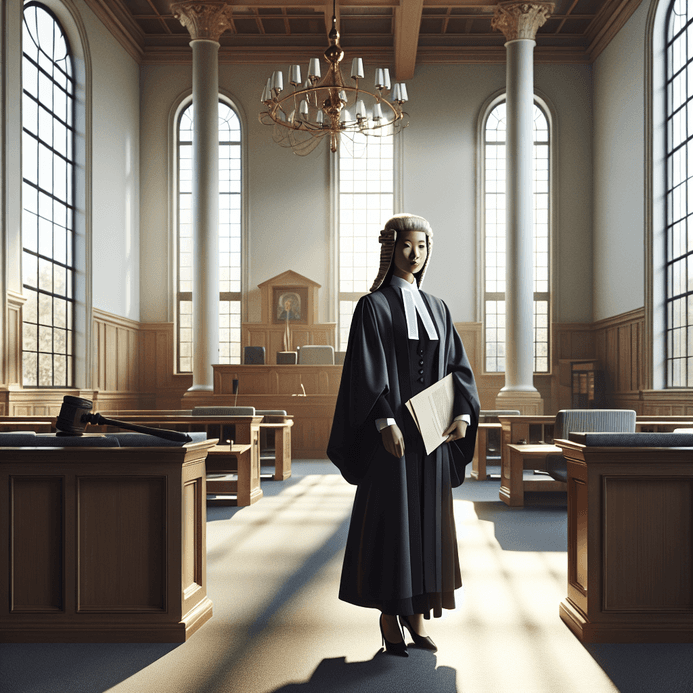
Traditionally, yes. Court dress in England and Wales has included wigs and robes, but practice varies by court and occasion, so check the dress rules of the court involved.
How do barristers and expert witnesses differ?
A barrister argues a case, while an expert witness gives opinion evidence on a specialised subject. In US federal court, Federal Rule of Evidence 702 sets the conditions for expert testimony. A witness qualified by knowledge, skill, experience, training or education may testify in the form of an opinion if the proponent "demonstrates to the court that it is more likely than not" that the testimony will help the trier of fact, is based on sufficient facts or data, uses reliable principles and methods, and reflects a reliable application of those methods to the facts.
For the broader role, see expert witness definition and legal role.
Where can litigation teams find expert witnesses?
Attorneys and litigation teams can find and retain expert witnesses through Legal Experts AI, a marketplace where they search profiles and use AI-assisted matching. To start, get matched with an expert witness or browse expert profiles.


