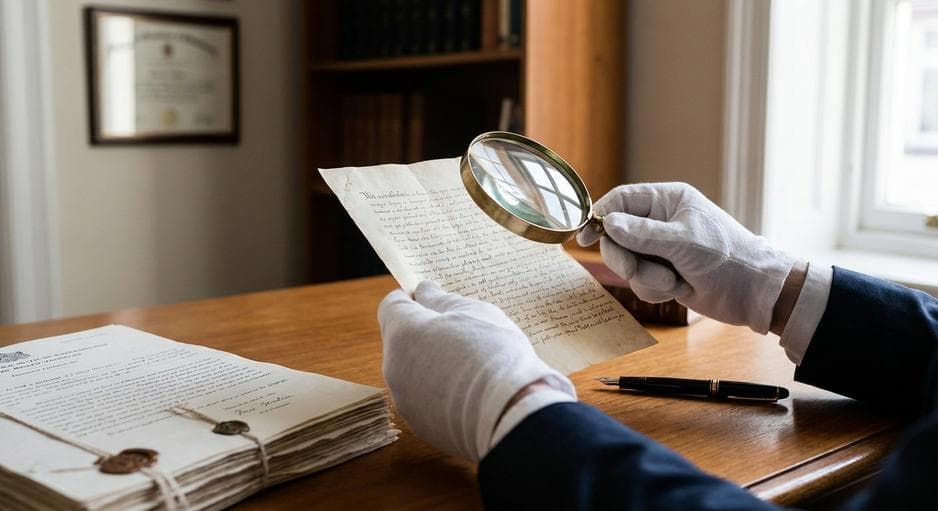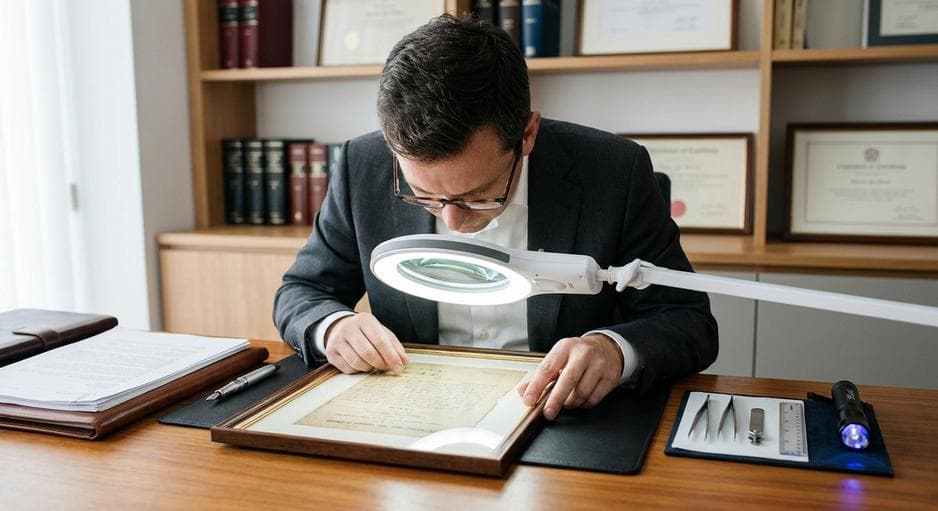



If your case involves forensic evaluation of ink age, ink comparison, sequence and chronology of handwritten or signed entries, questioned dates, document alterations, limitations of ink-aging conclusions, and the role of original documents in laboratory examination, you may need a ink dating expert witness. Not every case reaches that point. But when questions about liability, causation, or damages move past what a judge or jury can evaluate on their own, the right expert changes the picture.
This guide covers what a ink dating expert witness does, the cases that call for one, the evidence they review, and what to look for when you hire.
What a Ink Dating Expert Witness Does
A ink dating expert witness reviews the facts of a case, forms an independent professional opinion, and explains that opinion in a way that holds up in a legal setting. That setting may be a written report, a deposition, or trial testimony.
In cases involving backdated document disputes, altered contract or agreement dates, or will and estate chronology disputes, expert analysis helps attorneys see what the evidence shows, where the stronger arguments lie, and what questions still need answering before the case is ready.
Cases That Often Call for a Ink Dating Expert Witness
Backdated document disputes cases are the clearest example: the issue is whether a signature, date, or handwritten entry could have been placed on the document at the claimed time. The same expertise applies to altered contract or agreement dates, where different inks or entry sequences may be examined when parties dispute when terms, initials, or dates were added. will and estate chronology disputes often raises it too, particularly when ink evidence may be considered alongside handwriting and document features when the timing of signatures or additions is challenged. In medical or business record chronology matters, entries alleged to have been added after the event may raise questions about ink consistency and sequence. And when a case involves multiple-entry sequence disputes, the examiner may be asked whether one stroke, entry, stamp, or printing event occurred before or after another where the physical evidence permits that assessment — exactly the kind of question this expert is built to answer.
The disputed facts in these cases sit beyond what a layperson can reasonably evaluate. The issue may be technical evidence, industry standards, professional judgment, or complex causation. An expert provides the framework for understanding what happened and why it matters.
Evidence a Ink Dating Expert Witness Typically Reviews
Materials vary by case, but the analysis usually starts with original questioned document, since ink and stroke relationships often cannot be evaluated adequately from photocopies or ordinary scans. comparison entries from the same document or time period adds another layer, showing known or contemporaneous inks can provide useful context for consistency and difference. Where available, writing instruments or known ink sources when available can potential source material may support comparison but does not automatically establish a date. The expert will also look at high-resolution and spectral images to non-destructive imaging can document ink differences and relationships before any more invasive testing is considered. And document chronology and provenance records rounds out the picture, since claimed dates, custody, storage, and exposure conditions matter when interpreting what ink findings can support.
The aim is to ground every opinion in the record. An opinion built that way can be explained and defended when tested in deposition or at trial.
Methods, Standards, and Tools a Ink Dating Expert Witness May Use
Depending on the case, one common approach is non-destructive ink comparison and imaging, which visual and spectral examination can identify differences or relationships without immediately consuming evidence. Some experts also rely on entry and stroke-sequence assessment to intersections and physical relationships may help determine relative order where the document preserves suitable features. And laboratory ink analysis with documented limitations comes into play when when appropriate, analytical testing can compare ink components or aging characteristics while preserving a clear record of method, sampling, and uncertainty.
These frameworks and accepted practices give the expert's opinion its foundation. An opinion built on recognized methodology is harder to attack on cross-examination than one resting on the expert's say-so.
What to Look for When Hiring a Ink Dating Expert Witness
Credentials are a starting point, not the whole picture. Look first at forensic document-examination training with specific ink-analysis experience — ink chronology is a specialized questioned-document problem and should not be inferred from handwriting experience alone. experience explaining the limits of ink dating matters just as much, since many ink examinations support ranges, differences, or sequence conclusions rather than an exact writing date. Ask about competence with appropriate imaging and analytical methods too; the expert should select methods suitable to the document and the legal question. An expert with evidence-preservation and sampling discipline will some analyses can consume or alter tiny portions of evidence and require careful planning and documentation. And litigation experience in chronology and authenticity disputes can make the difference between a report that holds up and one that doesn't.
Beyond the resume, watch how the expert communicates. Someone who knows the field deeply but cannot explain it clearly to a lay audience will struggle in front of a jury. The strongest experts do both.
Common Mistakes Attorneys Make
Even experienced attorneys run into avoidable problems when retaining a ink dating expert witness. The most common misstep is promising an exact calendar date from ink alone, which ink evidence often cannot identify the precise day or month an entry was made. Some attorneys also fall into working from a photocopy when original ink is the issue, and a copy reproduces appearance but not the physical and chemical properties of the original ink. using destructive testing before documenting the document fully is another one worth watching for, since non-destructive examination and preservation should come first whenever possible. And ignoring storage and environmental history tends to surface later than expected, usually once light, heat, humidity, paper, and storage conditions can affect ink behavior and the interpretation of aging evidence.
Most of these come down to timing and fit. The wrong expert, or the right expert brought in too late, is harder to fix than it sounds.
When to Bring One In
Earlier is better. Attorneys who retain a ink dating expert witness before discovery closes or depositions are scheduled get more out of the relationship. The expert has time to flag missing evidence, weigh in on strategy, and stress-test opinions before they go on record.
The clearest signal you need one: the case turns on disputed technical facts, specialized standards, or evidence that requires professional interpretation to carry weight.
Frequently Asked Questions
1. What does a ink dating expert witness do?
An ink dating expert witness examines ink characteristics, differences, aging evidence, and the sequence of entries to evaluate whether handwritten or signed material is consistent with a claimed chronology, while explaining the limits of any dating conclusion.
2. When should an attorney hire one?
Hire one when a document is alleged to be backdated, altered later, completed at different times, or created in a different sequence than claimed and the original physical document is available for examination.
3. What evidence does the expert review?
The expert typically reviews the original document, comparison inks or contemporaneous entries, high-resolution and spectral images, intersecting strokes, possible source pens when available, and records describing the document's history and storage.
4. What qualifications should the expert have?
Look for forensic document-examination training plus specific ink-analysis experience, careful evidence-preservation practices, familiarity with non-destructive and analytical methods, and a conservative approach to what ink aging can establish.
5. How can attorneys find the right expert?
Choose an expert who first clarifies whether the case needs ink comparison, relative sequence, or age assessment, then confirms that the original document and sufficient contextual information are available before recommending testing.
Related Expert Witness Resources
For a broader look at this practice area, visit the () page.
For expert witnesses in this specific specialty, see the Ink dating expert witness page.
If your case touches on related issues, you may also want to explore how to hire a document examination expert witness and how to hire a forensic handwriting expert witness.
Find a Ink Dating Expert Witness
If your case involves forensic evaluation of ink age, ink comparison, sequence and chronology of handwritten or signed entries, questioned dates, document alterations, limitations of ink-aging conclusions, and the role of original documents in laboratory examination, a qualified ink dating expert witness can help you make sense of the evidence, build a stronger strategy, and present a credible case.
[CTA Button Text](Future Location Page Full URL)
Was this article helpful?