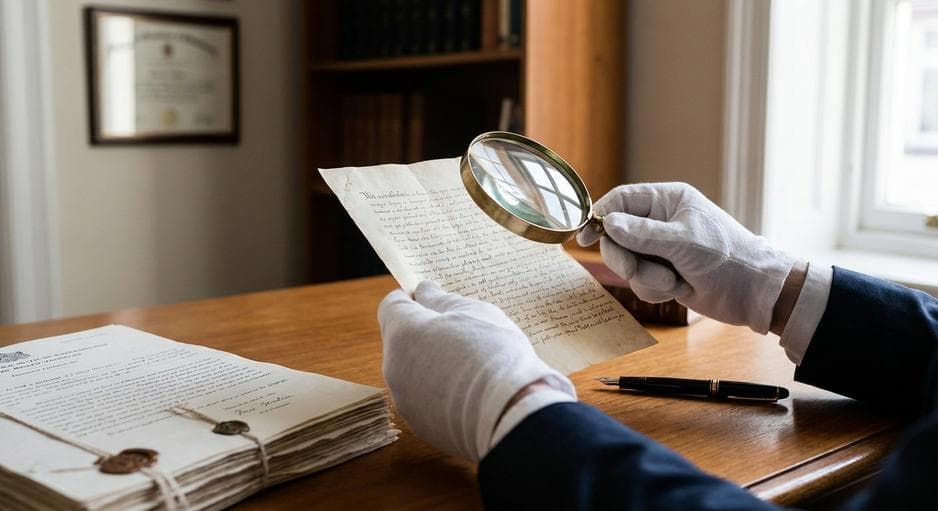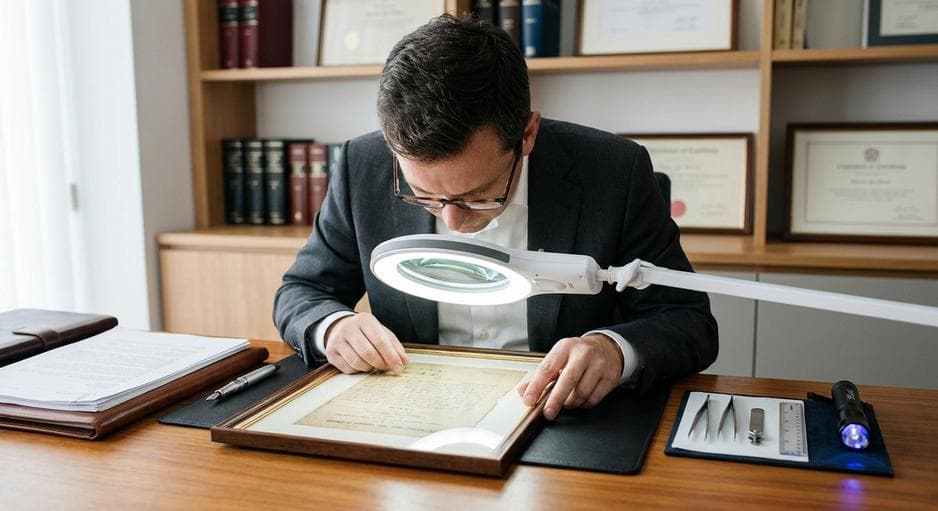


If your case involves selection and qualification of a forensic handwriting examiner, signature comparison, questioned-writing analysis, examiner competency, report preparation, deposition and trial testimony, and admissibility of handwriting opinions, you may need a handwriting examiner expert witness. Not every case reaches that point. But when questions about liability, causation, or damages move past what a judge or jury can evaluate on their own, the right expert changes the picture.
This guide covers what a handwriting examiner expert witness does, the cases that call for one, the evidence they review, and what to look for when you hire.
What a Handwriting Examiner Expert Witness Does
A handwriting examiner expert witness reviews the facts of a case, forms an independent professional opinion, and explains that opinion in a way that holds up in a legal setting. That setting may be a written report, a deposition, or trial testimony.
In cases involving expert-qualification disputes, signature-authentication cases, or handwriting authorship cases, expert analysis helps attorneys see what the evidence shows, where the stronger arguments lie, and what questions still need answering before the case is ready.
Cases That Often Call for a Handwriting Examiner Expert Witness
Expert-qualification disputes cases are the clearest example: the case may turn not only on the handwriting result but on whether the examiner is properly trained and methodologically reliable. The same expertise applies to signature-authentication cases, where an examiner evaluates whether a disputed signature is consistent with genuine comparison signatures. handwriting authorship cases often raises it too, particularly when the issue is whether disputed writing was produced by a particular person. In competing-expert cases matters, two examiners may disagree about the strength or meaning of observed handwriting features. And when a case involves pretrial admissibility challenges, methods, training, data quality, and the limits of the opinion may be examined before testimony reaches the factfinder — exactly the kind of question this expert is built to answer.
The disputed facts in these cases sit beyond what a layperson can reasonably evaluate. The issue may be technical evidence, industry standards, professional judgment, or complex causation. An expert provides the framework for understanding what happened and why it matters.
Evidence a Handwriting Examiner Expert Witness Typically Reviews
Materials vary by case, but the analysis usually starts with examiner curriculum vitae and training history, since the foundation of the opinion depends on how the examiner learned and demonstrated competence. questioned and known writing sets adds another layer, showing the actual materials used determine whether the comparison was adequate. Where available, bench notes, marked exhibits, and comparison charts can these show how observations were documented and communicated. The expert will also look at expert report and stated conclusion scale to the wording of the conclusion should match the evidentiary support. And deposition or prior testimony materials rounds out the picture, since prior explanations can reveal consistency, methodology, and experience under challenge.
The aim is to ground every opinion in the record. An opinion built that way can be explained and defended when tested in deposition or at trial.
Methods, Standards, and Tools a Handwriting Examiner Expert Witness May Use
Depending on the case, one common approach is systematic questioned-document comparison protocol, which the examiner documents the questioned material, comparison material, observations, evaluation, and conclusion. Some experts also rely on comparison chart and demonstrative preparation to annotated enlargements can show similarities, differences, and relevant limitations to the court. And quality and sufficiency review of exemplars comes into play when the examiner determines whether the available samples are sufficiently comparable and numerous for a meaningful opinion.
These frameworks and accepted practices give the expert's opinion its foundation. An opinion built on recognized methodology is harder to attack on cross-examination than one resting on the expert's say-so.
What to Look for When Hiring a Handwriting Examiner Expert Witness
Credentials are a starting point, not the whole picture. Look first at formal multi-year forensic document-examination training or equivalent rigorous preparation — the examiner should have discipline-specific training rather than only a short handwriting course. demonstrated competency through casework, proficiency testing, or recognized credentials matters just as much, since objective evidence of competence matters when qualifications are challenged. Ask about experience with the precise issue in dispute too; signature examination, disguised writing, and broader document examination are related but not identical tasks. An expert with ability to prepare transparent reports and demonstrative comparisons will attorneys and courts need to understand what was compared and why it matters. And deposition and trial experience can make the difference between a report that holds up and one that doesn't.
Beyond the resume, watch how the expert communicates. Someone who knows the field deeply but cannot explain it clearly to a lay audience will struggle in front of a jury. The strongest experts do both.
Common Mistakes Attorneys Make
Even experienced attorneys run into avoidable problems when retaining a handwriting examiner expert witness. The most common misstep is choosing an examiner based only on years in practice, which years alone do not establish discipline-specific training, competency, or the quality of the method. Some attorneys also fall into failing to ask how the examiner was trained and tested, and qualification challenges often focus on the pathway to competence, not just job titles. withholding contrary or problematic exemplars is another one worth watching for, since a selective comparison set can undermine the credibility of the resulting opinion. And hiring an examiner who cannot explain uncertainty tends to surface later than expected, usually once courts and juries need a defensible explanation of both the findings and their limits.
Most of these come down to timing and fit. The wrong expert, or the right expert brought in too late, is harder to fix than it sounds.
When to Bring One In
Earlier is better. Attorneys who retain a handwriting examiner expert witness before discovery closes or depositions are scheduled get more out of the relationship. The expert has time to flag missing evidence, weigh in on strategy, and stress-test opinions before they go on record.
The clearest signal you need one: the case turns on disputed technical facts, specialized standards, or evidence that requires professional interpretation to carry weight.
Frequently Asked Questions
1. What does a handwriting examiner expert witness do?
A handwriting examiner expert witness evaluates questioned handwriting and signatures using forensic document-examination methods, documents the comparison, prepares opinions and exhibits, and may testify about authorship, genuineness, forgery indicators, and limitations.
2. When should an attorney hire one?
Attorneys should hire one when handwriting or signature evidence is central to liability, authenticity, fraud, estate, contract, or criminal issues, especially when expert qualifications or admissibility may be contested.
3. What evidence does the expert review?
They review questioned documents, known exemplars, originals or high-quality images, case chronology, collection information, comparison charts, and other materials needed to assess the quality of the writing evidence.
4. What qualifications should the expert have?
A strong examiner should have rigorous forensic document-examination training, demonstrated competency, relevant case experience, transparent reporting practices, and the ability to withstand deposition and trial scrutiny.
5. How can attorneys find the right expert?
Review the examiner's training route, actual case experience, proficiency or credential history, report style, and ability to explain the conclusion scale; then confirm the expert has enough suitable writing material to do the work properly.
Related Expert Witness Resources
For a broader look at this practice area, visit the () page.
For expert witnesses in this specific specialty, see the Handwriting examiner expert witness page.
If your case touches on related issues, you may also want to explore how to hire a handwriting expert witness and how to hire a document examination expert witness.
Find a Handwriting Examiner Expert Witness
If your case involves selection and qualification of a forensic handwriting examiner, signature comparison, questioned-writing analysis, examiner competency, report preparation, deposition and trial testimony, and admissibility of handwriting opinions, a qualified handwriting examiner expert witness can help you make sense of the evidence, build a stronger strategy, and present a credible case.
[CTA Button Text](Future Location Page Full URL)
Was this article helpful?