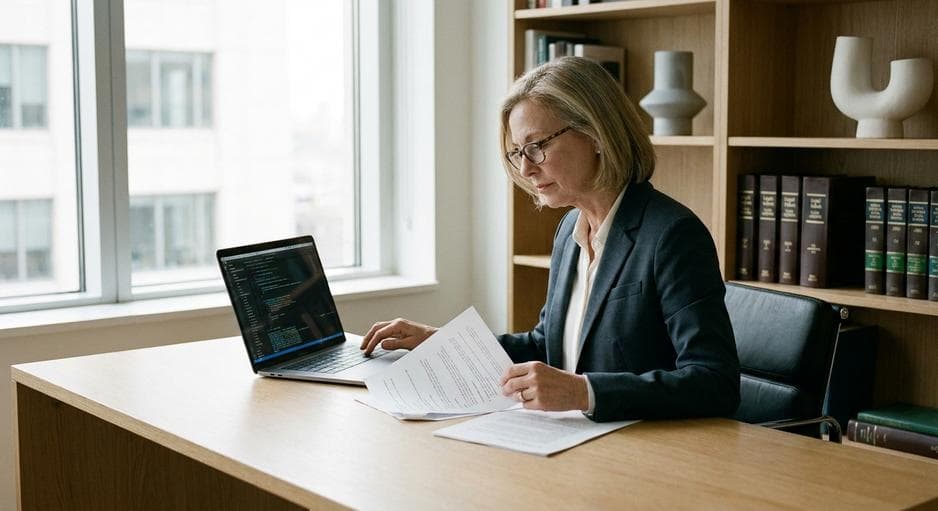



If your case involves computer systems, hardware, software, operating systems, data, system behavior, failures, and technical evidence in litigation, you may need a computers expert witness. Not every case reaches that point. But when questions about liability, causation, or damages move past what a judge or jury can evaluate on their own, the right expert changes the picture.
This guide covers what a computers expert witness does, the cases that call for one, the evidence they review, and what to look for when you hire.
What a Computers Expert Witness Does
A computers expert witness reviews the facts of a case, forms an independent professional opinion, and explains that opinion in a way that holds up in a legal setting. That setting may be a written report, a deposition, or trial testimony.
In cases involving software failure disputes, computer misuse claims, or system performance litigation, expert analysis helps attorneys see what the evidence shows, where the stronger arguments lie, and what questions still need answering before the case is ready.
Cases That Often Call for a Computers Expert Witness
Software failure disputes cases are the clearest example: the dispute turns on computer systems and case-specific records. The same expertise applies to computer misuse claims, where the expert can separate documented facts from assumptions and explain the technical issue. system performance litigation often raises it too, particularly when the analysis must connect the underlying records to the disputed conduct, loss, or outcome. In data loss matters matters, timing, documentation, and applicable practices often determine whether the claim is supportable. And when a case involves hardware-software interaction disputes, a defensible opinion requires a complete record and a method that can be explained under cross-examination — exactly the kind of question this expert is built to answer.
The disputed facts in these cases sit beyond what a layperson can reasonably evaluate. The issue may be technical evidence, industry standards, professional judgment, or complex causation. An expert provides the framework for understanding what happened and why it matters.
Evidence a Computers Expert Witness Typically Reviews
Materials vary by case, but the analysis usually starts with system logs, since they provide the primary factual record for the expert's analysis. hardware and software configurations adds another layer, showing they help test whether the claimed sequence or billing/technical position matches contemporaneous documentation. Where available, source code or application records can they can confirm or contradict assumptions drawn from summary records. The expert will also look at forensic images and files to they establish the applicable configuration, policy, pricing, or operating context. And technical documentation rounds out the picture, since they help connect the technical findings to the disputed damages, conduct, or event.
The aim is to ground every opinion in the record. An opinion built that way can be explained and defended when tested in deposition or at trial.
Methods, Standards, and Tools a Computers Expert Witness May Use
Depending on the case, one common approach is system forensic analysis, which used to organize the evidence and test the central disputed proposition. Some experts also rely on configuration and log review to used to compare the case record against an objective technical or industry framework. And reproduction and failure testing comes into play when used to validate conclusions across independent sources rather than relying on a single record.
These frameworks and accepted practices give the expert's opinion its foundation. An opinion built on recognized methodology is harder to attack on cross-examination than one resting on the expert's say-so.
What to Look for When Hiring a Computers Expert Witness
Credentials are a starting point, not the whole picture. Look first at computer engineering or computer science expertise — the expert should have direct experience with the exact subject rather than only adjacent expertise. system troubleshooting experience matters just as much, since current domain knowledge is important because methods, systems, and standards change. Ask about digital evidence handling skills too; hands-on analytical experience helps distinguish real anomalies from normal variation. An expert with relevant software or hardware specialization will the expert should be able to explain both methodology and limitations clearly. And expert testimony experience can make the difference between a report that holds up and one that doesn't.
Beyond the resume, watch how the expert communicates. Someone who knows the field deeply but cannot explain it clearly to a lay audience will struggle in front of a jury. The strongest experts do both.
Common Mistakes Attorneys Make
Even experienced attorneys run into avoidable problems when retaining a computers expert witness. The most common misstep is using a generalist for highly specialized software, which because it can create a conclusion that is broader than the underlying evidence supports. Some attorneys also fall into altering evidence during examination, and because the missing context may change the interpretation of the same record. testing a different version than the disputed system is another one worth watching for, since because a sound opinion should distinguish correlation, inconsistency, and actual causation. And failing to document reproducible methods tends to surface later than expected, usually once because the expert should remain within the limits of the discipline and available evidence.
Most of these come down to timing and fit. The wrong expert, or the right expert brought in too late, is harder to fix than it sounds.
When to Bring One In
Earlier is better. Attorneys who retain a computers expert witness before discovery closes or depositions are scheduled get more out of the relationship. The expert has time to flag missing evidence, weigh in on strategy, and stress-test opinions before they go on record.
The clearest signal you need one: the case turns on disputed technical facts, specialized standards, or evidence that requires professional interpretation to carry weight.
Frequently Asked Questions
1. What does a computers expert witness do?
A computers expert witness evaluates computer systems, hardware, software, operating systems, data, system behavior, failures, and technical evidence in litigation to help the court understand the technical issues, the evidence, and whether the disputed position is supported by the record.
2. When should an attorney hire one?
Attorneys should consider hiring one when a case materially depends on computer systems, when the parties disagree about technical interpretation, or when specialized records need to be analyzed before discovery or deposition strategy is finalized.
3. What evidence does the expert review?
The expert may review system logs, hardware and software configurations, source code or application records, forensic images and files, and technical documentation.
4. What qualifications should the expert have?
A strong expert should have computer engineering or computer science expertise, system troubleshooting experience, digital evidence handling skills, relevant software or hardware specialization, and expert testimony experience.
5. How can attorneys find the right expert?
Attorneys should select a computers expert whose experience matches the exact dispute, who can work from the primary records, apply a transparent methodology, explain limitations, and communicate conclusions clearly in a report and testimony.
Related Expert Witness Resources
For a broader look at this practice area, visit the () page.
For expert witnesses in this specific specialty, see the computers expert witness page.
If your case touches on related issues, you may also want to explore how to hire a cybersecurity expert witness and how to hire a data security expert witness.
Find a Computers Expert Witness
If your case involves computer systems, hardware, software, operating systems, data, system behavior, failures, and technical evidence in litigation, a qualified computers expert witness can help you make sense of the evidence, build a stronger strategy, and present a credible case.
Was this article helpful?