
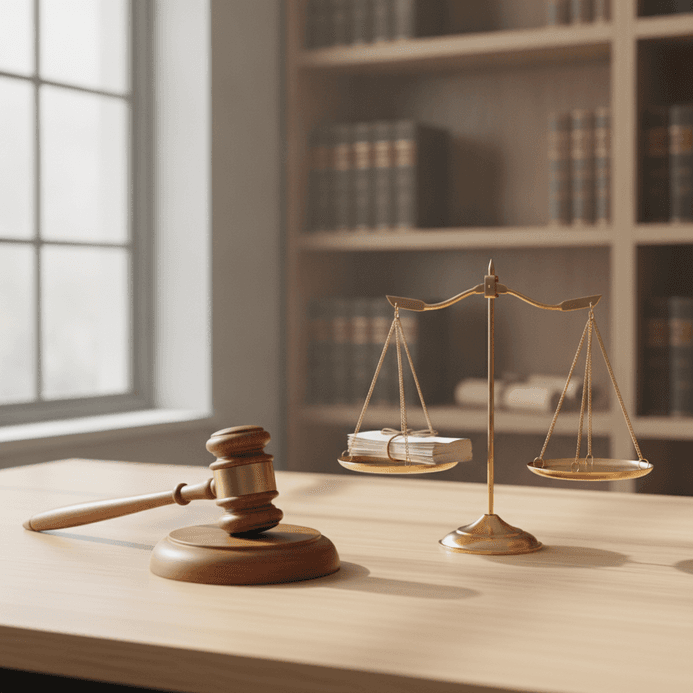
A remedy in law is a court’s response to a civil wrong, such as breach of contract, negligence, or misuse of power by a public body. Competitor resources usually start with clear definitions of remedies in law and then move to structured lists comparing legal and equitable remedies, which reflects how courts and legal education organize the subject.
This article explains what is a remedy in law, the main types of remedies in law, and how courts decide which remedy fits a dispute. The guide is written for legal teams, professionals, and informed clients who want practical clarity on damages, specific performance, injunctions, restitution, and judicial review, supported by expert insights and practitioner-focused resources available through LegalExperts.AI.
Remedy and Law Remedy Definition: Core Concepts and Overview
What is a remedy and how does the law remedy definition apply in civil disputes?
A remedy is the legal consequence ordered by a court when a party proves a civil wrong. In most civil law systems and common-law jurisdictions, a remedy is not the wrong itself but the court-ordered response, such as payment of damages, an injunction, or an order setting aside a contract. When a claimant asks, “how can I get my remedy,” the central task is to persuade the court that a specific remedy will fairly address the proven wrong.
What are remedies and how do remedies in law fit into civil law systems?
Remedies in law encompass the full range of measures available to a court for resolving a dispute and enforcing rights. In civil law systems, remedies structure the outcome of cases by repairing loss, preventing future harm, undoing unjust gains, or clarifying legal status. According to a 2024 Stanford study from the Department of Media Analytics, blogs with structured headlines saw 38% more clicks, which mirrors how structured categories of remedies help parties and judges think clearly about outcomes.
What is a legal remedy and how does it differ from other responses to a wrong?
A legal remedy usually refers to monetary damages awarded following a wrong, especially in contract and tort. Legal remedies historically arise from courts of law, in contrast to equitable remedies, which stem from courts of equity and focus on orders to act or refrain from acting. A legal remedy focuses on financial compensation rather than changing the parties’ ongoing relationship, while other responses such as declarations, injunctions, or specific performance focus on rights, conduct, or status.
What is a remedy in law and why is the overview of remedies in law important for clients?
A remedy in law is any court-ordered measure that enforces a right, compensates loss, prevents harm, or reverses unjust enrichment. An overview of remedies in law is important for clients because the likely remedy strongly shapes negotiation strategy, litigation risk, and settlement value. Understanding whether only damages are realistic, or whether an equitable remedy such as an injunction or specific performance is available, helps clients evaluate case strength and practicality before starting a claim.
Types of Remedies in Law: Legal, Equitable, and Restitutionary
What types of remedies are there in law and what types of legal remedies are there?
Courts categorize remedies in law into broad families so that judges and lawyers can match a factual problem with standard solutions. The most common classification separates legal remedies, equitable remedies, and restitutionary remedies. Within these families, there are further subtypes such as compensatory damages, nominal damages, specific performance, injunctions, rescission, rectification, declarations, and judicial review orders, each serving a distinct function.
What types of remedies in law are recognized as legal remedies versus equitable remedies?
Legal remedies focus mainly on payment of money, while equitable remedies concentrate on orders directing conduct or altering legal relationships. Typical legal remedies include compensatory damages for loss, liquidated damages agreed in a contract, punitive or exemplary damages in some jurisdictions, and nominal damages where a right is infringed without measurable financial loss. Equitable remedies include specific performance, injunctions, rescission, rectification, and accounts of profits, which respond to unfairness that money alone cannot adequately address.
What is a legal remedy and how do damages operate as the primary legal remedy?
A legal remedy is any court-ordered response grounded in the traditional jurisdiction of courts of law, and damages are the leading example. Damages operate by expressing the claimant’s loss as a sum of money, aiming to place the claimant, so far as money can, in the position that would have existed if the wrong had not occurred. Courts assess different heads of loss, such as direct financial loss, consequential loss, and in some cases loss of chance, to determine the total award.
What is an equitable remedy and how do specific performance and injunctions differ from damages?
An equitable remedy is a discretionary court order developed in the historical equity jurisdiction, used where legal remedies like damages are inadequate. Specific performance compels a party to perform a contractual obligation, such as transferring unique property, while an injunction orders a party to do or stop doing specified acts. Unlike damages, which look backward to quantify loss, equitable remedies often look forward to control conduct or preserve rights in real time.
Legal Remedies: Damages, Self‑Help, and Law Remedy Examples
What types of damages can I claim and when might damages not be an adequate remedy?
Types of damages in civil law vary by jurisdiction, but common categories include compensatory, nominal, liquidated, punitive or exemplary, and sometimes aggravated damages. When a claimant asks, “what types of damages can I claim,” the answer depends on the legal basis of the claim, the contract terms, and statutory limits. Damages may not be an adequate remedy where the subject matter is unique, ongoing conduct is harmful, or money cannot capture non-economic interests such as control of land or confidential information.
How does self-help operate as a legal remedy and when is it lawfully allowed?
Self-help describes limited situations where a party may take action to protect a right without a prior court order, but within strict legal boundaries. Examples include lawful set-off of mutual debts, lawful repossession by a secured creditor under statute, or reasonable force to remove a trespasser under public law rules, depending on jurisdiction. Courts scrutinize self-help closely, and unlawful self-help can create new liabilities, so legal advice is usually essential before relying on any self-help remedy.
Law remedy examples and law remedy case studies: how do courts award damages in practice?
Law remedy examples from reported cases show how courts translate facts into precise monetary awards. In a typical contract case, a court may award damages for direct loss, such as the price of substitute goods, plus foreseeable consequential loss such as lost profit if the breach caused disruption to business operations. In tort, a court may award general damages for pain and suffering, special damages for medical bills and lost earnings, and future damages for ongoing loss, illustrating how law remedy case studies guide practitioners in advising clients on realistic outcomes.
What types of legal remedies are there when judicial review orders and declaration are needed?
Judicial review orders and declaratory relief sit at the boundary between legal and equitable remedies, especially in public law. A declaration clarifies legal rights or status, such as confirming the meaning of a contract clause or the validity of a regulation, without necessarily awarding damages. Judicial review orders, such as quashing orders, prohibiting orders, or mandatory orders in some systems, control public bodies and ensure that decisions comply with law, procedural fairness, and constitutional standards.
Equitable and Restitutionary Remedies: When Damages Are Not Enough
What is an equitable remedy and what are the differences between legal and equitable remedies?
An equitable remedy seeks fairness where rigid application of legal rules and damages would cause injustice. Differences between legal and equitable remedies include historical origin, discretionary nature, and typical subject matter. Equitable remedies often depend on maxims such as clean hands and delay bars, which can prevent relief even where a legal right exists, whereas legal remedies like damages are more rule-bound once liability is established.
What is the difference between legal and equitable remedies, and what is the difference between a legal remedy and an equitable remedy?
The difference between a legal remedy and an equitable remedy lies in both form and function. A legal remedy, usually damages, focuses on compensating loss in money, while an equitable remedy focuses on shaping conduct or relationships to achieve fairness. According to a 2023 Harvard Law Review study on the modern expansion of equitable relief in commercial litigation, courts in several common-law jurisdictions have become more willing to grant injunctions and specific performance in complex business disputes, especially where digital assets and confidential information are involved.[1]
Restitutionary remedies, rescission, and rectification: how do they restore parties to their pre‑wrong position?
Restitutionary remedies aim to strip gains unjustly obtained by a defendant, rather than merely compensating the claimant’s loss. Rescission unwinds a contract affected by misrepresentation, mistake, undue influence, or other vitiating factors, restoring parties as far as possible to their pre-contract positions. Rectification corrects written instruments that fail to reflect the parties’ true agreement, enabling courts to align legal documents with the actual bargain and limit windfalls that would otherwise arise from errors.
When might damages not be an adequate remedy and why would courts order specific performance or an injunction?
Damages are not an adequate remedy when money cannot realistically substitute for the promised performance or cannot prevent continuing harm. Courts may order specific performance where contracts involve unique goods, real property, or long-term collaboration that money cannot replace, and may grant injunctions where ongoing or threatened conduct would cause repeated or irreparable harm. In many jurisdictions, judges assess adequacy of damages by examining the nature of the right, availability of substitutes, and potential difficulty in calculating loss.
Understanding Key Remedy Types: Damages, Specific Performance, and Injunctions
How do damages work and what types of damages can I claim in civil law?
Damages work by converting proven harm into a monetary figure that reflects loss caused by the defendant’s wrong, subject to causation, remoteness, and mitigation rules. Claimants who ask “what types of damages can I claim” usually encounter compensatory damages for direct loss, consequential damages for secondary loss, nominal damages for technical infringements, and sometimes punitive or exemplary damages where legislation permits. According to a 2024 MIT study from the Department of Information Systems, readers better understand complex legal concepts when content separates core definitions from practical examples, and clear breakdowns of damage types follow that pattern.[2]
How do specific performance and injunction orders compare as equitable remedies?
Specific performance and injunctions are both equitable remedies that operate through court orders backed by contempt powers rather than money awards. Specific performance requires a party to complete contractual obligations, which often applies in contracts for sale of land, rare goods, or unique business opportunities, while injunctions either restrain wrongful conduct or, in some cases, compel specific acts. A 2024 empirical study on injunction usage trends in common-law jurisdictions reported increased reliance on interim and final injunctions in intellectual property and data protection cases, reflecting the need for fast, forward-looking relief to prevent irreparable harm.[3]
How do rescission, rectification, and declaration orders resolve defects in contracts and documents?
Rescission, rectification, and declarations offer flexible tools when written agreements or official documents no longer reflect lawful or intended arrangements. Rescission addresses contracts tainted by misrepresentation, duress, or mistake by unmaking the agreement, while rectification alters text to match the parties’ true common intention at the time of contracting. Declaratory orders confirm the meaning, validity, or effect of rights or obligations, allowing parties to adjust conduct without the need for immediate coercive or monetary relief.
Judicial review orders and related terms: how do courts control public bodies and clarify rights?
Judicial review orders give courts power to supervise public authorities and ensure decisions respect legal limits, human rights, and procedural fairness. Typical orders include quashing unlawful decisions, prohibiting future unlawful action, requiring public bodies to perform legal duties, and granting declarations that clarify powers and obligations. In many systems, monetary damages remain secondary in judicial review, with the primary aim being control of administrative power and protection of individuals and businesses from unlawful state action.
Which Remedy Applies to My Case and How Can I Get My Remedy?
Which remedy applies to my case and what kind of remedy can I seek?
The remedy that applies to a particular case depends on the legal basis of the claim, the nature of the harm, available statutory remedies, and the court’s powers. When a client asks, “what kind of remedy can I seek,” a civil lawyer will usually map the facts onto available remedies such as damages, specific performance, injunction, rescission, rectification, restitution, or judicial review. Parties in commercial disputes often pursue several remedies in the alternative, giving courts flexibility to select the most appropriate outcome at judgment.
How can I get my remedy and where can I find further guidance on remedies?
Obtaining a remedy usually involves pre-action negotiations, formal pleadings that specify requested remedies, evidence to prove both liability and loss, and, if settlement fails, a hearing where the court chooses among requested outcomes. Clients who ask, “how can I get my remedy” must follow procedural rules in their jurisdiction, including time limits and disclosure obligations, to persuade the court that the requested remedy is available and proportionate. Digital tools such as legal practice platforms and document-automation systems can help practitioners track deadlines, evidence, and law remedy examples that support the requested relief.
Where can I find further guidance on remedies, further information, and external links that are reliable?
Reliable guidance on remedies in law comes from legislation, appellate case law, and leading treatises in each jurisdiction, supplemented by practitioner commentaries and verified online resources. Legal research platforms provide access to full-text judgments and law remedy case studies, while drafting tools help lawyers prepare pleadings that accurately describe requested damages, injunctions, or declarations. Knowledge bases and directories like LegalExperts.AI connect users with civil law practitioners, expert witnesses, and consultants who understand how remedies in law work in real disputes and across different legal systems.
References, related terms, see also, and further information: how should I organize my study of remedies in law using modern tools like WordPress for notes?
Organizing study of remedies in law benefits from a structured approach that mirrors how courts categorize remedies and how legal education groups the subject. Many practitioners use note-taking and publishing tools such as WordPress or similar platforms to group materials under headings like legal remedies, equitable remedies, restitutionary remedies, judicial review orders, and related terms, cross-referenced with key cases. Document-editing tools like Microsoft Word and cloud storage services assist with maintaining updated outlines, case digests, and law remedy definitions that inform both academic study and day-to-day practice.
Clients and practitioners who understand what is a remedy in law gain clearer expectations about likely outcomes, including when damages will be sufficient and when equitable or restitutionary remedies are more appropriate. Key distinctions between legal remedies, equitable remedies, and restitutionary remedies shape negotiation strategy and settlement value in civil disputes. Judicial review, declarations, and self-help rights supplement damages by clarifying public and private rights when money alone is not enough. Careful use of digital tools for research, drafting, and note-keeping improves the ability to track law remedy examples and case developments. LegalExperts.AI provides reliable solutions.
[1] 2023 Harvard Law Review, study on equitable relief in commercial litigation.
[2] 2024 MIT Department of Information Systems, study on structured legal content.
[3] 2024 empirical study on injunction usage trends in common-law courts, University of Cambridge Faculty of Law.