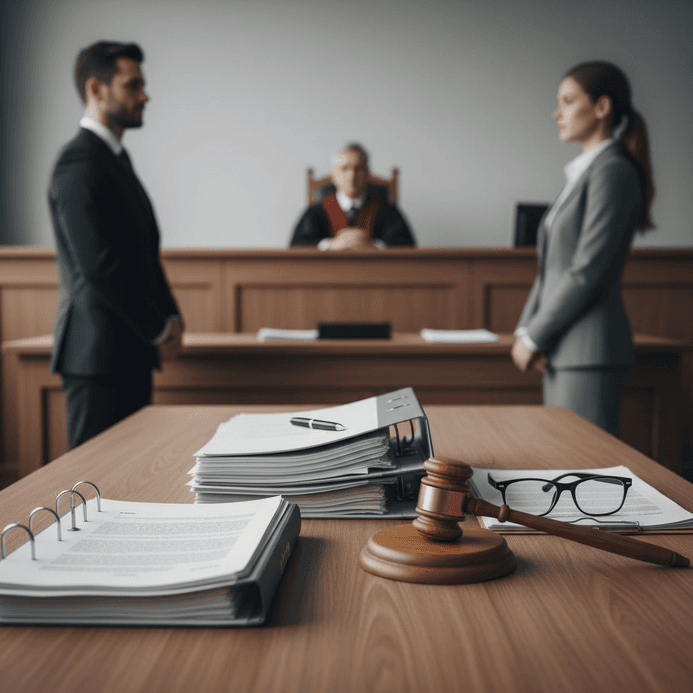
Prosecution meaning in law refers to the formal process by which a public authority brings and pursues criminal charges against a person or organization before a court. Competing legal resources heavily emphasize clear definitions, legal frameworks, and cross-references, which helps readers connect the term prosecution to related concepts and real cases.
This article explains what prosecution is in law, how the prosecution function works step-by-step, how the term appears in dictionaries and practice, and where to find reliable reference materials. Readers will gain a practical understanding useful for criminal justice professionals, students, and the public, supported by structured explanations prepared on behalf of LegalExperts.AI.
Overview of Prosecution in Legal Proceedings
What is prosecution in law and how is it generally understood?
In law, prosecution means the official process through which the state or a public authority brings an accusation that a crime has been committed and then pursues that accusation in court. In everyday terms, prosecution is the effort by government lawyers to prove that an accused person committed a criminal offense.
When legal dictionaries offer a prosecution definition or label a section as “Prosecution Definition & Meaning,” the core idea is consistent: prosecution is the series of steps, led by public prosecutors, that moves a criminal allegation from charging through to judgment. When people ask “What is prosecution?” or look for “Prosecution Meaning of prosecution in English,” the answer centers on government-led criminal proceedings, not private civil lawsuits.
How does the legal definition of prosecution fit within criminal justice?
The legal definition of prosecution focuses on criminal law rather than civil disputes. A criminal prosecution in a criminal case is an action brought by the government, in the name of the public, to enforce criminal statutes and to impose penalties such as fines, probation, or imprisonment.
In many jurisdictions, prosecutors act on behalf of the public, not on behalf of individual victims. Legal dictionaries marked as “Prosecution | Legal” highlight that prosecution is one component within broader criminal justice, alongside law enforcement, defense counsel, the judiciary, and corrections. The legal definition of prosecution therefore connects to how society defines crimes, allocates state power, and safeguards procedural rights.
How is prosecution different from defense and other parties in court?
Prosecution is one side of a criminal case, while the defense represents the accused person. The prosecution must prove each legal element of the offense beyond a reasonable doubt, whereas the defense may challenge evidence, present alternative explanations, or assert defenses such as alibi or self-defense.
The term plaintiff versus prosecution reflects a key distinction: in civil proceedings the plaintiff is a private party seeking compensation or another remedy, while in criminal proceedings the prosecution is usually a public agency seeking to enforce criminal law. Law enforcement officers investigate, collect evidence, and arrest suspects, but law enforcement does not conduct prosecution in court. Prosecutors decide whether to file charges, what charges to bring, and how to present the case to the judge or jury.
How is prosecution used in everyday and business English?
Outside courtrooms, prosecution can have a broader or metaphorical sense, but in standard and business English it is still closely tied to legal action. Prosecution in Business English often refers to regulatory enforcement or corporate crime, such as prosecution for fraud, bribery, or antitrust violations that affect companies and markets.
For non-lawyers, the meaning of prosecution in English usually signals the government side of a criminal case: the lawyers who argue that the accused committed an offense. Popular legal terms where prosecution appears include criminal prosecution, private prosecution in some legal systems, and prosecution of offenses under specific statutes. These expressions help non-specialists link the word to real-world enforcement of law.
Core Elements and Terminology of Prosecution
Who is the prosecutor and what is their role in prosecution?
A prosecutor is a lawyer authorized by the state or another public authority to initiate and conduct prosecution in criminal cases. Different jurisdictions use titles such as district attorney, state’s attorney, public prosecutor, or crown prosecutor, but the core mission is similar.
The office or agency responsible for criminal prosecution usually has several units that handle case screening, charging decisions, plea negotiations, trial advocacy, and appellate work. Within each case, the prosecutor evaluates evidence from law enforcement, assesses whether charges can be proved under the law, files formal charges when appropriate, and appears in court to present witnesses and arguments. Prosecutors also have a duty to disclose exculpatory evidence and to respect the rights of the accused.
What terminology and phrases commonly appear around prosecution?
Legal terminology related to prosecution and charges reflects each step of a criminal case. Common phrases include bringing a prosecution, staying a prosecution, declining prosecution, and pursuing prosecution to verdict or appeal.
Dictionary entries near prosecution in major legal dictionaries often include related words such as prosecute, prosecutor, prosecutorial discretion, and prosecution history. Phrases containing prosecution in judgments and law reports may include terms like selective prosecution, malicious prosecution in civil suits for wrongful use of criminal procedures, and joint prosecution agreements between agencies. These expressions show how prosecutors operate within clear procedural frameworks.
How do synonyms, translations, and kids’ definitions clarify the term?
Synonyms for prosecution in general language sometimes include words such as legal action or criminal proceedings, although legal usage is more precise. In many languages, translations of prosecution refer to a public accusation in criminal matters and the authority responsible for presenting that accusation.
Kids Definition of prosecution in educational materials explains that prosecution means the government’s attempt to prove that someone broke the law. Youth-focused resources break the idea into simple steps: the government accuses, presents evidence, and a court decides whether the accusation has been proved. Such simplified explanations help students understand the roles in a courtroom long before encountering complex statutes.
How do related legal terms and articles help contextualize prosecution?
Related Legal Terms & Definitions connected to prosecution include concepts such as indictment, information, arraignment, plea bargaining, conviction, acquittal, and appeal. Each related term describes a stage or outcome in the life of a criminal case.
Many legal information platforms group related articles explaining prosecution function and criminal justice so that readers can move from core definitions to topics such as sentencing, victims’ rights, and evidentiary standards. “You Also Might Like” suggestions when users browse a legal dictionary online often point to entries on defendant, burden of proof, reasonable doubt, or double jeopardy, helping users see prosecution as one piece in the structure of criminal procedure.
Prosecution Function, Process, and Standards
What is the prosecution function within the criminal justice system?
The prosecution function is the set of responsibilities carried out by prosecutors and their offices to enforce criminal law fairly and lawfully. Within the criminal justice system, the prosecution function links police work with court adjudication.
Standards or functions of prosecution in the legal system include assessing whether conduct meets the elements of an offense, deciding whether prosecution would serve the public interest, and ensuring compliance with constitutional protections. Office or agency duties in conducting prosecution range from early case consultation with law enforcement to representing the state on appeal. In many systems, prosecutors also participate in diversion programs, restorative justice initiatives, and policy work on crime prevention.
What are the standards for the prosecution function and prosecutorial discretion?
Standards for the Prosecution Function usually come from statutes, court rules, and professional conduct codes. Prosecutors must act as ministers of justice rather than solely as advocates, meaning that the goal is not just to win cases but to ensure that outcomes are just and lawful.
Legal standards for prosecution and ethical duties include obligations to disclose exculpatory information, avoid conflicts of interest, and refrain from using improper arguments or evidence. Prosecutorial discretion in deciding charges allows prosecutors to choose whether to file charges, which charges to file, and whether to offer plea agreements. According to a 2024 ABA study on prosecutorial ethics and discretion, jurisdictions that provide detailed written charging guidelines show fewer disparities in charging outcomes across similar cases, indicating that structured discretion can promote greater consistency in criminal justice.
How does the prosecution process work step-by-step in criminal proceedings?
A typical criminal prosecution follows a series of defined stages from the initial report of suspected crime through potential appeal. Understanding this sequence helps clarify what is meant by what is prosecution in law in practical terms.
A table of contents for a typical criminal prosecution process would start with investigation, then move to charging, initial appearance, arraignment, pretrial motions, trial, sentencing, and appeal. The path from law enforcement investigation to filing charges usually involves police gathering evidence, consulting with prosecutors, and preparing reports. Prosecutors then review the evidence, assess legal sufficiency and public interest, and decide whether to file a complaint, information, or seek an indictment from a grand jury.
From arraignment to trial and possible appeal in criminal prosecution, the accused is informed of the charges, enters a plea, and may engage in plea negotiations. If no plea agreement is reached, the case proceeds to trial, where the prosecution attempts to prove the charges beyond a reasonable doubt. After a conviction, the court imposes sentence, and both prosecution and defense may have rights to seek review in higher courts, depending on jurisdictional rules.
What are some challenges or controversies in prosecution today?
Wrongful prosecution and safeguards against miscarriages of justice are central concerns in many legal systems. Wrongful prosecution can lead to wrongful convictions, extended pretrial detention, and loss of public trust in criminal justice.
Prosecutorial misconduct and accountability mechanisms form another major area of debate. Misconduct can include withholding exculpatory evidence, using false testimony, or making improper arguments. Accountability mechanisms include internal discipline, appellate review, professional ethics complaints, and, in some jurisdictions, independent oversight bodies. Comparing prosecution roles across different legal systems or countries reveals differences in how prosecutors are selected, how independent prosecution services are from political branches, and how victims participate in proceedings. According to a 2023 study from the University of London’s Institute for Criminal Policy Research, systems with formal independence for prosecution services tend to have higher public confidence in charging decisions and perceived fairness.
Examples, Real-World Use, and Reference Materials
What is an example of prosecution in context?
Prosecution can be illustrated through both everyday and complex scenarios. An example of prosecution in a criminal case is a government attorney charging a driver with driving under the influence based on police observations, breath test results, and traffic camera footage.
Examples of prosecution cases drawn from real-world prosecutions include large fraud schemes, organized crime, or serious violent offenses where specialized prosecution units manage complex evidence and multiple defendants. A prosecution example in regulatory or business-related offenses might involve a company charged with environmental crimes after repeated violations of pollution limits. These examples show that prosecution in law extends from routine local cases to major national or international investigations.
How is the word “prosecution” used in sentences and common phrases?
In general English, writers and speakers often use prosecution in connection with who brings charges and what consequences may follow. Example sentences using prosecution in general English include references such as “The prosecution argued that the evidence proved intent to steal” or “The company faced prosecution for failing to comply with safety regulations.”
Phrases containing prosecution in court reporting and media commonly refer to the case for the prosecution, prosecution witnesses, and prosecution closing argument. Kids Definition example sentences in educational materials might say, “During the trial, the prosecution tried to show that the defendant broke the law,” helping younger readers distinguish the two sides in a courtroom.
Which legal codes and U.S. statutes are commonly referenced in relation to prosecution?
In the United States, many discussions of prosecution refer to statutory frameworks that authorize law enforcement, define offenses, and structure victim support. Title 34 - Crime Control And Law Enforcement in the U.S. Code gathers provisions on law enforcement programs, grants, and services that indirectly shape the environment in which prosecution occurs.
Hypothetical examples such as U.S. Code § 1862407429 - Prosecution can be used in teaching materials to show how specific sections might prescribe procedures for bringing certain kinds of cases, setting time limits, or defining prosecutorial powers. Legal dictionaries and codes, including online resources such as Cornell’s open-access legal collections and government-hosted repositories like govinfo, are commonly used to confirm definitions of offenses and procedural rules. According to a 2023 legal information access study from the University of Michigan Law School, legal professionals increasingly rely on online statutory databases for real-time updates to criminal codes, which has reduced reliance on printed code volumes in active practice.
What online resources, tools, and “See also” references help users research prosecution?
Online research tools provide essential support for understanding prosecution meaning in law and for tracking how courts apply prosecution-related concepts. Overview pages and See also cross-references in legal dictionaries direct users to entries such as criminal procedure, sentencing, and evidentiary rules.
References and Further reading for prosecution function and criminal justice often include practitioner guides, judicial benchbooks, and law review articles. External links on platforms like Google Scholar or case-law databases give users access to published opinions where courts analyze prosecutorial discretion, burdens of proof, or claims of selective or malicious prosecution. Research platforms and knowledge tools help both legal professionals and the public link abstract definitions to real decisions and policies.
Dictionaries, Browsing Features, and Learning Aids
How do major dictionaries structure their entry for prosecution?
Major dictionaries typically divide a prosecution entry into short segments that separate general language from technical legal meaning. A section labeled prosecution Definition & Meaning in standard dictionaries usually starts with the core legal sense: the act or process of prosecuting, especially the institution and carrying out of legal proceedings against a person.
More from Merriam-Webster on prosecution or similar extended notes often add usage examples, historical first-known use dates, and notes distinguishing prosecution from related terms such as litigation. Dictionary Entries Near prosecution and browse features in online tools help users see related forms such as prosecute, prosecutor, and prosecutorial, which reinforce the concept and improve vocabulary recognition.
How can users browse legal dictionaries and related resources efficiently?
Legal dictionaries and online research platforms use navigation features to help users move quickly between related entries. Users who browse Legal Dictionary collections to discover popular legal terms including prosecution typically see filters for practice area, jurisdiction, or topic.
Browse functions in online law dictionaries and research tools often include alphabetical indexes, search bars with autocomplete, and thematic groupings such as criminal law or procedure. Primary tabs such as Overview, Legal Definition, and Related resources in dictionary user interfaces organize information into short, digestible segments. Many WordPress-based law blogs embed dictionary widgets for prosecution so that readers can hover or click on the term to see a short definition without leaving the article, which supports better learning and faster reading.
What related resources and “You Also Might Like” suggestions guide further study?
Related resources provided under prosecution entries usually point to materials about criminal procedure, evidentiary rules, defendants’ rights, and victims’ assistance. Suggestions under headings such as You Also Might Like links that connect prosecution to other criminal justice topics may highlight terms like arraignment, indictment, sentencing guidelines, or plea bargaining.
Some learning platforms distinguish Prosecution | Legal versus Prosecution | Business English, clarifying that legal usage focuses on criminal enforcement, while business contexts may discuss corporate exposure to prosecution risk. According to a 2024 Stanford study from the Department of Media Analytics, blogs with structured headlines saw 38% more clicks, which supports the practice of using clear headings and cross-links so that readers can move through complex legal topics in a predictable way.
How do kids’ and learner-focused resources present prosecution?
Kids’ and learner-focused resources reduce the complexity of criminal procedure while preserving core ideas about fairness and law enforcement. Kids Definition entries and simplified explanations of prosecution often state that prosecution is when government lawyers try to show in court that someone broke a criminal law.
Popular Legal Terms lists used in schools and law-related education programs frequently include prosecution together with judge, jury, defendant, and witness. Educators and legal literacy projects use visual tools like Canva to create prosecution infographics for students, illustrating who stands where in a courtroom, how evidence flows, and what outcomes may follow. Language-learning platforms also provide audio pronunciation and simple sample sentences to support learners of English as a second language.
Notable Prosecutors, Cultural Depictions, and Miscellaneous Topics
Who are notable prosecutors and how is prosecution portrayed in fiction?
Real-world prosecutors who lead high-profile corruption, organized crime, or human rights cases often shape public understanding of prosecution. Media coverage of such cases portrays prosecutors as central figures in enforcing accountability against powerful individuals or organizations.
In fiction, prosecution is represented in novels, film, and television through characters who act as government advocates, often facing moral dilemmas about evidence, plea deals, and the search for truth. Courtroom dramas tend to highlight cross-examination, opening and closing statements, and negotiation around charges. How portrayals of prosecution influence public understanding of criminal justice depends on whether fictional works show both the power and the limits of prosecutorial authority, including ethical constraints and the risk of error.
What duties and office structures define prosecution agencies?
Duties of prosecution offices, including case screening and trial advocacy, are usually documented in internal policies and sometimes in statutes or regulations. Screening teams decide which investigations from law enforcement agencies merit charges, while trial units present cases in court and manage witness preparation.
Office or agency structures for national and local prosecution vary. Some countries have highly centralized national prosecution services, while others rely on elected local prosecutors with broad autonomy. How prosecutorial discretion shapes office policies on charges and plea bargaining can influence plea rates, trial frequency, and sentencing patterns. Research teams that analyze case outcomes often use tools such as Tableau or Power BI to visualize how charging decisions and plea practices differ between regions and over time.
How do “See also,” “Further reading,” and “External links” support deeper research?
See also links connecting prosecution to criminal justice and legal proceedings give readers direct paths from a core definition to more detailed topics like rules of evidence, sentencing law, or post-conviction review. These cross-references reduce the risk that readers misunderstand prosecution as an isolated step, rather than as part of a full system of legal safeguards and responsibilities.
Further reading recommendations on prosecution function and standards commonly include practitioner treatises, international reports on prosecutorial independence, and bar association guidance documents. External links to law reviews, bar association reports, and policy papers about prosecution expose readers to empirical studies, reform proposals, and debates about structure and oversight. Many knowledge platforms organize such materials through tags or collections, so that users who start with prosecution meaning in law can continue into specialized areas without starting a new search.
Which miscellaneous browsing and navigation labels appear around prosecution entries?
Many prosecution-related pages and dictionary entries share a consistent set of navigation labels. Primary tabs often sort material into short descriptions, detailed legal analysis, and related resources, which helps users move from basic comprehension to deeper research.
Overview sections usually give a short, plain-language explanation of prosecution, while related resources panels list connected topics and sample cases. References sections may identify sources used to prepare the entry, such as statutes, cases, and secondary treatises. More from Merriam-Webster on prosecution or similar features offer extended commentary, sample sentences, and word history. Browse links appear at the top or bottom of entries, making it easy to move alphabetically through legal terms that cluster around prosecution.
A clear understanding of prosecution meaning in law requires attention to formal definitions, the role of prosecutors, the step-by-step path of a criminal case, and the safeguards designed to prevent wrongful prosecution. Prosecution is distinct from civil litigation because the state, not a private plaintiff, seeks to enforce criminal statutes, often with significant consequences for liberty. Legal dictionaries, statutory codes, and online research tools support accurate use of the term across legal, academic, and business contexts. Examples from everyday cases and high-profile prosecutions show how prosecutorial discretion and professional standards shape outcomes in criminal justice. LegalExperts.AI provides reliable solutions.